
Cauliflower
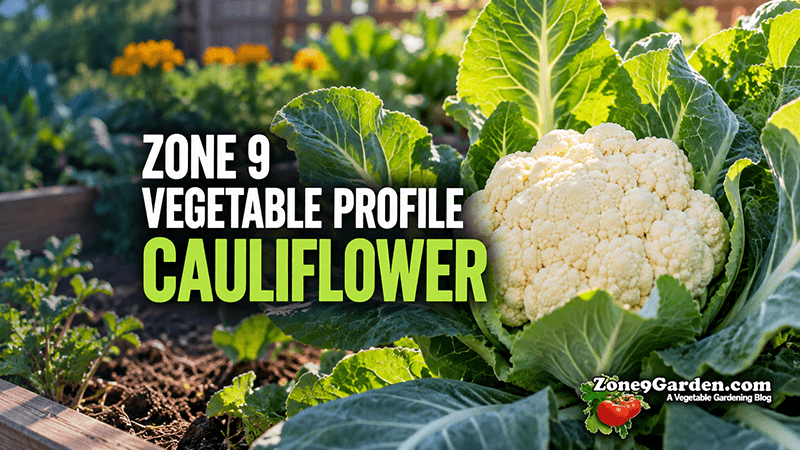
Cauliflower is a cool-season cole crop in the Brassicaceae family grown for its compact immature flower head, or curd. It is more sensitive to temperature stress than most other cole crops and performs best with steady growth, fertile well-drained soil, consistent moisture, and mild temperatures. Zone 9 is well suited to fall, winter, and early-spring cauliflower production. UF/IFAS lists cauliflower planting from August through February in North Florida, September through February in Central Florida, and September through January in South Florida. UC ANR notes that cauliflower grows best under cool conditions and is especially sensitive to prolonged cold and excessive heat, both of which can disrupt head formation.
Planting Windows for Zone 9
| Stage | Spring | Fall |
|---|---|---|
| Start Indoors | Dec 15 – Jan 31 | Jul 1 – Aug 31 |
| Direct Sow | Jan 1 – Feb 15 | Aug 1 – Sep 30 |
| Transplant | Jan 15 – Mar 1 | Aug 15 – Oct 31 |
| Harvest | Mar 15 – May 31 | Oct 15 – Mar 31 |
Recommended Cauliflower Varieties
Snow Crown — Widely recommended by UF/IFAS and UC ANR; early, dependable white cauliflower with good adaptability.
Snowball Strains — Traditional white cauliflower types recommended by UF/IFAS for Florida gardens.
Snow King — White cauliflower recommended by UC ANR for home gardens.
Majestic — Hybrid cauliflower recommended by UF/IFAS for Florida production.
Whistler — Hybrid white cauliflower recommended by UF/IFAS.
White Passion — Hybrid white cauliflower recommended by UF/IFAS.
Graffiti — Purple cauliflower listed by UC ANR; provides colorful heads while using the same basic culture as white types.
Cheddar — Orange cauliflower listed by UC ANR.
Romanesco — Green spiral-headed cauliflower type listed by UC ANR.
Fertilizer Schedule
Incorporate finished compost or other organic matter and apply fertilizer according to a soil test. Where phosphorus is needed, incorporate it before planting. A target pH of about 6.5 is appropriate for cauliflower, with phosphorus and potassium based on soil-test results.
Set sturdy transplants with 4–6 true leaves, water thoroughly, and use a starter or balanced fertilizer only where soil fertility indicates a need. Keep concentrated fertilizer away from stems and roots.
Side-dress with a light nitrogen application and water it in.
Consider light, frequent nitrogen applications during active growth, especially in sandy soil or after nutrient-leaching rainfall. Avoid overfertilization and keep fertilizer off plant stems.
Maintain steady moisture. Avoid late heavy nitrogen applications once heading begins because excessive nitrogen at this stage can contribute to leafy or loose curds.
Planting Details
0.5 inch; 0.25–0.5 inch range
18–24 inches for home gardens
24–36 inches
5–10 days under good growing conditions
65–85°F optimum range; about 70–75°F is an excellent target
40°F minimum for seed germination
65–85°F for seed germination; cool-season establishment is best under mild soil and air temperatures
Growing Requirements
Full sun, preferably 6+ hours daily; at least 4–6 hours.
Keep soil consistently and evenly moist from transplanting through head development. Water deeply to encourage a strong root system, avoid drought stress, and minimize prolonged leaf wetness when possible.
Fertile, well-drained loam or sandy loam rich in organic matter; avoid compacted soil, shallow hardpans, and waterlogged conditions.
6.0–6.5; about 6.5 is an excellent target.
Moderate-to-heavy feeder. Base phosphorus and potassium on soil-test results and provide steady nitrogen for vegetative growth without excessive applications.
Preplant compost and soil-test fertilizer → transplant or direct sow into prepared soil → light nitrogen side-dressing when plants are about 3–4 inches tall or established → repeat light nitrogen every 3–4 weeks if needed during active growth → reduce unnecessary late feeding as heads approach harvest.
Top 5 Common Cauliflower Pests
Fall–Spring; active during mild weather
Velvety green caterpillars chew large irregular holes in leaves and may contaminate plants with frass. Heavy feeding reduces leaf area and can weaken developing plants.
Fall–Spring; often active during mild weather
Green looping caterpillars chew ragged holes in leaves. Heavy populations can remove substantial foliage and reduce plant vigor and head development.
Fall–Spring; often strongest in mild dry periods
Small green larvae feed mainly on leaf undersides, first creating window-like patches and later small holes. Heavy infestations can seriously damage young plants.
Fall–Spring; populations often increase during cool-to-mild weather
Aphid colonies cluster on leaves and within developing heads, causing curling, yellowing, reduced vigor, sticky honeydew, and contamination of harvested heads.
Cool, wet periods; Fall–Spring
White larvae feed on roots and underground stems, causing stunting, yellowing, wilting, poor growth, and sometimes plant death. Root wounds can also allow secondary decay.
Top 5 Common Cauliflower Diseases
Cool, moist or humid weather; Fall–Spring
Irregular yellow patches develop on leaves and later turn tan to brown. White fluffy growth may appear on leaf undersides. Systemic infection can produce internal black streaks in cauliflower stems and floret branches.
Warm, wet or humid conditions
Yellow V-shaped lesions develop from leaf margins and veins may darken as bacteria move through vascular tissue. Severe infection causes stunting, leaf loss, poor head development, and postharvest deterioration.
Cool-to-moderate moist soil; especially acidic infested soil
Roots become enlarged, distorted, and club-shaped. Aboveground plants become stunted, yellow, and may wilt during warm parts of the day even when soil moisture is adequate.
Cool-to-mild wet conditions; favored by splashing rain or overhead irrigation
Small dark specks enlarge into numerous water-soaked spots that later become tan and may have purple margins. Severe spotting reduces healthy leaf area and can weaken plants.
Warm, wet conditions; often after injury or prolonged moisture
Water-soaked tissue becomes soft, mushy, and rapidly decayed. Infection can damage stems and heads and may produce foul-smelling breakdown under warm, wet conditions.
Zone 9 Weather Patterns
Several days of cold temperatures can trigger premature small heads, known as buttoning.
Minimum temperature for seed germination.
Optimum germination range; about 70–75°F is an excellent target.
Ideal cool-season growing range for cole crops.
Cauliflower is highly heat sensitive; heat can reduce curd quality and disrupt head formation.
Greater risk of water stress, stalled head development, and poor curd quality.
Greater risk of downy mildew, clubroot, bacterial diseases, root problems, and cabbage maggot injury.
Water stress can reduce yield, firmness, head size, and color; maintain consistent soil moisture.
Harvest
80 days
Spring: March 15 – May 31
Fall/Winter: October 15 – March 31
Heads are firm, compact, dense, and typically about 4–8 inches in diameter, depending on cultivar. Harvest before individual florets begin separating, loosening, or developing a ricey appearance.
Cut the main stalk just below the head while it is firm and compact, leaving several wrapper leaves attached for protection. For white non-self-blanching cultivars, fold or loosely tie outer leaves over the developing head when it is about 2–3 inches across to reduce yellowing from sunlight. Harvest promptly once mature because overmature heads loosen and lose quality.
Crop Relationships
Brassicaceae — Mustard / Cabbage Family
Brassicaceae / Cole Crops
Dill
Sage
Rosemary
Celery
Onions
Tomatoes
Pole Beans
Runner Beans
Peppers
Strawberries
Helpful Links
- Zone 9 Planting Calendar: What to Plant All Year — Use the year-round calendar to plan cauliflower alongside other cool-season Zone 9 vegetables.
- Zone 9 Fall Planting Guide — Plan fall cauliflower and other cool-season vegetables as temperatures begin to decline.
- Zone 9 Winter Planting Guide — See how cauliflower fits into the productive Zone 9 winter garden.
- Zone 9 Spring Planting Guide — Plan an early spring cauliflower crop before warmer weather becomes limiting.
- What to Plant in September in Zone 9 — See when cauliflower and other fall vegetables can be started or transplanted as the fall season develops.
The crop data presented in this guide represents standardized Zone 9 values derived from and averaged across guidance from UF/IFAS Extension, Texas A&M AgriLife Extension, University of Arizona Cooperative Extension, and UC Agriculture & Natural Resources. USDA establishes the Zone 9 plant-hardiness framework. Recommendations may vary by local climate, cultivar, soil conditions, microclimate, and individual growing conditions.