
What to Plant in August, September, October, and Beyond
If you live in USDA Zone 9, fall is one of the best times of the year to grow vegetables. While gardeners in northern states are putting their gardens to bed, Zone 9 gardeners are just getting started.
The cooler temperatures, fewer insect problems, and more manageable growing conditions make fall gardening more productive than spring for many crops.
Whether you are growing in Florida, Texas, Louisiana, Arizona, or coastal California, this guide explains what to plant each month, when to start seeds, and which crops perform best in a Zone 9 fall garden.
Why Fall Is the Best Gardening Season in Zone 9
One of the biggest mistakes new Zone 9 gardeners make is following planting calendars written for northern climates.
In most of the country, spring is the main planting season. In Zone 9, fall often produces the healthiest and most productive gardens.
Benefits of fall gardening include:
- Lower temperatures that reduce plant stress
- Less frequent watering
- Fewer destructive insects
- Lower disease pressure
- Sweeter leafy greens after cool nights
- Better growing conditions for broccoli, cabbage, kale, and other brassicas
Many Zone 9 gardeners can harvest vegetables from October through early spring. Planting times vary by region, so always adjust the dates based on your local weather and first frost date.
Quick Zone 9 Fall Planting Calendar
MonthBest Crops to PlantAugustTomatoes, peppers, broccoli, collards, celerySeptemberBeans, cucumbers, lettuce, kale, radishesOctoberCarrots, onions, spinach, beets, cauliflowerNovemberGarlic, strawberries, cabbage, lettuceDecemberPeas, carrots, onions, lettuce, spinach
| Month | Best Crops to Plant |
|---|---|
| August | Tomatoes, peppers, broccoli, collards, celery |
| September | Beans, cucumbers, lettuce, kale, radishes |
| October | Carrots, onions, spinach, beets, cauliflower |
| November | Garlic, strawberries, cabbage, lettuce |
| December | Peas, carrots, onions, lettuce, spinach |
What to Plant in August in Zone 9
August may still feel like the middle of summer, but it is the beginning of fall garden season in Zone 9.
Good crops to plant in August include:
- Broccoli
- Collards
- Celery
- Tomatoes
- Peppers
- Eggplant
- Winter squash
- Watermelon in early August
Broccoli and other cool-season vegetables may struggle if planted directly into hot soil. Starting seeds indoors or in a shaded area can improve germination.
Young seedlings may also benefit from shade cloth during the hottest part of the day.
Water deeply in the morning and apply mulch around new plants to keep the soil cooler and reduce moisture loss.
What to Plant in September in Zone 9
September is when the fall garden begins to take shape.
Good crops to plant in September include:
- Bush beans
- Pole beans
- Cucumbers
- Kale
- Lettuce
- Mustard greens
- Radishes
- Turnips
- Collards
- Swiss chard
September is also a good month for succession planting.
Plant small amounts of beans, lettuce, radishes, and other fast-growing crops every two weeks. This helps prevent everything from becoming ready to harvest at the same time.
Continue protecting young cool-season crops from extreme afternoon heat, especially during the first half of the month.
What to Plant in October in Zone 9
October is one of the easiest and most productive gardening months in Zone 9.
The soil is still warm enough for seeds to germinate, but cooler nights reduce stress on young plants.
Good crops to plant in October include:
- Carrots
- Beets
- Spinach
- Cauliflower
- Broccoli
- Cabbage
- Onions
- Lettuce
- Radishes
- Strawberries
Root crops such as carrots and beets perform best in loose, well-draining soil.
Remove rocks, break up compacted areas, and avoid adding large amounts of fresh manure before planting. Too much nitrogen can cause root crops to produce leafy growth instead of strong roots.
What to Plant in November in Zone 9
November is a great month for planting many cool-season crops.
Good crops to plant in November include:
- Garlic
- Strawberries
- Cabbage
- Lettuce
- Kale
- Spinach
- Carrots
- Radishes
- Peas
- Onions
Garlic planted in late fall has time to establish roots before warmer spring weather arrives.
Choose garlic varieties suited to mild-winter climates. Softneck garlic usually performs better than hardneck garlic in many Zone 9 areas.
What to Plant in December in Zone 9
December planting options depend on your exact location and frost risk.
In warmer parts of Zone 9, you may still be able to plant:
- Lettuce
- Spinach
- Carrots
- Radishes
- Peas
- Onions
- Kale
- Swiss chard
Growth may slow during periods of cold weather, but many cool-season vegetables will continue producing.
Keep frost cloth available to protect tender seedlings when freezing temperatures are expected.
Best Vegetables for a Zone 9 Fall Garden
Leafy Greens
Leafy greens are some of the easiest crops to grow during fall and winter.
Good choices include:
- Lettuce
- Kale
- Spinach
- Swiss chard
- Collards
- Mustard greens
Many greens develop better flavor after exposure to cool weather.
Root Crops
Root vegetables grow well when temperatures begin to cool.
Good choices include:
- Carrots
- Radishes
- Turnips
- Beets
- Onions
Prepare the soil carefully before planting. Loose soil helps roots grow straight and prevents misshapen vegetables.
Brassicas
Brassicas are among the most dependable fall vegetables in Zone 9.
Good choices include:
- Broccoli
- Cabbage
- Cauliflower
- Brussels sprouts
- Kale
- Collards
Cabbage worms and other caterpillars can still be a problem during fall. Check the undersides of leaves regularly and remove pests before they cause serious damage.
Warm-Season Crops
Some warm-season vegetables can continue producing into fall when planted early enough.
Good choices include:
- Tomatoes
- Peppers
- Eggplant
- Beans
- Cucumbers
These crops need enough time to mature before cold weather arrives.
Choose fast-growing or early-maturing varieties for better results.
Best Tomato Varieties for a Zone 9 Fall Garden
Fall tomatoes can grow well in Zone 9, but variety selection is important.
Choose tomatoes that mature quickly and perform well in warm conditions.
Good options include:
- Roma
- Celebrity
- Early Girl
- Juliet
- Better Boy
- Sweet 100
Plant fall tomatoes in late summer so they have time to flower and produce fruit before colder weather arrives.
Large, long-season tomato varieties may not ripen before temperatures drop.
How to Prepare Your Garden for Fall Planting
Fall garden preparation starts before the weather cools.
Remove dead or diseased summer plants, but avoid pulling healthy crops that are still producing.
Add one to three inches of finished compost to the garden bed and mix it into the upper layer of soil.
Check irrigation lines, repair leaks, and make sure water is reaching the root zone.
Apply mulch after planting to help regulate soil temperature and conserve moisture.
Rotating crop families can also reduce pest and disease problems.
Avoid planting the same type of crop in the same location season after season whenever possible.
Watering a Fall Garden in Zone 9
Fall gardens usually require less water than summer gardens, but newly planted seeds and seedlings still need consistent moisture.
Keep the top layer of soil evenly moist until seeds germinate.
Once plants become established, water deeply rather than applying small amounts every day.
As temperatures cool, reduce watering frequency.
Overwatering during fall can lead to root rot, fungal disease, and nutrient loss.
Fertilizing Fall Vegetables
Before adding fertilizer, consider testing your soil.
Many fall vegetables perform well with compost and a balanced vegetable fertilizer.
Leafy greens may benefit from a fertilizer with slightly more nitrogen.
Root crops should not receive excessive nitrogen because it can produce large tops and small roots.
Always follow the fertilizer label and avoid applying more than the recommended amount.
Common Zone 9 Fall Gardening Mistakes
One common mistake is waiting too long to start broccoli, cabbage, and cauliflower.
These crops need time to establish before winter.
Another mistake is planting cool-season seeds into extremely hot soil. High soil temperatures can reduce germination, especially for lettuce and spinach.
Other common mistakes include:
- Overwatering as temperatures cool
- Forgetting to mulch
- Planting long-season tomato varieties too late
- Ignoring caterpillars on brassicas
- Planting carrots in hard or rocky soil
- Planting too many vegetables at once
- Failing to protect seedlings from afternoon heat
Frequently Asked Questions
When should I start a fall garden in Zone 9?
Most Zone 9 fall gardens begin in August or September.
Warm-season crops such as tomatoes and peppers are usually planted first. Cool-season crops are added as temperatures begin to drop.
What vegetables grow best in Zone 9 during fall?
Some of the most reliable fall vegetables include:
- Broccoli
- Cabbage
- Lettuce
- Kale
- Spinach
- Carrots
- Radishes
- Onions
- Peas
- Collards
Can I grow tomatoes in fall in Zone 9?
Yes. Fall tomatoes can grow well in Zone 9 when planted early enough.
Choose fast-maturing varieties and plant them in late summer so they can produce before cold weather arrives.
Is fall gardening easier than spring gardening in Zone 9?
For many gardeners, fall gardening is easier than spring gardening.
Cooler weather reduces plant stress and creates better growing conditions for leafy greens, root crops, and brassicas.
Do I need to protect my fall garden from frost?
Some parts of Zone 9 experience occasional freezes.
Keep frost cloth available and cover tender plants when freezing temperatures are expected.
Cool-season vegetables such as kale, carrots, and collards can usually tolerate light frost better than tomatoes, peppers, cucumbers, and beans.
Final Thoughts
Fall is one of the best seasons for growing vegetables in Zone 9.
By matching each crop to the correct planting window, preparing the soil, and adjusting watering as temperatures cool, you can harvest fresh vegetables for months.
Start with a few dependable crops, plant in stages, and adjust the timing based on your local climate.
With proper planning, your Zone 9 fall garden can become one of the most productive gardens of the year.
Related: Spring Planting Guide | Summer Planting Guide
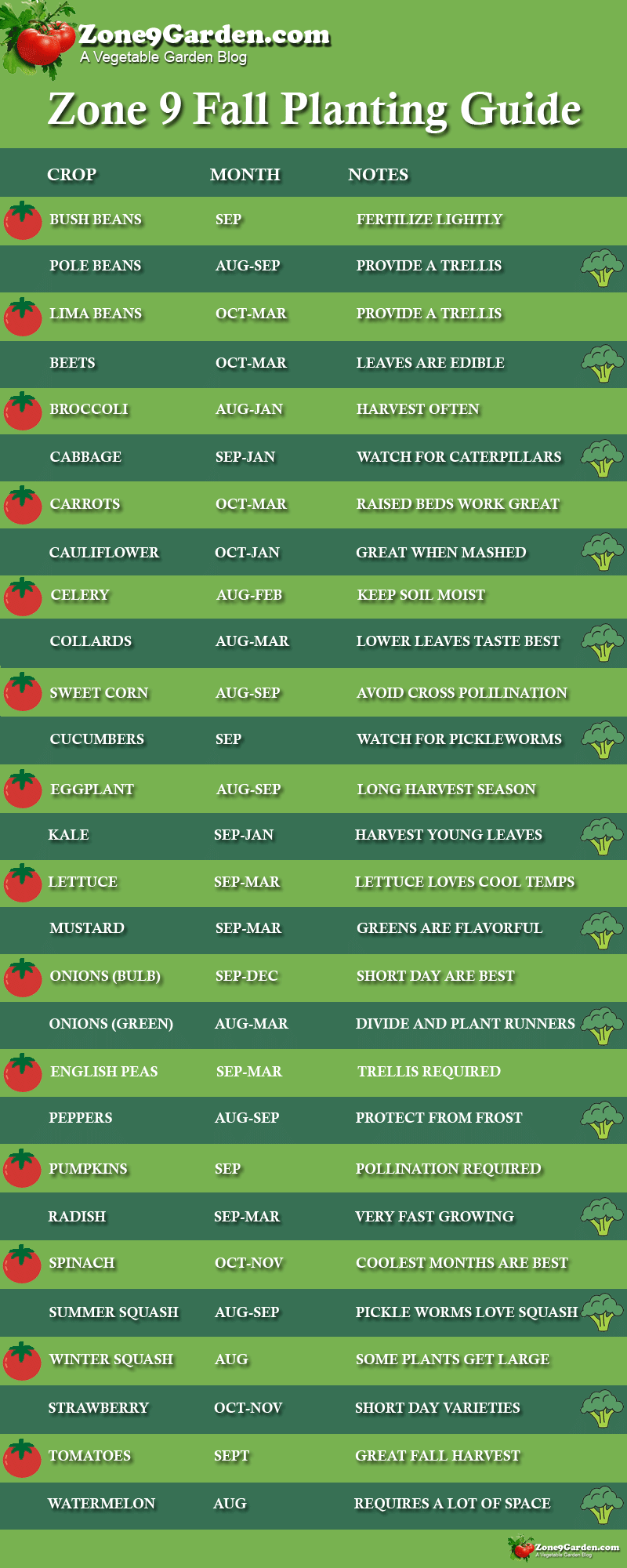
| Crop | Month to Plant | Recommended Varieties | Notes |
|---|---|---|---|
| Bush Beans | September | Bush Blue Lake, Cherokee Yellow Wax | Fertilize lightly. |
| Pole Beans | August–September | Kentucky Wonder, Blue Lake | Support for vines required. |
| Lima Beans | September | Henderson, Jackson Wonder | Provide a trellis. |
| Beets | October–March | Early Wonder, Cylindra, Red Ace | Leaves are edible. |
| Broccoli | August–January | Early Green, Waltham, Packman | Harvest often for better production. |
| Cabbage | September–January | Rio Verde, Red Acre | Caterpillars love this crop. |
| Carrots | October–March | Imperator, Danvers, Chantenay | Raised beds work best. |
| Cauliflower | October–January | Snowball, Snow Crown | Some varieties produce green heads. |
| Celery | August–February | All Utah Strains | Keep soil consistently moist for germination. |
| Collards | August–March | Georgia Southern, Top Bunch | Harvest lower leaves first. |
| Sweet Corn | August–September | Silver Queen, Sweet Ice, Early Sunglow | Avoid cross-pollination between varieties. |
| Cucumbers | September | Poinsett, Ashley, Eureka | Watch for pickleworms. |
| Eggplant | August–September | Black Beauty, Cloud Nine | Produces over a long harvest season. |
| Kale | September–January | Dwarf Blue Curled, Redbor | Harvest young leaves for the best flavor. |
| Lettuce | September–March | Great Lakes, Tom Thumb, Salad Bowl | Crisphead varieties perform best in cool weather. |
| Mustard | September–March | Southern Giant, Green Wave | Grow for greens or seeds. |
| Onions (Bulbing) | September–December | Granex | Short-day varieties are best for Florida. |
| Onions (Green) | August–March | Evergreen Bunching, White Lisbon | Harvest continuously as needed. |
| English Peas | September–March | Green Arrow, Sugar Snap | Trellis is required. |
| Peppers | August–September | Most sweet and hot varieties | Can produce into early summer. |
| Pumpkins | September | Big Max, Jack Be Little | Requires good pollination. |
| Radishes | September–March | Cherry Belle, Sparkler | Very fast-growing. |
| Spinach | October–November | Melody, Space | Performs best during the coolest months. |
| Summer Squash | August–September | Early Prolific, Summer Crookneck | Pickleworms are a common problem. |
| Winter Squash | August | Spaghetti, Table Queen | Monitor for pickleworms as with summer squash. |
| Strawberries | October–November | Chandler, Camarosa | Choose short-day varieties. |
| Tomatoes | September | Many varieties perform well | Can be grown nearly year-round in Zone 9. |
| Turnips | September–November | Purple Top, White Globe | Both roots and greens are edible. |
| Watermelon | August | Jubilee, Crimson Sweet, Sugar Baby | Requires plenty of space to spread. |
Many of the crops listed will also grow in the winter, spring and sometimes
the summer. These are just a few recommendations that work well as fall
crops!