
Spinach
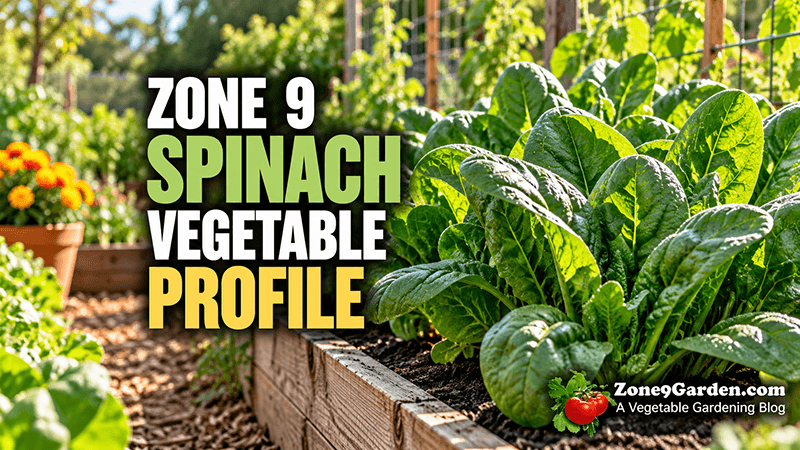
Spinach is a fast-growing, cool-season leafy vegetable in the Amaranthaceae family. It is grown for tender edible leaves and occurs in savoy, semi-savoy, and smooth-leaf types. Spinach performs best in fertile, well-drained soil with consistent moisture and cool temperatures; warm weather quickly encourages bolting and reduces leaf quality.
Zone 9 is especially well suited to fall, winter, and early-spring spinach production. UF/IFAS lists spinach planting from September through March in North and Central Florida and October through February in South Florida. UC ANR reports an ideal growth range of about 40–75°F, with fastest growth around 60–65°F. Arizona Extension likewise recommends spinach as a cool-season crop and notes that air temperatures above about 80°F reduce seed germination and accelerate bolting.

Planting Windows for Zone 9
| Stage | Spring | Fall |
|---|---|---|
| Start Indoors | Dec 15 – Jan 31 | Aug 1 – Sep 15 |
| Direct Sow | Jan 1 – Mar 15 | Sep 1 – Dec 15 |
| Transplant | Jan 15 – Mar 15 | Sep 15 – Dec 1 |
| Harvest | Feb 15 – May 15 | Oct 15 – Mar 31 |
Recommended Spinach Varieties
Melody — Semi-savoy spinach recommended by UF/IFAS and Arizona Extension; dependable for cool-season gardens.
Bloomsdale Longstanding — Traditional savoy spinach recommended by UF/IFAS and UC ANR sources; valued for crinkled leaves and cool-weather performance.
Tyee — Semi-savoy hybrid recommended by UF/IFAS; widely used for fall and winter production.
Space — Smooth-leaf hybrid recommended by UF/IFAS and UC ANR; suitable for fresh use and baby-leaf harvest.
Olympia — Spinach variety recommended by Arizona Extension; useful for cool-season home gardens.
Teton — Spinach variety recommended by Arizona Extension.
Corvair — Spinach variety included in UC ANR regional recommendations.
Ashley — Semi-savoy hybrid included in current UF/IFAS spinach cultivar recommendations.
Fertilizer Schedule
Incorporate finished compost or organic matter and apply fertilizer according to a soil test. If the soil has not been amended with organic matter, use a modest balanced fertilizer containing nitrogen and phosphorus before planting.
Direct sow into moist soil and keep the seedbed evenly moist. Use starter fertilizer only if soil fertility is low; avoid concentrated fertilizer directly against seeds or young plants.
Apply a light nitrogen side-dressing and water it in. UC ANR specifically recommends nitrogen at this growth stage.
Repeat only light nitrogen applications where plant color, growth rate, sandy soil, prolonged harvest, or nutrient-leaching rainfall indicates a need.
Avoid heavy late fertilizer applications intended to force growth once heat is pushing plants toward bolting. Maintain even moisture and harvest promptly.
Planting Details
0.5 inch
3–4 inches; 3–6 inches is acceptable for larger plants
14–24 inches; UF/IFAS allows 12–36 inches depending on production system
7–12 days under good growing conditions; around 10 days can occur in cool soil near 40°F
65–75°F optimum
32°F biological germination minimum; 40°F+ preferred for practical planting
65–75°F optimum for germination; about 50–65°F is excellent for cool-season establishment
Growing Requirements
Full sun to light partial shade; at least 4–6 hours of sun daily
Frequent, consistent moisture because spinach is shallow rooted; keep soil evenly moist without saturation and avoid prolonged leaf wetness after emergence.
Fertile, well-drained sandy loam or loam rich in organic matter; spinach is sensitive to saturated or poorly drained soil.
6.0–6.5
Moderate-to-heavy nitrogen feeder for rapid leafy growth; maintain balanced fertility and avoid excessive fertilizer contact with leaves or stems.
Preplant compost/soil-test fertilizer → direct sow or transplant → light nitrogen side-dressing when plants reach about 3–4 inches tall or after thinning → repeat light nitrogen every 3–4 weeks only if continued growth, plant color, sandy soil, or nutrient leaching indicates a need.
Top 5 Common Spinach Pests
Fall–Spring; often increase during mild weather
Colonies feed on tender leaves and the crown, causing curling, yellowing, reduced vigor, sticky honeydew, and contamination of harvested leaves. Aphids can also transmit virus diseases.
Fall–Spring; especially during mild weather
Larvae tunnel between leaf surfaces and create winding pale or translucent mines. Heavy mining reduces photosynthetic area and makes leaves unmarketable or unusable.
Fall–Spring; seedlings and young plants are especially vulnerable
Cutworms may sever seedlings at or below the soil line, while loopers and other caterpillars chew irregular holes in leaves and can feed in the plant crown. Heavy infestations may stunt or kill young plants and contaminate foliage.
Fall–Spring; greatest on seedlings and young plants
Adults chew many small round shot holes in leaves. Heavy feeding can stunt or weaken seedlings before they become well established.
Cool, wet periods; often Fall–Spring
Tiny mites feed deep in the plant crown on newly expanding leaves. Damage appears as distorted new growth or small holes in young leaves and can be serious on seedlings or slow-growing plants.
Top 5 Common Spinach Diseases
Cool, wet or humid weather; Fall–Spring
Yellow to light-green spots develop on upper leaf surfaces, while purple-gray downy growth may appear beneath the leaves. Lesions enlarge, become tan and dry, and severe infection can curl, distort, or blight foliage.
Seedling stage and cool or poorly drained wet soil
Seeds may fail to germinate, newly emerged seedlings may collapse, and older plants may become stunted, yellow, wilted, or die. Infected roots can appear water-soaked or brown to black.
Cool-to-mild wet weather; often worse during rainy periods
Small circular water-soaked leaf lesions enlarge and turn tan to brown and papery. Severe infections cause lesions to merge and blight large portions of the leaf.
Mild-to-warm weather with leaf wetness
Small circular to oval gray-green spots enlarge and turn tan. Older spots may merge, dry, and become papery, reducing usable leaf area and harvest quality.
Fall–Spring; especially when insect vectors are active
Leaves may develop yellowing, mottling, mosaic patterns, ringspots, puckering, curling, necrotic spots, or stunting. Some infections damage the crown and substantially reduce usable foliage.
Zone 9 Weather Patterns
Spinach performs best during the coolest part of the Zone 9 growing season. Temperature and moisture strongly influence germination, leaf quality, disease pressure, and bolting.
Established spinach can be injured by severe or prolonged freezes, although intermediate-size plants are quite cold tolerant.
Spinach tolerates frost well and remains a strong cool-season crop.
Biological minimum for seed germination according to UC ANR.
Practical cool-soil planting threshold used by Arizona Extension; germination is slower but reliable with good moisture.
Optimum seed-germination range.
Favorable growth range; growth is fastest around 60–65°F.
Bolting risk rises quickly and seed germination declines.
Greater risk of bolting, tough or bitter leaves, wilting, and reduced leaf quality.
Greater risk of downy mildew, damping-off, root rot, anthracnose, and leaf spots.
Can produce tough leaves, slower development, and off-flavors; maintain even soil moisture.
Harvest
40 days
Spring: February 15 – May 15
Fall/Winter: October 15 – March 31
Leaves are large enough for the intended use, deep green, tender, and still produced from a compact vegetative crown. Harvest before the center begins elongating into a flower stalk because bolting quickly reduces tenderness and eating quality.
Harvest individual outer leaves while plants are young, leaving the crown intact for continued growth, or cut the entire mature plant near the soil line. Harvest promptly as temperatures rise because spinach bolts rapidly in warm weather. Succession sowing every 2–3 weeks during cool weather can extend the harvest.
Crop Relationships
Amaranthaceae — Amaranth / Beet Family
Amaranthaceae / Leafy Greens
Sweet Alyssum
Cilantro
Dill
Calendula
Marigolds
Swiss Chard
Beets
Quinoa
Amaranth
Other Spinach
Helpful Links
- How to Grow Spinach — Read Zone9Garden.com’s existing spinach guide for additional planting, care, and harvesting information.
- Zone 9 Planting Calendar: What to Plant Every Month — Use the year-round calendar to plan spinach and other cool-season crops throughout the Zone 9 growing year.
- Zone 9 Fall Planting Guide — Plan spinach alongside other leafy greens and cool-season vegetables during the productive fall growing season.
- What to Plant in September in Zone 9 — Prepare for the transition from summer heat into the cool-season garden.
- Reset Your Zone 9 Garden for Fall — Prepare beds, improve soil, and plan crop rotation before planting spinach and other fall vegetables.
The crop data presented in this guide represents standardized Zone 9 values derived from and averaged across guidance from UF/IFAS Extension, Texas A&M AgriLife Extension, University of Arizona Cooperative Extension, and UC Agriculture & Natural Resources. USDA establishes the Zone 9 plant-hardiness framework. Recommendations may vary by local climate, cultivar, soil conditions, microclimate, and individual growing conditions.