
Beet
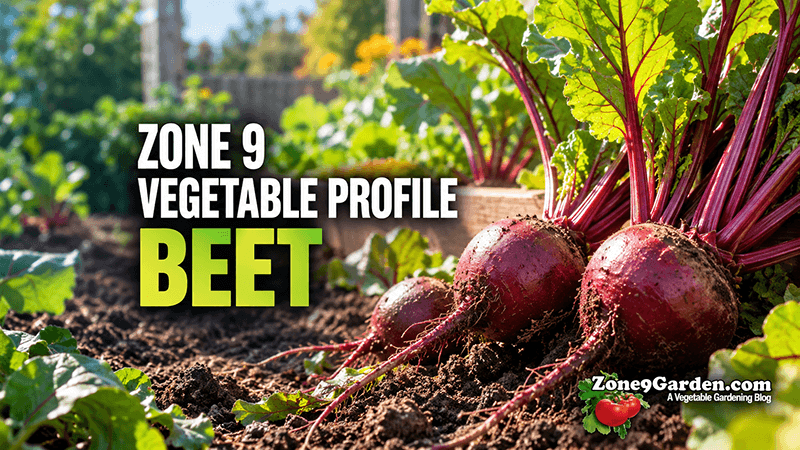
Beet is a cool-season root vegetable in the Amaranthaceae family, grown for both its swollen storage root and edible leafy tops. Beets perform best in loose, fertile, well-drained soil with even moisture and cool temperatures.
Zone 9 is well suited to fall, winter, and early-spring production. UF/IFAS lists outdoor beet planting from September through March in North Florida, September through February in Central Florida, and October through January in South Florida. Texas A&M notes that beets grow well in spring and fall and can be grown all winter in many South Texas areas. UC ANR notes best growth near 60–65°F and that warm conditions can reduce root quality.
Planting Windows for Zone 9
| Stage | Spring | Fall |
|---|---|---|
| Start Indoors | Not Recommended | Not Recommended |
| Direct Sow | Jan 1 – Mar 15 | Aug 15 – Nov 30 |
| Transplant | Not Recommended | Not Recommended |
| Harvest | Feb 15 – May 31 | Oct 15 – Mar 31 |
Recommended Beet Varieties
Detroit Dark Red — Classic red beet recommended by UF/IFAS, Texas A&M, and UC ANR.
Early Wonder — Early red beet recommended by UF/IFAS and UC ANR.
Red Ace — Uniform red beet recommended by UF/IFAS and Texas A&M.
Chioggia — Italian heirloom with red-and-white interior rings; recommended by UF/IFAS, Texas A&M, and UC ANR.
Cylindra (Formanova) — Long cylindrical beet recommended by UF/IFAS and UC ANR.
Ruby Queen — Round red beet recommended by Texas A&M and UC ANR.
Golden / Yellow Detroit — Golden-rooted beet recommended by UF/IFAS and UC ANR.
Bull’s Blood — Dark-leaved beet recommended by UC ANR; useful for both roots and baby greens.
Fertilizer Schedule
Incorporate finished compost or organic matter and apply fertilizer according to a soil test. Texas A&M recommends a complete fertilizer before planting where needed. Avoid excessive nitrogen, which can favor tops over roots.
Direct sow into loose, moist soil. Maintain steady seedbed moisture because poor moisture at seeding can reduce emergence. Keep concentrated fertilizer away from seed.
Apply a light side-dressing if needed. Texas A&M specifically recommends a supplemental fertilizer application when beet plants are about 4–6 inches tall.
Maintain even moisture and balanced fertility. Avoid heavy nitrogen applications that encourage excessive top growth. Correct boron only when a soil test or local Extension recommendation indicates deficiency.
Routine additional feeding is usually unnecessary in fertile, well-prepared soil. Use a light supplemental feeding only if plants are pale, soil is very sandy, or heavy rainfall has caused nutrient leaching.
Planting Details
0.5 inch; UF/IFAS allows 0.5–1 inch
2–4 inches after thinning; 3 inches is a useful standard for full-size roots
12–18 inches for home-garden rows
5–10 days under favorable conditions; 7–14 days is common in cooler soil
65–85°F optimum; about 77°F gives very rapid emergence
40°F biological germination minimum
50–75°F for cool-season establishment; 65–85°F is optimum for seed germination
Growing Requirements
Full sun, 6+ hours daily; tolerates partial shade.
Keep soil evenly moist through germination and root enlargement; water deeply about weekly when rainfall is insufficient and avoid repeated drying that can reduce root quality.
Deep, loose, well-drained sandy loam or loam with good organic matter; avoid compacted, crusted, rocky, or waterlogged soil.
6.0–7.0; about 6.5 is an excellent target.
Moderate feeder; use balanced fertility based on a soil test, avoid excessive nitrogen, and address boron only when soil testing or local Extension guidance indicates deficiency.
Preplant compost/soil-test fertilizer → direct sow into prepared soil → light side-dressing when plants are about 4–6 inches tall → additional feeding usually unnecessary unless prolonged production, pale growth, sandy soil, or nutrient-leaching rainfall indicates a need.
Top 5 Common Beet Pests
Season / Timing: Fall–Spring; often active during mild weather
Symptoms / Damage: Larvae tunnel between leaf surfaces, leaving winding pale or silvery mines. Heavy mining reduces leaf area, weakens plants, and can make beet greens unusable. UC ANR identifies leafminer as the most common home-garden beet pest.
Season / Timing: Fall–Spring; greatest on seedlings and young plants
Symptoms / Damage: Adults chew numerous tiny round shot holes in leaves. Heavy feeding can weaken seedlings and reduce leaf area needed for root development. Texas A&M specifically lists flea beetles as beet pests.
Season / Timing: Fall–Spring; populations often increase during mild weather
Symptoms / Damage: Aphids cluster on leaf undersides and suck plant sap, causing curling, yellowing, reduced vigor, and sticky honeydew. Some aphids can also transmit plant viruses. Texas A&M lists aphids as common beet pests.
Season / Timing: Spring–Fall; often more active as weather warms
Symptoms / Damage: Green caterpillars with dark side stripes feed on foliage, creating irregular holes and sometimes stripping large portions of leaves. Texas A&M specifically identifies beet armyworm as a beet pest.
Season / Timing: Spring–Fall
Symptoms / Damage: Larvae feed on young beet leaves, producing ragged chewing damage and sometimes webbing foliage together. Heavy feeding can stunt young plants. Texas A&M specifically lists webworms among beet pests.
Top 5 Common Beet Diseases
Season / Timing: Warm, humid or wet weather; often late spring through fall
Symptoms: Small circular tan-to-light-brown spots with reddish-purple borders form on leaves. Spots can merge, causing yellowing, necrosis, and leaf collapse. Warm nights, high humidity, and prolonged leaf wetness favor disease.
Season / Timing: Spring–Fall; especially when beet leafhoppers are active
Symptoms: Leaves become dwarfed, crinkled, thickened, and rolled upward or inward. Veins may become swollen, plants are stunted, and roots may become distorted with dark vascular rings. Arizona Extension documents curly top disease in table beets.
Season / Timing: Seedling stage; wet soil, especially as soils warm
Symptoms: Seed may decay before emergence or seedlings develop dark root/crown lesions, wilt, and die. Pythium, Rhizoctonia, and Aphanomyces can be involved. Risk rises with excess soil moisture and slow emergence.
Season / Timing: Spring–Summer; warm, moist, poorly drained soil
Symptoms: Plants may suddenly yellow and wilt. Roots develop brown dry rot with deep fissures near the crown; severe infections can destroy the root and crown.
Season / Timing: Mild-to-warm dry weather with moderate humidity
Symptoms: White powdery spots develop on older leaves and may spread across the leaf surface. Heavily infected leaves yellow, become necrotic, and die. UC ANR notes table beets and other Beta species can host the pathogen.
Zone 9 Weather Patterns
Cool conditions generally produce the best beet growth and root quality. Temperature, moisture, and humidity can substantially affect germination, root development, bolting, and disease pressure.
Significant freeze injury can occur, especially to young growth and exposed roots.
Established beets tolerate frost and mild freezes well.
Minimum soil temperature for beet seed germination.
Strong seedling emergence and good cool-season establishment.
UC ANR optimum seed-germination range; emergence is very rapid near 77–86°F.
Excellent general growth and root-quality conditions.
Root quality may decline and warm conditions can promote zoning, stronger flavor, and bolting.
Greater risk of tough roots, poor texture, uneven growth, and bolting.
Greater risk of Cercospora leaf spot, damping-off, and root rots.
Can reduce root quality; maintain even moisture for smooth, tender roots.
Harvest
Days to Maturity:
50–70 days from seed; about 60 days is a useful average.
Harvest Window:
Spring: February 15 – May 31
Fall/Winter: October 15 – March 31
Harvest Indicators:
Roots are typically ready when about 1.5–2.5 inches in diameter for standard table beets, depending on cultivar. Roots should be firm and tender before becoming oversized, woody, or strongly ringed. Young leaves can be harvested earlier as greens.
Harvest Instructions:
Pull whole plants when roots reach the desired size. Loosen compact soil first if needed. Cut tops off leaving about 1 inch of stem for storage and refrigerate roots promptly. Harvest before prolonged heat causes toughness, white zoning, or bolting.
Crop Relationships
Amaranthaceae — Amaranth / Beet Family
Amaranthaceae / Root Crops
Onions
Kohlrabi
Sweet Alyssum
Dill
Calendula
Swiss Chard
Spinach
Quinoa
Amaranth
Other Beets
Helpful Links
- Zone 9 Planting Calendar: What to Plant Every Month — Use the year-round calendar to place beets within your local Zone 9 growing season.
- Zone 9 Fall Planting Guide — Plan beets alongside other cool-season fall and winter vegetables.
- Succession Planting in Zone 9 — Learn how repeated sowings can extend the harvest from quick-growing crops such as beets.
- Texas A&M AgriLife Extension: Beets — Extension guidance on planting, fertilizing, watering, harvesting, and common beet problems.
The crop data presented in this guide represents standardized Zone 9 values derived from and averaged across guidance from UF/IFAS Extension, Texas A&M AgriLife Extension, University of Arizona Cooperative Extension, and UC Agriculture & Natural Resources. USDA establishes the Zone 9 plant-hardiness framework. Recommendations may vary by local climate, cultivar, soil conditions, microclimate, and individual growing conditions.