
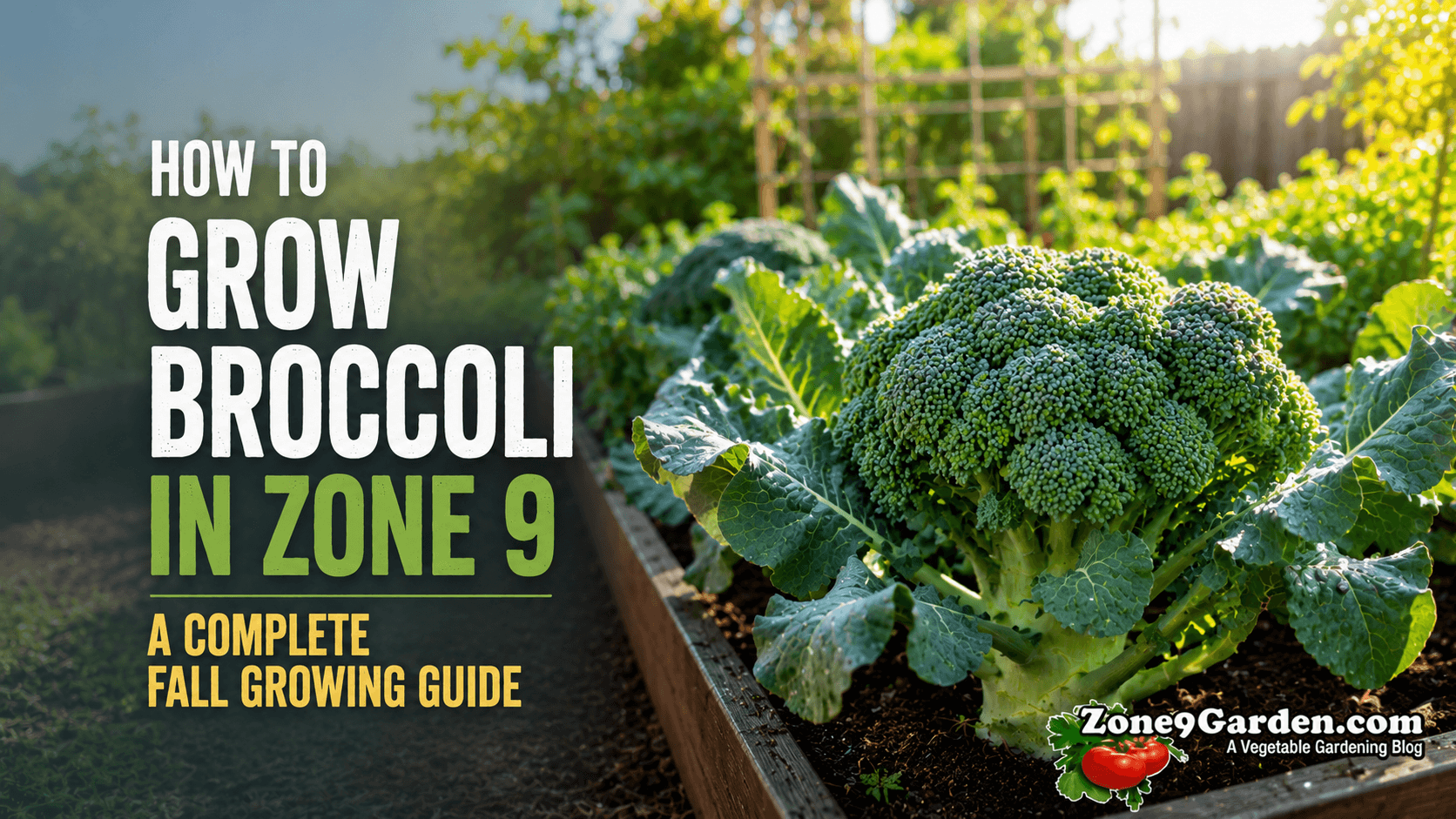
Growing broccoli in Zone 9 can be incredibly rewarding, but timing makes all the difference.
Broccoli loves cool weather. Unfortunately, gardeners in Zone 9 often have plenty of heat and a relatively short stretch of truly cold weather. Plant broccoli too early, and young plants may struggle through late-summer heat. Plant too late, and your broccoli may not have enough time to produce large, healthy heads during the best growing conditions.
The solution is to treat broccoli primarily as a fall and winter vegetable rather than a traditional spring crop.
Once you understand when to start seeds, how to protect young plants from heat, and what broccoli needs as temperatures cool, it can become one of the most productive vegetables in your Zone 9 garden.
In this complete guide, we’ll cover how to grow broccoli in Zone 9, including planting dates, starting seeds, soil preparation, watering, fertilizing, pest control, harvesting, and what to do after you cut the main broccoli head.
Why Broccoli Grows So Well in Zone 9 During Fall
Broccoli is a cool-season member of the brassica family, along with cabbage, cauliflower, kale, collards, Brussels sprouts, and several other familiar garden vegetables.
Unlike tomatoes, peppers, cucumbers, and squash, broccoli doesn’t appreciate hot weather.
That’s why fall can be such a productive broccoli-growing season in Zone 9.
You can start plants while temperatures are still warm and then allow them to mature as daytime and nighttime temperatures gradually become cooler.
Broccoli generally performs best during mild weather. Established plants can tolerate some cold, but prolonged heat can create problems.
When broccoli experiences excessive heat, you may notice:
- Small heads
- Loose heads
- Rapid flowering
- Bitter or stronger flavors
- Stressed plants
- Poor overall production
Getting the timing right allows the plant to establish itself before the best head-forming weather arrives.
Best Time to Plant Broccoli in Zone 9
If you want to grow broccoli in Zone 9, your planting calendar will look very different from one designed for northern gardeners.
Instead of concentrating primarily on spring, you’ll usually want to concentrate on late summer and fall.
Exact planting dates vary considerably across Zone 9 because USDA hardiness zones describe average minimum winter temperatures—not summer heat, humidity, rainfall, or your first frost date.
As a general starting point:
July through August: Start fall broccoli seeds indoors or in a protected location.
August through September: Continue starting seeds and begin transplanting established seedlings when conditions are appropriate.
September through October: Prime transplanting season in many Zone 9 gardens.
Late fall and winter: Continue harvesting established broccoli plants and their side shoots.
Gardeners in particularly warm Zone 9 locations may need to shift the schedule later. Areas with earlier freezes may need to start sooner.
Your local weather should always take priority over a calendar.
If temperatures are still consistently in the 90s, don’t rush small broccoli seedlings into an exposed garden bed simply because a planting calendar says it’s time.
Should You Grow Broccoli From Seeds or Transplants?
You can successfully grow broccoli either way.
Buying transplants is certainly easier.
Starting broccoli from seed, however, gives you access to many more varieties and makes succession planting much more affordable.
Starting Broccoli From Seed
For a fall garden, start broccoli seeds several weeks before you expect to transplant them.
Use a clean seed-starting mix and containers with good drainage.
Plant the seeds approximately 1/4 to 1/2 inch deep, lightly cover them, and keep the growing medium consistently moist without keeping it waterlogged.
One of the challenges with starting fall broccoli is temperature.
You’re trying to germinate a cool-season vegetable during one of the hottest portions of the Zone 9 gardening year.
Don’t leave seed trays baking in intense afternoon sunshine.
A bright, protected location can make seed starting much easier. Once seedlings emerge, provide plenty of light so they develop strong stems rather than becoming tall and leggy.
Growing Broccoli From Transplants
Buying broccoli transplants can save several weeks.
Look for compact, healthy plants with:
- Deep green leaves
- Sturdy stems
- No visible insects
- No yellowing foliage
- No signs of disease
- Roots that aren’t severely crowded
Bigger isn’t necessarily better.
A healthy, moderately sized transplant can establish faster than an oversized plant that has spent too long in a small nursery pot.
Hardening Off Broccoli Seedlings
Don’t take broccoli seedlings from a protected environment and immediately plant them in full Zone 9 sunshine.
They need time to adjust.
Gradually expose seedlings to outdoor conditions over approximately a week.
Start with a protected location and relatively short periods outdoors. Gradually increase their exposure to sunlight and wind.
Fall broccoli seedlings may need particular protection from intense afternoon sun.
Even though broccoli likes full sun once established during cooler weather, a young transplant placed into a hot garden in August can become stressed surprisingly quickly.
Choosing the Best Location for Broccoli
Broccoli performs best with plenty of sunlight.
During cool fall and winter weather, choose a location receiving at least six hours of direct sunlight whenever possible.
However, late-summer conditions create an interesting challenge.
Temporary afternoon shade can benefit newly transplanted broccoli when temperatures remain high.
You can use shade cloth while plants establish and remove it as temperatures become more favorable.
Avoid permanently placing broccoli in a heavily shaded location simply because the weather is hot when you transplant it. Remember that the same garden may receive much less sunlight as the days shorten.
Preparing Soil for Broccoli
Broccoli is a relatively heavy feeder.
Rich, fertile, well-draining soil gives plants the foundation they need to produce large leaves and healthy heads.
Before planting, work finished compost into the bed.
A layer of approximately 1 to 2 inches of good-quality compost is a reasonable starting point for many established garden beds, although the amount your garden needs depends on its existing soil.
Broccoli generally prefers soil that is slightly acidic to neutral, roughly around pH 6.0 to 7.0.
A soil test is far better than guessing.
Testing can tell you whether you actually need fertilizer, lime, or other amendments before you plant.
Avoid continuously adding products simply because they’re commonly recommended for vegetable gardens. Excessive nutrients can cause problems just as deficiencies can.
Drainage Matters
Broccoli appreciates consistent moisture but doesn’t want roots sitting in waterlogged soil.
This can be particularly important in humid or rainy Zone 9 climates.
Raised beds can be useful where native soil drains poorly.
Adding organic matter can also improve soil structure over time.
How to Plant Broccoli
Once seedlings are hardened off and weather conditions are reasonable, they’re ready for the garden.
Dig a hole approximately the size of the plant’s root ball.
Carefully remove the transplant without unnecessarily disturbing its roots and place it at approximately the same depth it was growing in its container.
Firm the soil gently around the plant and water thoroughly.
Broccoli Spacing
Give your broccoli room to grow.
For large heads, spacing plants approximately 18 to 24 inches apart is a good general guideline.
Crowded broccoli plants compete for sunlight, moisture, nutrients, and airflow.
You may fit more plants into a bed by reducing spacing, but you’ll often end up with smaller plants and smaller heads.
Good spacing also improves airflow, which can help reduce some disease problems.
Mulching Broccoli
Mulch is especially useful when growing fall broccoli in Zone 9.
Apply a layer of organic mulch around established plants using materials such as:
- Straw
- Shredded leaves
- Pine straw
- Untreated grass clippings
- Other suitable organic mulch
Keep mulch slightly away from the plant’s stem rather than piling it directly against it.
Mulch helps maintain consistent soil moisture and suppress weeds.
More importantly during late summer and early fall, it helps insulate the soil from extreme temperature fluctuations.
How Much Water Does Broccoli Need?
Consistency is more important than constantly watering.
Broccoli needs adequate moisture to support its large leaves and developing heads.
As a broad guideline, vegetable gardens often need around 1 to 1½ inches of water per week, including rainfall, but your actual irrigation needs will depend on temperature, soil type, wind, rainfall, mulch, and the maturity of your plants.
Check the soil rather than automatically turning on the irrigation system.
Water deeply enough to encourage a strong root system.
Water in the Morning
Morning is usually the best time to irrigate.
It gives foliage a chance to dry and provides plants with moisture before the warmest part of the day.
Drip irrigation or soaker hoses are excellent options because they deliver water directly around the root zone.
Try to avoid keeping foliage wet for extended periods, particularly overnight.
Fertilizing Broccoli in Zone 9
Broccoli needs nutrients to produce vigorous leaves and large heads, but more fertilizer doesn’t automatically mean more broccoli.
Start with your soil test whenever possible.
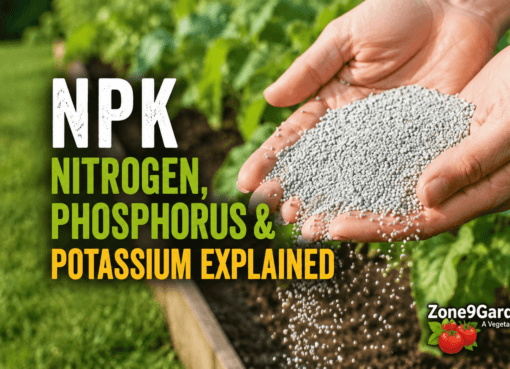
If fertilizer is needed, use a product appropriate for vegetable gardens and follow its label instructions.
Nitrogen is particularly important for leafy growth during the early portion of broccoli’s development.
However, excessive fertilization can create overly lush plants and nutrient imbalances.
The goal isn’t to force the plant to grow as quickly as possible.
The goal is steady, healthy growth.
If you’ve amended the bed with quality compost and your soil is already fertile, you may need considerably less supplemental fertilizer than someone gardening in nutrient-poor soil.
Growing Broccoli During Hot Fall Weather
This is where growing broccoli in Zone 9 differs significantly from growing it farther north.
Your calendar might say fall.
Your thermometer might strongly disagree.
If you’ve transplanted broccoli and another stretch of 90-degree weather arrives, reduce heat stress wherever possible.
Use Temporary Shade
Shade cloth can protect young plants from intense afternoon sunshine.
You don’t necessarily need to shade broccoli throughout the entire day. Reducing the harshest late-day sun can make a substantial difference.
Remove or reduce the shading once cooler weather arrives.
Keep Soil Mulched
Mulch reduces evaporation and helps moderate soil temperature.
Maintain Consistent Moisture
Heat-stressed plants dry out faster.
Check young transplants regularly, but don’t respond by keeping the soil constantly saturated.
Common Broccoli Pests in Zone 9
One downside to the mild Zone 9 climate is that insect pests can remain active well into fall.
Broccoli is particularly attractive to several pests.
Cabbage Worms and Caterpillars
If something is chewing large holes in your broccoli leaves, caterpillars should be among your first suspects.
Inspect plants frequently.
Look at both sides of the leaves, especially the undersides.
Small caterpillars are much easier to control before their population grows.
Hand-picking can be very effective in a small garden.
Floating row covers can also help prevent adult moths and butterflies from laying eggs on young plants. Install covers before pests arrive and secure the edges.
If you use an insect-control product, make sure it’s specifically labeled for the pest and for use on broccoli, and follow all label directions.
Aphids
Aphids are small, soft-bodied insects that may gather in clusters on broccoli leaves and developing heads.
Small populations can sometimes be knocked from plants with a strong stream of water.
Beneficial insects can also help keep aphid populations under control.
Check broccoli regularly so you discover an infestation before aphids become embedded throughout a developing head.
Other Broccoli Problems
Not every broccoli problem is caused by insects.
Small Broccoli Heads
Small heads can result from several factors, including:
- Heat
- Poor soil fertility
- Crowding
- Transplant stress
- Inconsistent watering
- Variety characteristics
Broccoli Flowering Too Quickly
When broccoli heads begin loosening and producing yellow flowers, the plant is moving beyond the ideal harvest stage.
Hot weather can accelerate this process.
Harvest heads while the buds remain tight.
Yellow Leaves
An occasional older yellow leaf isn’t necessarily a problem.
Widespread yellowing can indicate excessive moisture, nutrient problems, root stress, disease, or other issues.
Look at the entire plant and its growing conditions before reaching for fertilizer.
When to Harvest Broccoli
This is the moment you’ve been waiting for.
Harvest the main broccoli head when it reaches a useful size and the individual flower buds are still tight and compact.
Don’t wait for the head to become enormous.
If the buds begin separating, loosening, or showing yellow flowers, you’ve waited too long for peak quality.
Use a clean, sharp knife and cut the central head with several inches of stem attached.
Make the cut carefully to avoid unnecessarily damaging the rest of the plant.
And most importantly:
Don’t pull the broccoli plant out of the garden.
Your harvest probably isn’t finished.
Don’t Forget the Broccoli Side Shoots
One of the best reasons to grow broccoli at home is something grocery-store shoppers rarely experience.
After you harvest the main head, many broccoli varieties begin producing smaller shoots from the sides of the plant.
These side shoots won’t normally become as large as the original head, but there can be lots of them.
Continue watering and caring for the plant.
Harvest side shoots regularly while their buds remain tight.
Depending on the variety and weather, a healthy plant can continue producing for weeks.
That means one broccoli plant can provide far more than a single harvest.
Succession Planting Broccoli
Don’t plant every broccoli seedling on the same afternoon.
Succession planting can extend your harvest dramatically.
Instead, consider planting another small group every two to three weeks during your appropriate local planting window.
For example, you might plant:
- First group in late August
- Second group in mid-September
- Third group in early October
Exact timing will depend on your location.
Succession planting also provides some insurance against unpredictable Zone 9 weather.
If an early planting struggles through unexpected heat, the next planting may experience ideal conditions.
Can You Grow Broccoli in Containers?
Absolutely.
Container gardening is a good option for gardeners with limited space.
Because broccoli becomes a substantial plant, give it plenty of room.
A container around 5 gallons or larger per plant provides a useful starting point, with larger containers offering more stable moisture and root space.
Make sure the container has drainage holes.
Use a high-quality potting mix rather than filling containers with native garden soil.
Container-grown broccoli may need more frequent watering because pots can dry out faster than garden beds.
Best Broccoli Varieties for Zone 9
When selecting broccoli for a fall garden, pay attention to days to maturity and heat tolerance.
Shorter-season varieties can be particularly useful because they allow you to fit production into the best portion of your cool season.
Varieties commonly grown by home gardeners include:
- Green Magic
- Belstar
- Packman
- Calabrese
- Waltham 29
Don’t select a variety based solely on its name or head size.
Read the seed packet and compare its maturity period with your expected weather.
Trying several varieties is one of the best ways to discover what performs consistently in your specific Zone 9 microclimate.
Frequently Asked Questions About Growing Broccoli in Zone 9
What month should I plant broccoli in Zone 9?
Late summer through fall is generally the primary broccoli planting period in Zone 9. Many gardeners start seeds during July and August and transplant during August, September, or October.
Exact timing depends on your local summer heat and expected winter temperatures.
Can broccoli survive winter in Zone 9?
Broccoli is a cool-season vegetable and established plants can tolerate light cold. Zone 9 winters are mild enough in many locations for broccoli to grow through a significant portion of winter.
However, Zone 9 still experiences freezes, and conditions vary substantially by location.
Can I grow broccoli in spring in Zone 9?
Yes, but timing can be difficult.
Broccoli needs enough time to mature before temperatures become consistently hot. This can create a narrow spring growing window in warmer Zone 9 locations.
For many gardeners, fall is the easier and more dependable season.
Does broccoli need full sun?
Broccoli generally performs best with at least six hours of direct sunlight during cool weather.
Young fall transplants may benefit from temporary afternoon protection while temperatures remain extremely hot.
How far apart should broccoli plants be?
Approximately 18 to 24 inches between plants is a good general spacing for gardeners trying to produce full-sized plants and heads.
Follow the recommendations for your particular variety when available.
Why isn’t my broccoli forming a head?
The plant may simply need more time.
If it’s mature enough that you expected a head, possible causes include excessive heat, stress, crowding, nutritional problems, or other unfavorable growing conditions.
Why is my broccoli head so small?
Small broccoli heads can result from heat stress, overcrowding, poor nutrition, inconsistent watering, transplant stress, or variety differences.
Should I remove broccoli after harvesting the main head?
Usually, no.
Leave the plant growing because many varieties produce edible side shoots after the main head has been removed.
Can broccoli tolerate frost?
Established broccoli can tolerate some cold weather and light frost, but hard or prolonged freezes can damage plants.
Protect plants when unusually cold weather is forecast for your area.
How many broccoli heads do you get from one plant?
A broccoli plant generally produces one main central head.
After harvesting it, many varieties produce multiple smaller side shoots that can be harvested over an extended period.
Grow Broccoli in Zone 9 for a Productive Fall Harvest
Learning how to grow broccoli in Zone 9 is mostly about learning to work with your climate rather than against it.
Don’t wait until cold weather arrives to begin thinking about broccoli.
Start preparing while summer is still underway. Get your seeds growing, prepare the soil, and have healthy transplants ready as temperatures begin moving in the right direction.
Remember the essentials:
- Start fall broccoli early enough to mature during cool weather.
- Protect young seedlings from extreme late-summer heat.
- Give plants rich, well-draining soil.
- Space plants adequately.
- Maintain consistent moisture without waterlogging the roots.
- Watch closely for cabbage worms and aphids.
- Harvest while the flower buds remain tight.
- Leave plants in the garden for additional side-shoot harvests.
- Use succession planting to extend your season.
Once you get the timing right, broccoli can become one of the most dependable vegetables in your Zone 9 fall and winter garden.
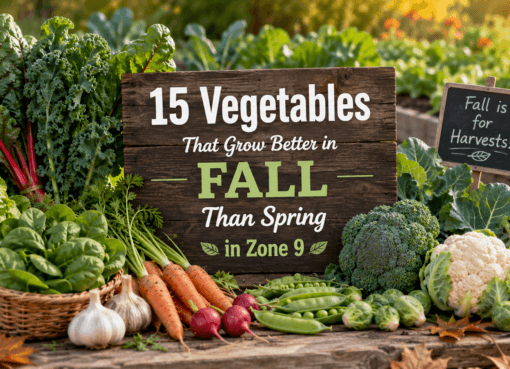
And don’t stop with broccoli. Use our Zone 9 Fall Planting Guide to plan the rest of your cool-season vegetable garden, including carrots, lettuce, kale, cabbage, onions, peas, radishes, spinach, and more.