
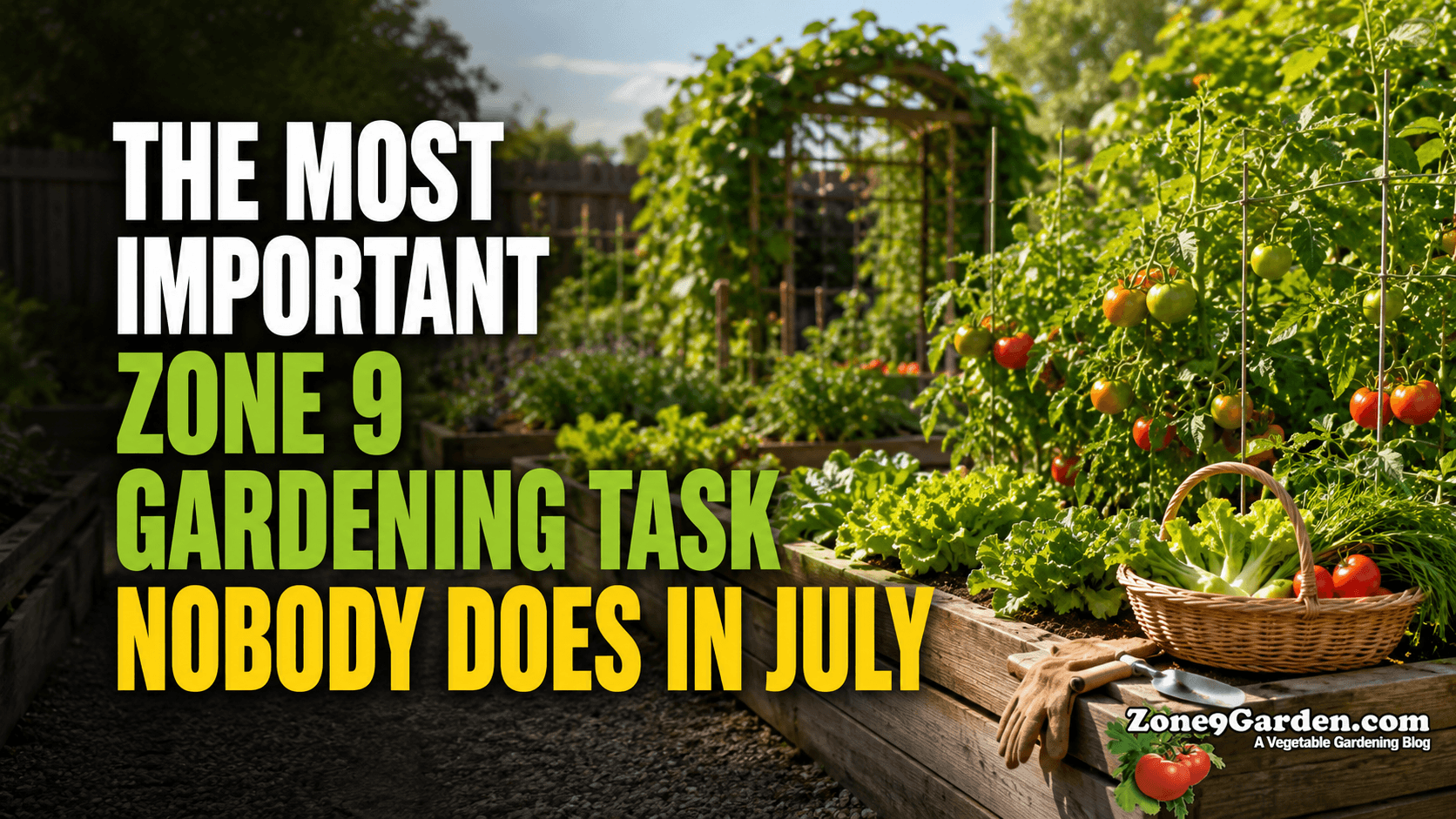
July is when Zone 9 gardens reveal their true character.
Tomatoes are producing heavily. Peppers are loaded with fruit. Basil seems unstoppable. Tropical flowers are thriving, and warm-season vegetables are finally delivering the harvest gardeners have been waiting for all year.
It’s also the month when many gardeners make a critical mistake.
They stop planning.
After months of planting, fertilizing, pruning, and harvesting, July often becomes a maintenance month. Gardeners water, weed, harvest, and try to survive the heat. The focus shifts entirely to keeping existing plants alive.
But the most successful Zone 9 gardeners know that July isn’t just about maintaining today’s garden.
It’s about preparing for tomorrow’s.
The single most important Zone 9 gardening task that almost nobody does in July is planning and preparing for the fall growing season.
While most gardeners wait until September or October to think about fall vegetables, the smartest growers begin their preparations in July. In warm climates, fall gardening doesn’t start when temperatures cool down—it starts weeks before.
By the time many gardeners begin thinking about broccoli, cabbage, carrots, lettuce, and other cool-season crops, they’re already behind.
Here’s why July preparation matters so much and exactly what you should be doing now.
Why July Is a Critical Month in Zone 9
Zone 9 gardening is different from gardening in cooler regions.
In many northern climates, gardening follows a straightforward pattern:
- Plant in spring
- Grow during summer
- Harvest in fall
- Rest during winter
Zone 9 gardeners operate on a completely different schedule.
Our summers are often too hot for many traditional vegetables. Temperatures regularly exceed 90°F, soil temperatures can reach well over 100°F, and many cool-season crops struggle or fail entirely during peak summer heat.
The result is that some of the best gardening weather of the year actually occurs in fall, winter, and early spring.
That means the fall garden isn’t an afterthought.
For many Zone 9 gardeners, it’s the main event.
The challenge is that successful fall gardens require preparation long before cooler temperatures arrive.
The Problem With Waiting Until Fall
Many gardeners make the same assumption every year:
“When the weather cools down, I’ll plant my fall garden.”
Unfortunately, that’s often too late.
Several important factors work against delayed planning:
Seed Availability
Popular varieties frequently sell out during late summer and early fall.
The gardeners who order seeds in July have access to the widest selection of:
- Broccoli
- Cauliflower
- Cabbage
- Kale
- Lettuce
- Spinach
- Carrots
- Beets
- Asian greens
Gardeners who wait until September may find their preferred varieties unavailable.
Seed Starting Timelines
Many cool-season crops need to be started well before ideal outdoor temperatures arrive.
For example:
- Broccoli often needs 6–8 weeks before transplanting
- Cabbage may require 5–7 weeks
- Cauliflower benefits from an early start
- Brussels sprouts need even longer
If you wait until temperatures cool, transplants may not mature before winter.
Garden Bed Preparation
Summer crops leave behind more than empty space.
They leave:
- Depleted soil
- Pest populations
- Disease pressure
- Weed seeds
- Compacted growing areas
Preparing beds properly takes time, especially during hot weather.
What Happens When You Prepare Early
The difference between a rushed fall garden and a planned fall garden is dramatic.
Gardeners who begin preparing in July often experience:
Better Germination
Seeds planted on schedule have more time to establish before temperature swings arrive.
Stronger Transplants
Early-started seedlings develop robust root systems and healthier growth.
Higher Yields
Plants that mature during ideal growing conditions produce significantly more than plants struggling to catch up.
Fewer Pest Problems
Strategic timing helps crops avoid peak pest pressure from insects that thrive in summer.
Longer Harvest Seasons
An earlier start often translates into weeks or even months of additional harvests.
Step 1: Evaluate Your Current Garden
July is the perfect time to conduct a garden assessment.
Walk through every bed and ask three simple questions:
What’s Thriving?
Identify plants that are performing exceptionally well.
Take notes on:
- Varieties
- Planting dates
- Productivity
- Disease resistance
These observations become valuable planning tools for future seasons.
What’s Struggling?
Not every crop succeeds every year.
July reveals:
- Heat-sensitive varieties
- Watering issues
- Pest vulnerabilities
- Poor-performing locations
Use this information to improve future planting decisions.
What Will Be Removed Soon?
Many summer crops begin declining before fall planting season arrives.
Make a list of:
- Finished cucumber vines
- Declining squash plants
- Bolting herbs
- Underperforming vegetables
These spaces represent future opportunities.
Step 2: Order Fall Seeds Now
This is where most gardeners fall behind.
July is not too early.
In fact, it’s often the ideal time.
Focus on crops that excel during Zone 9’s cooler months:
Brassicas
These include:
- Broccoli
- Cabbage
- Kale
- Collards
- Brussels sprouts
- Cauliflower
They thrive once temperatures begin moderating.
Root Vegetables
Excellent choices include:
- Carrots
- Beets
- Turnips
- Radishes
- Parsnips
Many develop sweeter flavor during cooler weather.
Leafy Greens
Some of the best fall performers are:
- Lettuce
- Spinach
- Arugula
- Swiss chard
- Mustard greens
- Asian greens
These crops often outperform their spring counterparts.
Herbs
Fall is ideal for:
- Cilantro
- Parsley
- Dill
- Chervil
These herbs frequently struggle during summer but flourish in cooler conditions.
Step 3: Improve Your Soil Before You Need It
One of the most overlooked July tasks is soil improvement.
Most gardeners wait until planting day.
Successful gardeners start weeks earlier.
Add Compost
Summer crops consume enormous amounts of nutrients.
Adding compost now allows organic matter to begin integrating into the soil.
Benefits include:
- Improved moisture retention
- Better drainage
- Increased microbial activity
- Enhanced nutrient availability
Test Soil Conditions
A simple soil test can reveal:
- pH imbalances
- Nutrient deficiencies
- Excess salts from irrigation
July provides enough lead time to correct problems before planting season.
Mulch Empty Areas
Protecting exposed soil reduces:
- Moisture loss
- Weed germination
- Soil temperature extremes
- Erosion
Healthy fall gardens often begin with protected summer soil.
Step 4: Create a Fall Planting Calendar
One reason gardeners miss fall opportunities is poor timing.
Different crops need different schedules.
Instead of planting everything at once, create a staggered calendar.
For example:
Early Fall Crops
Often started in midsummer:
- Broccoli
- Cabbage
- Cauliflower
Mid-Season Fall Crops
Often planted slightly later:
- Carrots
- Beets
- Lettuce
- Spinach
Successive Plantings
Fast-growing crops benefit from repeated sowings:
- Radishes
- Leaf lettuce
- Arugula
- Mustard greens
A planting calendar transforms gardening from guesswork into strategy.
Step 5: Prepare for Heat During Establishment
Here’s something many new Zone 9 gardeners don’t realize:
Fall gardening often begins in summer temperatures.
Seeds and seedlings may need to establish while daytime highs still exceed 90°F.
That requires planning.
Shade Solutions
Temporary shade cloth can dramatically improve success rates.
Even 30–40% shade may reduce stress on young plants.
Consistent Irrigation
New seedlings require reliable moisture.
Consider:
- Drip irrigation
- Soaker hoses
- Timers
Maintaining even moisture becomes critical during establishment.
Morning Watering
Early watering minimizes evaporation and helps plants tolerate afternoon heat.
Step 6: Reduce Pest Pressure Before Fall Arrives
Summer pests don’t disappear automatically.
Many remain active well into fall.
July is the ideal time to reduce populations.
Focus on:
- Removing diseased plants
- Cleaning plant debris
- Monitoring insect populations
- Eliminating hiding places
A clean garden enters fall with fewer challenges.
The Hidden Advantage of July Planning
Perhaps the greatest benefit of July preparation isn’t better vegetables.
It’s reduced stress.
Gardeners who prepare early enjoy:
- Better organization
- More planting options
- Less rushing
- Higher confidence
Instead of scrambling when temperatures finally drop, they’re ready.
Their seeds are ordered.
Their soil is improved.
Their beds are planned.
Their transplants are growing.
When the first signs of cooler weather arrive, they can act immediately.
Common July Excuses That Hurt Fall Gardens
Many gardeners understand the importance of planning but still postpone it.
Here are the most common reasons.
“It’s Too Hot To Think About Fall”
That’s exactly why planning matters.
The cooler weather you’re anticipating is closer than you think.
“My Summer Garden Still Looks Great”
Excellent.
That doesn’t change the timeline for fall crops.
Planning and production can happen simultaneously.
“I’ll Remember Later”
Most gardeners don’t.
Life gets busy, seed varieties sell out, and opportunities disappear.
“I Don’t Have Empty Space Yet”
You don’t need empty space to plan.
You only need a strategy.
The Gardeners Who Consistently Harvest More
If you compare highly productive Zone 9 gardeners with average gardeners, one pattern appears repeatedly.
The most productive growers are always thinking one season ahead.
In spring, they’re planning summer.
In summer, they’re planning fall.
In fall, they’re planning winter.
In winter, they’re preparing for spring.
They understand that gardening success isn’t determined solely by what you plant today.
It’s determined by what you’re preparing for next.
Final Thoughts
July may feel like the heart of summer, but for Zone 9 gardeners, it’s also the beginning of the next growing season.
While everyone else is focused on harvesting tomatoes and watering peppers, the most successful gardeners are quietly preparing for months of future abundance.
They’re ordering seeds.
They’re improving soil.
They’re mapping out planting schedules.
They’re starting transplants.
They’re getting ready.
The most important Zone 9 gardening task nobody does in July isn’t watering, fertilizing, pruning, or harvesting.
It’s preparing for fall before everyone else realizes it’s time.
Do that one thing this month, and you’ll be rewarded with a healthier, more productive, and far more successful garden when cooler weather finally arrives.