
Last Updated on November 17, 2026
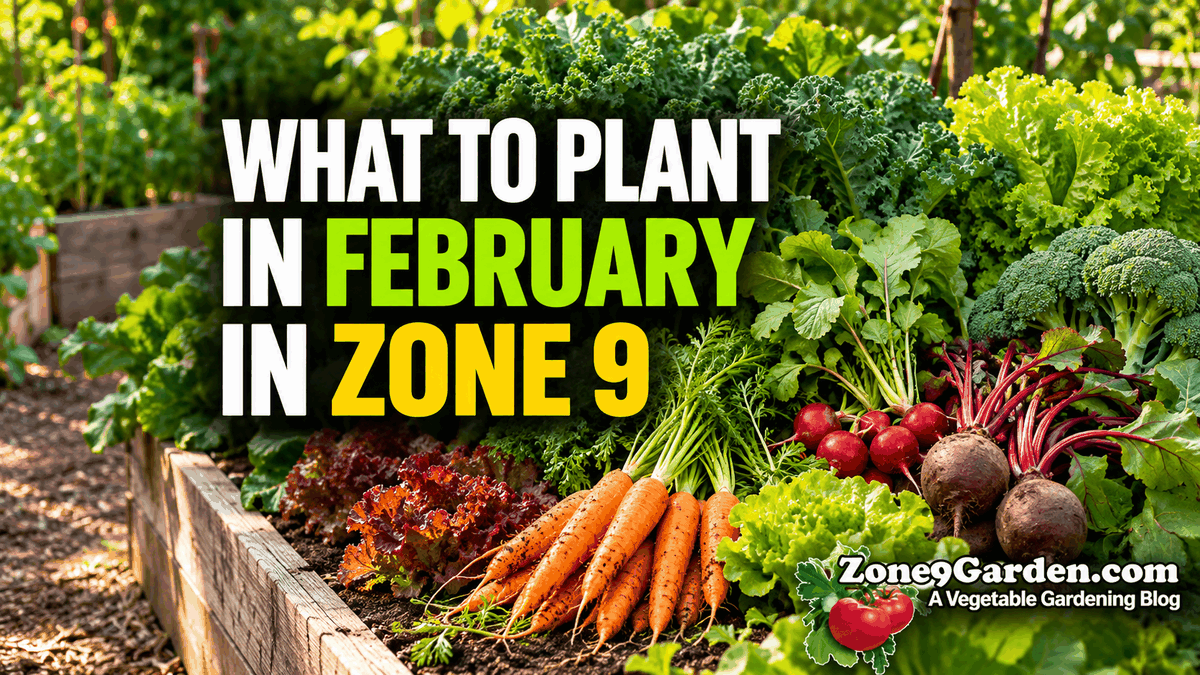
February is an exciting month for vegetable gardening in USDA Hardiness Zone 9. Your winter garden may still be producing fresh lettuce, carrots, broccoli, kale, and other cool-season vegetables, while longer days signal that spring planting is approaching.

Knowing what to plant in February in Zone 9 means balancing two opportunities: making the most of the remaining cool weather and preparing your garden for warm-season vegetables. Fast-growing crops such as radishes, leaf lettuce, and mustard greens can still provide useful harvests, while carrots, beets, Swiss chard, and collards offer additional planting options where local conditions allow.
February also brings important decisions about tomatoes, peppers, and other spring vegetables. In some warmer Zone 9 locations, gardeners may begin transplanting selected crops outdoors. In colder areas, February is better spent starting seeds indoors, checking frost dates, and preparing planting beds.
This guide covers February planting, harvesting, soil preparation, watering, fertilizing, frost protection, pests, and the differences between Zone 9a and Zone 9b. It also explains how February gardening varies across Florida, Texas, Arizona, and California.
For the complete winter season, visit our Zone 9 Winter Planting Guide.
What to Expect in This Guide
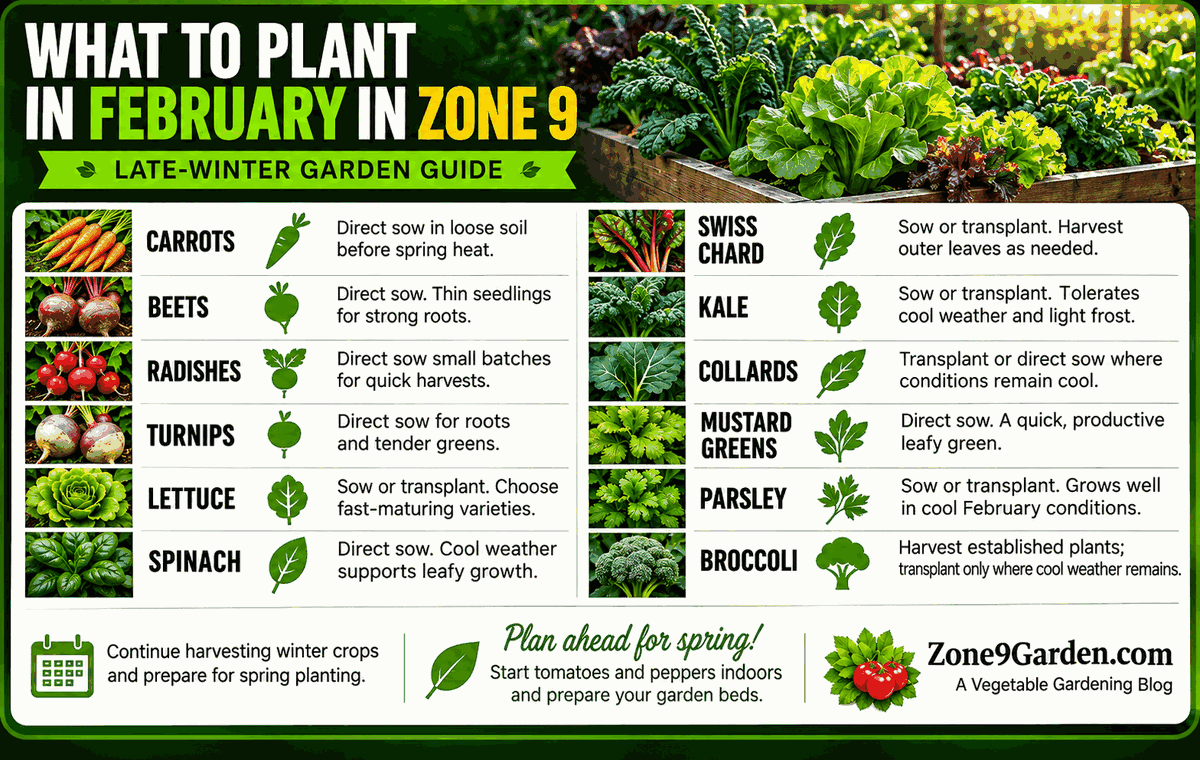
February Planting Guide at a Glance
February offers opportunities to sow cool-season crops, continue harvesting established winter vegetables, and prepare for the first warm-season plantings.
Why Garden in February in Zone 9?
February is one of the most useful transition months in a Zone 9 vegetable garden. Cool-season crops can still be productive, while gradually increasing daylight helps prepare the garden for spring.
For gardeners who established vegetables during fall and early winter, February can be a rewarding harvest month. Broccoli, cabbage, carrots, lettuce, and leafy greens may be reaching maturity or continuing to produce.
February also provides an opportunity to plant fast-growing vegetables in empty spaces. Radishes, baby greens, and certain lettuce varieties may produce a harvest before the weather becomes too warm.
Benefits of February gardening include:
- Continued harvesting from established winter crops.
- Opportunities to sow quick-growing vegetables.
- Cooler conditions for leafy greens and root crops.
- Time to prepare soil and irrigation before spring.
- Opportunities to start warm-season seeds indoors.
- More daylight than during the shortest winter days.
However, February weather can be unpredictable. Frosts and freezes remain possible in many Zone 9 locations, and some regions warm rapidly toward the end of the month.
The key is to match your planting choices to local conditions rather than assuming all Zone 9 gardens share the same calendar.
What to Plant in February in Zone 9
The following February planting and harvest plan follows the core crops featured in our Winter Planting Guide, with adjustments for regional growing conditions.
Most cool-season vegetables can be direct sown, while certain leafy greens and brassicas may also be transplanted. Long-season crops need particular care because rising temperatures can arrive before they mature.
Reading the table: Harvest means vegetables established earlier that may be ready during February. It does not mean seeds planted in February will produce an immediate harvest. “Locally” means the crop should be planted only when your regional Extension calendar and expected temperatures support it.
Potatoes are included as an additional regional opportunity because some Texas and Arizona Extension calendars specifically recommend February planting. They are not a universal February crop for every Zone 9 location.
February Gardening Tips
- Prioritize fast-growing vegetables where spring heat arrives early.
- Harvest established broccoli, cabbage, kale, and collards before quality declines.
- Plant root crops in loose, well-drained soil.
- Use successive small sowings of radishes and lettuce.
- Monitor the forecast before moving tender spring vegetables outdoors.
- Prepare empty beds for the next planting season.
Best Vegetables and Herbs to Grow in February
Lettuce
Lettuce is an excellent February choice in many Zone 9 gardens. Cooler temperatures favor tender leaves and help delay the bolting that often occurs as spring heat develops.
Leaf lettuce is especially useful because gardeners can harvest individual leaves while allowing the plant to continue growing. Choose varieties with maturity periods that fit your remaining cool season.
Direct sow into prepared soil or transplant healthy seedlings. Keep the root zone consistently moist without saturating the soil.
Read our How to Grow Lettuce in Zone 9 guide.
Carrots
Carrots are another valuable February crop where local temperatures remain suitable. They grow best in loose soil without rocks or hard clumps that interfere with root development.
Direct sow carrots rather than transplanting them. Keep the seedbed evenly moist during germination, and thin seedlings to the recommended spacing once they are established.
In warmer regions, sowing early in February may give carrots more time to develop before sustained heat arrives.
For detailed planting and harvesting advice, see How to Grow Carrots in Zone 9.
Radishes
Radishes are among the most useful February vegetables because many varieties mature relatively quickly. They can occupy small gaps between other vegetables and provide a harvest before the garden transitions to spring.
Direct sow seeds in loose soil and thin seedlings to prevent overcrowding. Uneven moisture and warm temperatures can reduce root quality.
Instead of planting a large quantity at once, sow a short row every week or two while conditions remain favorable.
See How to Grow Radishes in Zone 9.
Beets
Beets can provide both edible roots and tender greens. February planting is appropriate in many Zone 9 locations, but gardeners in rapidly warming regions should check the expected maturity date.
Direct sow into well-prepared soil. Thin seedlings carefully because beet seed clusters can produce more than one seedling.
Harvest tender greens selectively without excessively removing foliage needed for root growth.
Swiss Chard
Swiss chard is a productive leafy vegetable that often continues growing as temperatures warm. Its colorful stems and broad leaves make it useful in raised beds, traditional garden rows, and containers.
Direct sow or transplant where recommended locally. Allow adequate room for mature leaves and harvest older outer leaves while leaving the growing center intact.
Our How to Grow Swiss Chard in Zone 9 guide covers planting, maintenance, and harvesting.
Kale and Collards
Kale and collards are dependable cool-season greens in many Zone 9 gardens. Established plants may provide repeated harvests throughout February and into spring.
Harvest the larger outer leaves and allow younger leaves to continue developing. Inspect plants regularly for aphids, cabbageworms, and other brassica pests.
New February plantings are more appropriate in locations where sufficient cool weather remains. In warmer areas, harvesting existing plants may be more productive than establishing new ones.
Turnips and Mustard Greens
Turnips and mustard greens offer additional cool-season planting opportunities. Turnips can be grown for their roots, greens, or both, depending on the variety.
Mustard greens are especially useful for gardeners who want a relatively quick leafy harvest. Both crops can become less desirable as temperatures rise, so select appropriate varieties and planting dates.
Keep seedlings properly thinned and monitor for caterpillars and flea beetles.
Parsley, Cilantro, and Dill
Cooler February weather can support parsley, cilantro, and dill in suitable Zone 9 locations. These herbs are useful for kitchen harvesting and can also provide flowering resources for beneficial insects when allowed to bloom.
Parsley grows relatively slowly from seed, so transplants can be convenient. Cilantro and dill generally perform best when planted during their locally recommended cool-season windows.
For more information, see How to Grow Parsley in Zone 9.
Broccoli and Cabbage
February is often an important harvest month for broccoli and cabbage established earlier in winter. These vegetables need adequate cool weather to develop quality heads.
In warmer Zone 9 locations, planting new broccoli or cabbage late in February may leave too little time before rising temperatures interfere with development.
Some cooler regional calendars permit February transplants. Check your local planting recommendations and the expected days to maturity before purchasing plants.
Learn more in our How to Grow Broccoli in Zone 9 guide.
Potatoes
February is an important potato planting period in some Zone 9 regions, including parts of Texas and Arizona. Use certified seed potatoes and choose varieties suited to your local season.
Planting dates depend on soil conditions, frost risk, and the time available before high temperatures arrive. Potatoes are not equally suited to February planting in every Zone 9 location.
Consult your local Extension planting calendar and our How to Grow Potatoes in Zone 9 guide before planting.
Preparing for Spring Planting in February
While February is still part of the winter growing season, it is also the time to begin preparing for tomatoes, peppers, eggplant, beans, cucumbers, and squash.
One of the most important rules is to avoid confusing seed-starting dates with outdoor planting dates. A vegetable may be suitable for starting indoors during February even when it is too early to plant it outside.
See our full Zone 9 Spring Planting Guide
UF/IFAS and Texas A&M AgriLife Extension both emphasize the importance of matching warm-season planting dates to regional weather. Arizona and California calendars also vary considerably by elevation and local climate.
Before moving seedlings outdoors, harden them off gradually by introducing them to outdoor sunlight and wind over several days. Protect them from cold nights and postpone transplanting if a freeze is forecast.
For year-round planting decisions, consult our Zone 9 Planting Calendar.
Preparing Your Zone 9 Garden in February
February is a good time to improve the condition of your vegetable beds before the spring growing season becomes busy.
Start by examining the crops already growing. Healthy vegetables that are still producing can remain in place, while exhausted plants can be removed to make room for new plantings.
Clean Up Existing Beds
Remove weeds, dead plants, and severely diseased crop material. Avoid leaving infected plant debris where it may contribute to future disease problems.
Healthy crop residues may be composted when appropriate, but heavily diseased material should be handled according to local Extension guidance.
Prepare Soil for Root Crops
Carrots, beets, radishes, and turnips need a seedbed that allows roots to develop without major obstructions.
Remove rocks and break up compacted areas. Avoid working saturated soil, which can create clods and compaction.
Check Soil Fertility
Before applying large amounts of fertilizer or soil amendments, consider a soil test. Add finished compost where appropriate and follow recommendations for your soil and intended crops.
Excessive fertilizer can create problems rather than improve production.
Inspect Irrigation
Check drip lines, hoses, emitters, timers, and watering connections before spring temperatures increase water demand.
Repair leaks and make sure irrigation reaches the full root zone of each planting area.
Plan Your Next Crops
Decide which winter vegetables will remain in place and which beds will become available for tomatoes, peppers, beans, or other spring crops.
Our Zone 9 Crop Profiles can help you compare individual crop requirements.
Watering Your February Vegetable Garden
February watering needs depend on rainfall, temperature, soil type, and the stage of crop growth.
Many Zone 9 gardens need less frequent irrigation during cool weather than during summer. However, seedbeds still require careful moisture management, and dry regions such as Arizona may need regular irrigation even during winter.
Newly planted seeds need consistent moisture near the soil surface for germination. Established vegetables should be watered according to moisture in their root zones.
Before You Water
Check moisture below the soil surface. A dry-looking surface does not necessarily mean the root zone needs irrigation. Water when needed rather than following a fixed daily schedule.
Overwatering can contribute to poor root development, nutrient loss, and disease. Conversely, allowing newly sown carrot or lettuce seedbeds to dry out can reduce germination.
As February progresses, reassess your watering schedule. Increasing temperatures, wind, and longer days can cause the soil to dry more quickly.
Fertilizing Vegetables in February
Vegetables need appropriate nutrients to support growth, but fertilizer applications should be based on soil conditions and crop requirements rather than the calendar alone.
Leafy vegetables such as lettuce, kale, collards, and Swiss chard require adequate nitrogen for healthy leaf production. Root vegetables also need balanced nutrition, but excessive nitrogen can encourage foliage growth without improving root quality.
Use a soil test to guide amendments when possible. Follow product directions and avoid applying more fertilizer than the crop or soil requires.
When preparing beds for spring, consider the nutrient requirements of the next crop. Tomatoes and peppers may have different fertility needs from the leafy greens or root vegetables currently occupying the bed.
Protecting Your February Garden From Frost and Freezes
February may feel like spring on warm afternoons, but freezing temperatures are still possible in many Zone 9 gardens.
Young seedlings, recently transplanted vegetables, and warm-season crops can be particularly vulnerable. Even vegetables that tolerate light frost may suffer damage during prolonged or unusually severe freezes.
How to Protect Vegetables
- Check the National Weather Service forecast regularly.
- Use frost cloth or appropriate row covers before cold weather arrives.
- Secure covers to prevent wind damage and reduce cold air entry.
- Keep covers from crushing tender plants by using hoops or supports when necessary.
- Move containers to a protected location when practical.
- Ventilate or remove covers when daytime temperatures rise enough to create overheating.
- Delay planting frost-sensitive spring vegetables when a freeze remains possible.
Row covers can provide useful protection, but their effectiveness varies by material, installation, wind, and the severity of the cold event.
For detailed instructions, visit our Zone 9 Frost Protection Guide.
February Weather Reminder
A warm afternoon does not mean the danger of frost has passed. Use local forecast lows and your area’s typical last-frost timing when deciding whether to transplant tomatoes, peppers, or other tender vegetables.
Common February Garden Pests in Zone 9
Although cooler temperatures may reduce activity for some pests, February gardens can still experience damage from aphids, caterpillars, slugs, snails, and other insects.
Inspect vegetables regularly, especially the undersides of leaves and new growth. Identifying pests correctly is the first step toward effective management.
Beneficial insects such as lady beetles, lacewings, and parasitoid wasps can help reduce some pest populations. Avoid unnecessary broad-spectrum insecticide use that may harm these natural enemies.
For research-based pest identification and management, consult UC Integrated Pest Management.
February Gardening in Zone 9a vs. Zone 9b
USDA Hardiness Zone 9 is divided into two subzones based on average annual extreme minimum temperatures.
Zone 9a has average annual extreme minimum temperatures of 20–25°F, while Zone 9b has average annual extreme minimum temperatures of 25–30°F.
These definitions help gardeners understand winter cold risk, but they do not describe summer heat, rainfall, or exact planting dates.
Do not assume that every Zone 9b garden can plant tomatoes outdoors in February or that every Zone 9a garden must wait until March. Local frost dates, elevation, soil temperatures, and regional climate are more useful for those decisions.
Regional February Planting Differences Across Zone 9
Florida and the Southeast
February is an important transition month in Florida vegetable gardens. Cool-season crops such as carrots, lettuce, radishes, beets, and leafy greens can remain productive, while some warmer regions begin transitioning toward spring vegetables.
UF/IFAS planting guidance distinguishes among northern, central, and southern Florida because planting dates vary considerably.
Gardeners should consider local frost risk before planting tomatoes, peppers, or other cold-sensitive crops outdoors. Good drainage and airflow are also important where humidity is high.
Reference: UF/IFAS Florida Vegetable Gardening Guide.
Texas and the Gulf Coast
February can be a productive month for cool-season vegetables in parts of Texas. Depending on the region, gardeners may plant carrots, lettuce, broccoli or cabbage transplants, potatoes, and other vegetables.
However, late cold fronts remain a concern. The Texas A&M AgriLife planting calendars show that planting dates differ across the state.
In some Texas locations, February is a good time to plant seed potatoes and prepare tomato transplants for spring.
Reference: Texas Home Vegetable Gardening Guide.
Arizona and the Desert Southwest
Arizona’s low-desert gardens may experience pleasant February growing conditions, but warm afternoons can be followed by cold nights.
University of Arizona Cooperative Extension identifies February as an active gardening month in low-desert areas, with opportunities to plant cool-season crops and prepare for spring.
Gardeners should pay particular attention to irrigation, soil moisture, and rapid changes in temperature. Planting dates also vary greatly with elevation.
Reference: University of Arizona February Gardening Guide.
California
California Zone 9 includes coastal-influenced areas, inland valleys, and other locations with different winter and spring conditions.
UC ANR’s regional planting guidance shows that February can be appropriate for certain cool-season vegetables, including beets and broccoli in selected regions, while other crops have different planting windows.
Use a calendar designed for your part of California rather than relying on a statewide or hardiness-zone-only recommendation.
Reference: UC ANR Vegetable Gardening Handbook.
Your February Zone 9 Gardening Checklist
Use this checklist to organize your February planting, harvesting, and spring preparation.
Planting Tasks
- ☐ Check the local February planting calendar.
- ☐ Sow carrots, beets, radishes, or turnips where suitable.
- ☐ Plant lettuce and leafy greens where cool weather remains.
- ☐ Transplant suitable cool-season vegetables.
- ☐ Start appropriate spring vegetable seeds indoors.
- ☐ Check soil temperature before direct sowing warm-season crops.
Harvesting Tasks
- ☐ Harvest mature lettuce and leafy greens.
- ☐ Check broccoli and cabbage for harvest readiness.
- ☐ Harvest mature carrots, radishes, beets, and turnips.
- ☐ Remove exhausted crops from garden beds.
Garden Maintenance
- ☐ Inspect vegetables for aphids and caterpillars.
- ☐ Check soil moisture before watering.
- ☐ Repair irrigation lines and connections.
- ☐ Prepare soil for spring vegetables.
- ☐ Review soil-test results before fertilizing.
- ☐ Keep frost cloth ready for cold nights.
Spring Planning
- ☐ Review the typical last-frost date.
- ☐ Choose tomato and pepper varieties.
- ☐ Plan bed space for spring crops.
- ☐ Check trellises, stakes, and garden supports.
- ☐ Record planting and harvest dates.
For a broader seasonal checklist, visit our Zone 9 Winter Planting Guide.
Frequently Asked Questions About February Gardening in Zone 9
What vegetables can I plant in February in Zone 9?
Common February options include carrots, beets, radishes, lettuce, kale, collards, Swiss chard, turnips, mustard greens, and parsley. Local conditions determine which crops are best suited to your garden.
Can I plant tomatoes in February in Zone 9?
Tomatoes may be transplanted outdoors during February in some warmer Zone 9 locations, but many gardeners should wait until frost risk has passed and temperatures are suitable. Starting or maintaining transplants indoors may be more appropriate in colder locations.
Can I grow lettuce in February?
Yes. Lettuce is a useful February crop in many Zone 9 gardens. Choose varieties that can mature before sustained warm weather causes bolting or reduces leaf quality.
Is February too late to plant carrots?
Not necessarily. February carrot planting is appropriate in many Zone 9 regions. In warmer locations, plant early enough to allow root development before sustained spring heat.
Can I plant potatoes in February in Zone 9?
Yes, in some regions. Texas A&M AgriLife and University of Arizona calendars include February potato planting windows for selected locations. Check your local planting calendar before planting seed potatoes.
Can I plant broccoli in February?
Broccoli transplants can be appropriate in certain cooler regional planting windows. In warmer Zone 9 locations, established broccoli plants are generally more dependable because new plants may not mature before spring heat.
What herbs grow well in February in Zone 9?
Parsley, cilantro, and dill can grow well during February where temperatures and local planting calendars are suitable. Their growing windows vary by region.
Does Zone 9 get frost in February?
Yes. Frost and freezes remain possible in both Zone 9a and Zone 9b. The likelihood depends on location, elevation, and weather patterns. Monitor forecasts and protect vulnerable plants.
What can I harvest in February?
Depending on previous planting dates, February harvests may include lettuce, kale, collards, broccoli, cabbage, carrots, radishes, beets, turnips, Swiss chard, and herbs.
Should I start pepper seeds indoors in February?
February can be suitable for starting peppers indoors in some Zone 9 regions. Use your expected outdoor transplanting date to calculate when to start seeds, and wait for appropriate warmth before transplanting.
What is the biggest February gardening mistake?
A common mistake is planting warm-season vegetables outdoors simply because daytime temperatures feel pleasant. Frost risk, nighttime temperatures, and soil conditions still matter.
Does this guide apply to every Zone 9 garden?
The general growing principles apply broadly, but planting windows differ across Florida, Texas, Arizona, California, and other Zone 9 regions. Always consult local Extension guidance.
Final Thoughts: What to Plant in February in Zone 9
February is a valuable month for Zone 9 gardeners because it connects the productive winter growing season with the approaching spring garden.
Focus on vegetables that can make good use of the remaining cool weather. Radishes, lettuce, carrots, beets, Swiss chard, collards, turnips, and mustard greens are useful choices where local conditions permit.
Continue harvesting established broccoli, cabbage, kale, and other winter vegetables while preparing available beds for warm-season crops.
Most importantly, avoid rushing spring planting. A few warm February afternoons do not guarantee that frost risk has passed. Follow local planting calendars, monitor the forecast, and use the conditions in your own garden to guide decisions.
With thoughtful planting and preparation, February can provide fresh harvests while setting the stage for a successful Zone 9 spring garden.
Research Behind This Guide
February planting recommendations are informed by university Extension research, regional planting calendars, and USDA hardiness-zone definitions. Planting dates vary by location, elevation, frost risk, and seasonal temperatures.
February Planting Research and References
| Source | Research Focus |
|---|---|
| UF/IFAS | Florida Vegetable Gardening Guide — Regional planting dates, soil preparation, irrigation, and crop care. |
| Texas A&M AgriLife | Texas Home Vegetable Gardening Guide — Vegetable spacing, planting methods, and frost-related timing. |
| Texas A&M AgriLife | Travis County Vegetable Planting Guide — February crops, seed potatoes, transplants, and local frost dates. |
| University of Arizona | February Monthly Gardening Guide — Low-desert February growing, cold snaps, and seasonal preparation. |
| University of Arizona | Maricopa County Vegetable Planting Calendar — Desert crop planting windows and climate considerations. |
| UC ANR | Vegetable Gardening Handbook — California regional planting dates and vegetable requirements. |
| UC ANR / UC IPM | Integrated Pest Management — Pest identification, beneficial insects, and crop-specific management. |
| USDA | USDA Plant Hardiness Zone Map — Zone 9a and Zone 9b extreme minimum temperature definitions. |
| Zone9Garden.com | Zone 9 Winter Planting Guide — February crop selection and winter garden planning. |
Research Note: Planting recommendations are regional planning guidance, not guaranteed planting dates or harvest outcomes. Crop performance depends on variety, soil temperature, local frost dates, weather, and growing conditions. Consult your local Cooperative Extension office for location-specific recommendations.
Zone 9 Garden · Grow with the seasons.