
October is when the Zone 9 fall garden really begins to hit its stride.
September may still feel like summer in many parts of Zone 9, but October usually brings shorter days, cooler nights, and increasingly comfortable conditions for cool-season vegetables.
That opens the door for broccoli, cabbage, cauliflower, carrots, lettuce, kale, spinach, radishes, beets, and many other fall favorites.
For many Zone 9 gardeners, October isn’t the end of gardening season.
It’s the beginning of one of the best growing periods of the year.
Exactly what you should plant will still depend on where you live. Zone 9 stretches across very different climates, including parts of Florida, Texas, Louisiana, Arizona, and California. A gardener in humid Florida can experience very different October conditions from a gardener in dry Southern California or Arizona.
USDA hardiness zones primarily describe average annual extreme minimum temperatures, so they shouldn’t be treated as complete planting calendars.
Use this guide as your October starting point, then adjust for your local weather, first frost date, and growing conditions.
What Can You Plant in October in Zone 9?
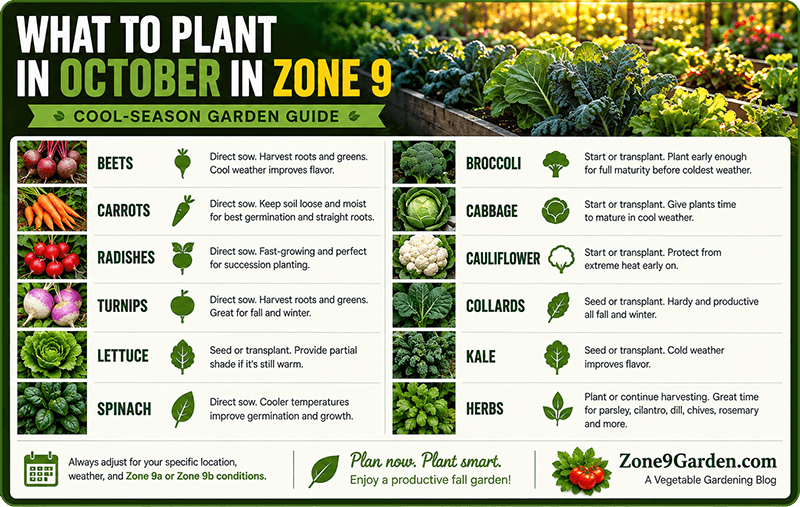
October is primarily a cool-season planting month.
Here’s a quick starting point:
| Crop | October Strategy |
|---|---|
| Beets | Direct sow |
| Broccoli | Transplant or plant established seedlings |
| Cabbage | Transplant or plant established seedlings |
| Carrots | Direct sow |
| Cauliflower | Transplant |
| Collards | Seed or transplant |
| Kale | Seed or transplant |
| Lettuce | Seed or transplant |
| Radishes | Direct sow |
| Spinach | Direct sow as temperatures cool |
| Turnips | Direct sow |
These aren’t universal planting dates.
Gardeners in warmer parts of Zone 9 may still need to wait for temperatures to moderate before planting some cool-season vegetables, while gardeners in cooler Zone 9a locations may already be well into their fall gardens.
Think of October as the month when the cool-season garden takes over.
Lettuce and Leafy Greens
October can be one of the best months to get serious about leafy greens.
Lettuce, kale, collards, and spinach all become increasingly practical as temperatures fall.
Lettuce is particularly sensitive to heat. Seeds can germinate poorly in hot soil, and established plants may bolt quickly when temperatures remain high.
October’s cooler conditions can make growing lettuce considerably easier than it was during late summer.
Instead of planting all your lettuce at once, try succession planting.
Sow a small amount every week or two. This can extend your harvest and prevent an entire bed of lettuce from becoming ready at the same time.
Kale and collards are also excellent choices for the October garden.
Both tolerate cool weather well and can continue producing as Zone 9 moves toward winter.
Spinach deserves a little more patience.
If October is still hot where you live, wait until conditions improve rather than forcing it. Spinach generally performs much better once the heat has truly broken.
Broccoli, Cabbage, and Cauliflower
October is prime time for cole crops in many Zone 9 gardens.
Broccoli, cabbage, and cauliflower appreciate the cooler temperatures that arrive during fall, making October an important month for getting established plants into the garden.
Transplants can give you a head start.
Look for compact, healthy plants with good color and strong stems. Avoid severely root-bound plants or oversized transplants that have spent too long in small containers.
Give these crops enough room.
A tiny broccoli transplant may not look like it needs much space today, but mature plants can become surprisingly large.
Consistent growth is particularly important for cauliflower. Stress caused by irregular watering, extreme temperatures, or poor growing conditions can affect head development.
October weather can make all three crops easier to manage, but don’t ignore unusually hot afternoons.
Recently transplanted seedlings may still appreciate temporary afternoon protection during an October heat wave.
Carrots and Beets
October is an excellent time to make room for root vegetables.
Carrots and beets should generally be direct sown rather than transplanted.
For carrots, soil preparation makes a big difference.
Remove rocks, roots, hard clods, and other obstructions before planting. Loose, workable soil allows carrot roots to develop more evenly.
Sow carrot seeds shallowly and pay close attention to moisture during germination.
The upper layer of soil can dry surprisingly quickly during warm or windy October weather. Because carrot seeds are planted close to the surface, letting that layer repeatedly dry out can result in poor germination.
Beets are another useful October crop.
Unlike carrots, beets give you two potential harvests. The roots are the obvious crop, but beet greens are edible as well.
Avoid overcrowding both crops.
Thin seedlings when necessary so developing roots have enough room to grow.
Radishes and Turnips
Want a quick fall crop?
Plant radishes.
Radishes are one of the easiest vegetables to fit into an October garden because they grow quickly and require relatively little space.
They can also be planted between slower-growing vegetables while those plants are still small.
Rather than sowing an entire packet at once, plant a short row and then sow another one a week or two later.
This succession planting strategy can provide radishes over a much longer period.
Turnips are another good choice.
Like beets, they can provide both edible roots and greens.
Direct sow turnips where they’ll grow and thin crowded seedlings as they develop.
October is a great month to start these quick-growing root crops, but there’s no reason you have to stop after one planting.
Keep some seed for November.
Kale and Collards
Kale and collards deserve special attention in a Zone 9 fall garden.
These sturdy greens can handle cooler conditions that would bring many summer vegetables to an end.
October is a good time to plant seedlings or establish new plants from seed, depending on your location and how quickly winter weather typically arrives.
Give the plants enough room to mature and keep young plants growing steadily with consistent moisture.
You can begin harvesting individual outer leaves once plants are large enough while allowing the center of the plant to continue growing.
That makes kale and collards especially useful for gardeners who want vegetables that can provide repeated harvests rather than one large harvest.
What About the Summer Garden?
October doesn’t necessarily mean you need to pull every tomato, pepper, eggplant, or other warm-season vegetable.
Look at the plants rather than the calendar.
If a pepper plant is healthy and producing, there’s little reason to remove it simply because October arrived.
Tomatoes may also become more productive as extreme summer temperatures moderate.
The situation changes considerably as you move across Zone 9, however.
Gardeners in areas with an earlier first frost have much less time remaining for warm-season vegetables than gardeners in frost-free or nearly frost-free locations.
Pay attention to your local forecast.
Keep productive warm-season plants while they’re worthwhile, but don’t allow tired summer plants to occupy valuable space you need for the fall garden.
If a plant is diseased, severely stressed, or barely producing, October may be the right time to replace it with something better suited to the season.
October Herbs
The herb garden changes with the season too.
As temperatures moderate, October can provide good conditions for several herbs that appreciate cooler weather.
Depending on your location, consider:
- Cilantro
- Parsley
- Dill
- Chives
- Rosemary
- Mint
Cilantro is particularly worth revisiting.
Gardeners who struggled to keep cilantro from bolting during warm weather may find it much easier to grow during the cooler months.
Parsley also fits nicely into the fall and winter garden.
Meanwhile, established rosemary can continue growing, and mint often becomes easier to manage as extreme summer heat fades.
Basil may continue producing in warm locations, but remember that basil is much more sensitive to cold than many of the herbs you’re planting for fall.
Keep Succession Planting
October isn’t a one-week planting season.
You don’t need to plant your entire cool-season garden at once.
In fact, spreading your planting across several weeks can give you a much longer harvest.
This works especially well with:
- Lettuce
- Radishes
- Carrots
- Beets
- Spinach
- Turnips
Plant a small amount now and another round in a week or two.
For crops that mature quickly, you may be able to continue this pattern through much of the cool season.
Succession planting also gives you some protection against unpredictable weather.
If one planting struggles because of an unexpected October heat wave, heavy rain, or another weather problem, your next planting gets another chance.
Prepare Your Garden for the Cool Season
If you didn’t finish resetting your garden in September, October is a good time to get it done.
Remove exhausted summer vegetables and weeds.
Don’t leave heavily diseased plant material sitting in the garden where it can create problems for future crops.
Then prepare the space for the months ahead.
Consider:
- Adding finished compost where organic matter is needed
- Removing weeds before they produce seed
- Checking irrigation lines and emitters
- Replenishing mulch where appropriate
- Making room for succession plantings
- Checking plants regularly for insects and disease
- Planning where larger crops such as broccoli and cabbage will mature
Avoid automatically adding large amounts of fertilizer just because you’re starting a new garden.
Different vegetables have different nutrient requirements.
When possible, base fertilizer and soil amendment decisions on your soil conditions and a soil test rather than guessing.
October Watering in Zone 9
Cooler weather changes how you water.
Your garden may not dry as quickly as it did during July, August, or September, but newly planted seeds and young transplants still need consistent moisture.
Seeds need particular attention during germination.
Carrots, lettuce, radishes, beets, spinach, and other directly sown vegetables shouldn’t be allowed to repeatedly dry out while they’re germinating.
Once plants develop larger root systems, begin encouraging deeper rooting with more thorough watering rather than constantly wetting only the soil surface.
Don’t assume plants need water simply because you watered on the same schedule during summer.
Lower temperatures, shorter days, and reduced evaporation can mean the garden uses water more slowly.
Rainfall also varies tremendously across Zone 9.
Check the soil.
Water when the plants actually need it.
Watch for October Pests
Cooler temperatures don’t mean garden pests disappear.
Young broccoli, cabbage, cauliflower, kale, and collards can attract caterpillars and other insects capable of damaging leaves quickly.
Check the undersides of leaves regularly.
Catching a pest problem when it begins is much easier than discovering it after several plants have been heavily damaged.
Slugs and snails may also become a problem in damp gardens.
And because some Zone 9 regions remain warm and humid during October, fungal and bacterial diseases can still develop.
Give plants appropriate spacing, avoid unnecessary leaf wetness, and remove severely diseased material from the garden.
Regular inspection is one of the simplest ways to keep small problems from becoming large ones.
Zone 9a vs. Zone 9b in October
October is another month when the difference between Zone 9 gardens becomes obvious.
Zone 9a generally experiences colder winter minimum temperatures than Zone 9b, but even that doesn’t tell you everything about October.
A Zone 9a garden in one region can have very different rainfall, humidity, daytime temperatures, and frost timing from another Zone 9a garden elsewhere in the country.
The same is true for Zone 9b.
That’s why your local conditions matter more than simply seeing “Zone 9” printed on a seed packet.
Gardeners in cooler Zone 9 locations may need to get broccoli, cabbage, cauliflower, and other longer-season vegetables established promptly.
Gardeners in the warmest areas may still be waiting for temperatures to become ideal for lettuce and spinach.
Use your hardiness zone as a starting point.
Then consider:
- Your average first frost
- Current daytime temperatures
- Nighttime temperatures
- Soil temperature
- Rainfall
- Humidity
- Your garden’s microclimate
- The crop you’re growing
A national Zone 9 planting calendar can tell you what to start thinking about.
Your local weather tells you when to actually plant it.
Your October Zone 9 Garden Checklist
If you only have a weekend to work in the garden, concentrate on the essentials.
Plant now: beets, carrots, radishes, turnips, and other root vegetables suited to your local conditions.
Get established: broccoli, cabbage, cauliflower, kale, collards, and lettuce.
Begin planting as temperatures allow: spinach and other cool-weather greens that may struggle if your October weather remains hot.
Keep producing: healthy tomatoes, peppers, eggplant, herbs, and other warm-season plants that are still productive.
Succession plant: sow smaller rounds of lettuce, carrots, radishes, beets, spinach, and turnips rather than planting everything at once.
Prepare for November: keep garden beds clean, watch for pests, maintain irrigation, and leave room for another round of cool-season vegetables.
October is one of the months that makes gardening in Zone 9 special.
While gardeners farther north may be wrapping up their vegetable gardens for the year, Zone 9 gardeners are filling beds with broccoli, cabbage, carrots, lettuce, kale, radishes, and other cool-season crops.
September started the transition.
In October, the fall garden gets serious.
For the bigger picture, use our Zone 9 Fall Planting Guide to see what to plant throughout the season, or visit our Zone 9 Planting Calendar to see what you can grow during every month of the year.
Related Zone 9 Garden Guides
Keep planning your fall and winter garden with these Zone9Garden.com guides:
- Zone 9 Planting Calendar: What to Plant Every Month — See what you can plant throughout the entire Zone 9 growing year.
- Zone 9 Fall Planting Guide — Plan your fall vegetable garden from late summer through the beginning of winter.
- How to Grow Broccoli in Zone 9 — Learn when to plant broccoli and how to grow it successfully during the Zone 9 fall and winter season.
- 15 Vegetables That Grow Better in Fall Than Spring in Zone 9 — Discover cool-season vegetables that take advantage of Zone 9’s mild fall and winter weather.
- Succession Planting in Zone 9 — Learn how to stagger plantings of lettuce, carrots, radishes, beets, and other vegetables for a longer harvest.
- Transition Your Garden from Summer Heat to Fall Production — Reset tired summer beds and prepare them for cool-season vegetables.
- Zone 9 Winter Planting Guide — Start planning ahead for the vegetables you can grow as October transitions into the Zone 9 winter garden.