
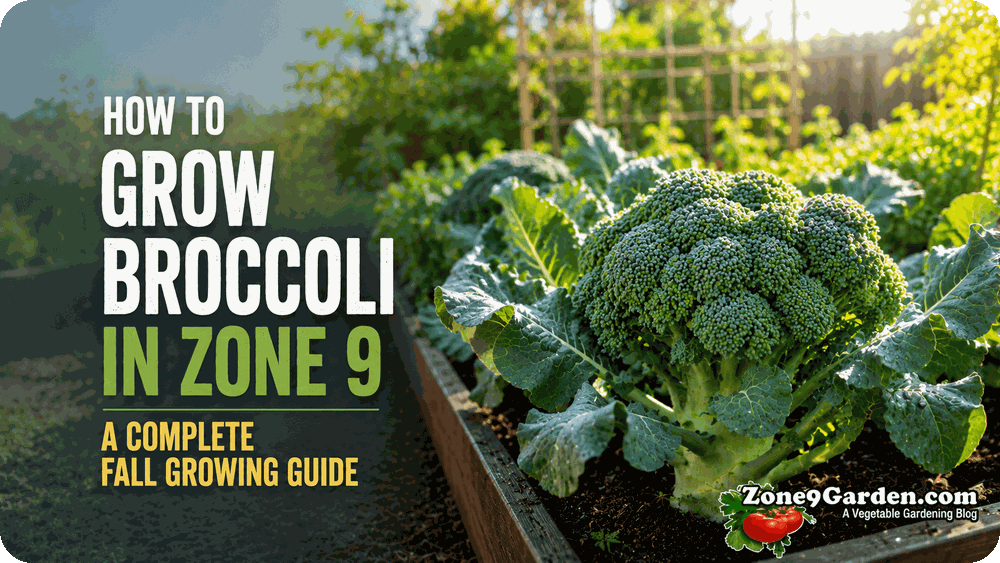
Growing broccoli in Zone 9 is all about timing.
Broccoli is a hardy, cool-season vegetable that performs best when it matures during mild weather. That makes fall and winter especially valuable growing seasons for Zone 9 gardeners, where summer heat can arrive early and remain intense well into the traditional fall calendar.
Unlike tomatoes, peppers, cucumbers, and other warm-season vegetables, broccoli does not thrive in prolonged heat. When temperatures become too high, plants may develop small or loose heads, flower prematurely, or bolt before producing the harvest you expected.
Get the timing right, however, and broccoli can become one of the most dependable vegetables in a Zone 9 fall and winter garden.
Broccoli, scientifically known as Brassica oleracea var. italica, belongs to the Brassicaceae family alongside cabbage, cauliflower, kale, collards, Brussels sprouts, mustard greens, turnips, and radishes.
The familiar broccoli head is actually a cluster of immature flower buds. The tender stem, leaves, and smaller side shoots are edible as well, making broccoli considerably more productive than the single large head sold in most grocery stores.
This guide covers everything you need to know about how to grow broccoli in Zone 9, including planting dates, varieties, seed starting, spacing, soil, watering, fertilizing, pests, diseases, weather, and harvesting.
SEE OUR FULL ZONE 9 BROCCOLI PROFILE
Why Broccoli Grows So Well in Zone 9 During Fall
Broccoli prefers cool conditions.
Average air temperatures around 60–65°F provide excellent growing conditions for cole crops such as broccoli.
That creates an advantage for Zone 9 gardeners.
Instead of attempting to mature broccoli during summer, you can establish plants as temperatures begin declining and allow them to produce heads during the cooler portion of fall and winter.
Fall-grown broccoli benefits from:
- Cooler daytime temperatures
- Cooler nights
- Reduced heat stress
- Better head development
- Lower risk of premature flowering
- A long cool-season harvest window in many Zone 9 locations
Broccoli can tolerate light frost considerably better than warm-season vegetables, although extreme cold can still damage plants and developing heads.
Heat is usually the bigger challenge.
Once temperatures consistently move above roughly 75–80°F, head quality can begin to decline. Above about 85°F, the risk of small heads, loose heads, premature flowering, and bolting increases significantly.
That is why successful Zone 9 broccoli growing is less about asking whether broccoli can grow in your climate and more about making sure it matures during the right part of the year.
Best Time to Plant Broccoli in Zone 9
Zone 9 stretches across several very different climates, including portions of Florida, Texas, Arizona, California, and other states.
For that reason, no single planting date works perfectly everywhere.
As a general Zone 9 planning range, broccoli can be grown during both spring and fall, although fall and winter are often easier.
Spring Broccoli
A general spring schedule is:
Start seeds indoors: December 15 through January 31
Direct sow: January 15 through February 28
Transplant: January 15 through March 1
Harvest: Approximately March 15 through May 15
The challenge with spring broccoli is rising temperatures.
Plants need enough time to mature before late-spring heat interferes with head development.
Fall and Winter Broccoli
A general fall schedule is:
Start seeds indoors: July 15 through August 31
Direct sow: August 15 through October 1
Transplant: September 1 through November 1
Harvest: Approximately November 1 through February 28
These dates should be treated as planning ranges rather than rigid rules.
Local temperature patterns matter more than the calendar.
A Zone 9 gardener experiencing temperatures in the mid-90s in September may need to protect seedlings or delay transplanting, while another gardener in a cooler Zone 9 microclimate may be able to plant earlier.
Starting Broccoli From Seed
Starting broccoli from seed gives you access to more varieties and makes succession planting much more affordable.
Broccoli seeds generally germinate in approximately 7–14 days when conditions are favorable.
Plant seeds about:
½ inch deep
The practical target for seed-starting soil temperature is approximately:
65–75°F
Broccoli seed can germinate at lower temperatures, with around 40°F representing a biological minimum, but germination becomes slower as conditions move away from the preferred range.
When starting seeds for fall, the challenge is often keeping them cool enough rather than warm enough.
A seed tray sitting in direct August sunshine can become far hotter than the surrounding air.
Start seeds in a bright, protected location and keep the growing medium consistently moist without leaving it waterlogged.
Once seedlings emerge, give them plenty of light so they develop compact growth and sturdy stems.
Should You Direct Sow or Use Transplants?
Both methods can work.
Direct sowing eliminates transplant shock and allows the root system to develop in place.
Transplants, however, give Zone 9 gardeners more control over timing.
This is especially helpful for fall broccoli because you can start seedlings while outdoor temperatures are still excessively hot and transplant them once conditions improve.
If buying transplants, look for plants that are:
- Compact
- Deep green
- Sturdy
- Free from obvious insect damage
- Free from yellowing leaves
- Not severely root-bound
An oversized plant that has spent too long in a small nursery container is not necessarily better than a smaller, healthy transplant.
Hardening Off Broccoli Seedlings
Seedlings grown indoors or in a protected area should not be moved directly into full outdoor conditions.
Gradually harden them off first.
Start by placing seedlings outdoors in a protected location for a limited amount of time.
Over approximately a week, gradually expose them to more:
- Sunlight
- Wind
- Outdoor temperature fluctuations
- Longer periods outside
This is particularly important for broccoli being transplanted in late summer.
A seedling raised under protected conditions can be damaged surprisingly quickly by intense Zone 9 afternoon sun.
Temporary shade during establishment can help.
Choosing the Best Location for Broccoli
Broccoli performs best in full sun, with approximately 6–8 or more hours of direct sunlight per day.
During the coolest months, maximizing sunlight is especially valuable.
Late-summer transplants may temporarily benefit from afternoon shade while temperatures remain extreme, but avoid permanently planting broccoli in a heavily shaded location.
Remember that sunlight conditions change considerably between August and December.
A garden bed that receives plenty of summer sun may receive significantly less light later in the year as the sun angle changes.
Preparing Soil for Broccoli
Broccoli grows best in fertile, well-drained loam that contains plenty of organic matter.
The preferred soil pH is approximately:
6.0–6.5
Broccoli is a moderate-to-heavy feeder and requires adequate nitrogen for strong leaf growth and head development.
Before planting, incorporate compost or other finished organic matter into the bed.
A soil test is the best way to determine whether additional fertilizer, phosphorus, lime, or other amendments are necessary.
Good drainage is also important.
Broccoli needs consistent moisture but does poorly when its roots remain saturated for long periods.
In locations with heavy soil or frequent rainfall, raised beds can improve drainage.
How Far Apart Should Broccoli Plants Be?
Give broccoli enough room to develop.
A good Zone 9 spacing target is:
Plant spacing: 12–18 inches
Row spacing: About 30 inches
Spacing affects more than head size.
Crowded plants compete for water, nutrients, sunlight, and root space. Crowding can also reduce airflow around foliage, which becomes particularly important during cool, humid weather when disease pressure increases.
If your goal is larger central heads, use the wider end of the spacing range.
Mulching Broccoli
Mulch is extremely useful in a Zone 9 broccoli garden.
Organic mulch helps:
- Keep soil moisture more consistent
- Reduce weeds
- Moderate soil temperatures
- Protect shallow feeder roots
- Reduce soil splash during irrigation or rain
Materials such as straw, shredded leaves, pine straw, or other suitable organic mulch can work well.
Keep mulch slightly away from the base of the stem instead of piling it directly against the plant.
During late summer and early fall, mulch can be particularly valuable because it reduces soil-temperature fluctuations while young plants establish.
How Much Water Does Broccoli Need?
Broccoli grows best with consistent moisture.
A useful general target is approximately:
1 to 1½ inches of water per week
That includes rainfall.
Actual irrigation needs depend on your:
- Soil type
- Rainfall
- Temperature
- Wind
- Mulch
- Plant size
- Local humidity
Rather than watering automatically on a fixed schedule, check soil moisture.
Deep, consistent watering is preferable to repeated shallow watering.
Broccoli that repeatedly swings between very dry and very wet conditions can become stressed and may produce poorer heads.
Morning watering is generally preferable because plants have access to moisture before the warmer portion of the day while foliage has time to dry.
Drip irrigation and soaker hoses work particularly well because they direct water toward the root zone instead of repeatedly wetting the leaves and developing heads.
How to Fertilize Broccoli
Broccoli requires good fertility, particularly adequate nitrogen.
However, fertilizer should support steady development rather than forcing excessive growth.
Before Planting
Approximately 1–3 weeks before planting, incorporate compost or organic matter.
Apply additional fertilizer according to soil-test recommendations.
Where soil is deficient, provide appropriate nitrogen and phosphorus before planting.
At Transplanting
Use a starter fertilizer if needed and water new transplants thoroughly.
Early Growth
When broccoli plants reach approximately 3–4 inches tall, apply a light nitrogen side-dressing where needed.
Vegetative Growth and Head Development
Approximately 3–4 weeks later, another light nitrogen feeding may be appropriate.
Head Formation
Maintain adequate fertility as the broccoli head begins developing.
This can be especially important in sandy soils or after periods of heavy rainfall that may have leached nitrogen from the root zone.
After the Main Head Is Harvested
If the plant remains healthy and continues producing side shoots, light supplemental fertilizer may be applied approximately every 3–4 weeks when needed.
The goal is to keep plants productive without overfertilizing them.
Best Broccoli Varieties for Zone 9
Choosing the right variety is particularly important in a warm climate.
Early and adaptable varieties can help broccoli reach maturity during the best cool-weather window.
Good choices include:
Green Magic — A compact, productive hybrid capable of producing large heads.
Packman — An early-maturing variety that can be especially useful where the cool growing season is limited.
Premium Crop — Known for producing large central heads.
Belstar — Produces a large main head followed by additional side shoots.
Calabrese — A traditional open-pollinated broccoli that produces a central head followed by numerous side shoots.
Green Comet — Useful for both central-head production and an extended side-shoot harvest.
De Cicco — Particularly valuable for gardeners interested in prolonged side-shoot production.
Cruiser — A fast-maturing choice that can be useful when rapid maturity is important.
Bravado — Produces a large central head followed by abundant side shoots and is noted for vigorous growth.
Arcadia — Another broccoli cultivar suited to warm-region production.
Growing several varieties can help you determine which performs best in your specific Zone 9 microclimate.
Growing Broccoli During Warm Fall Weather
One of the biggest challenges with fall broccoli in Zone 9 is that the calendar may say fall while temperatures still feel like midsummer.
Broccoli performs very well around 60–65°F.
Once temperatures rise above approximately 75–80°F, head quality may begin declining.
Above roughly 85°F, problems become more likely.
These can include:
- Smaller heads
- Loose florets
- Premature flowering
- Bolting
- Water stress
- Reduced yields
If another stretch of hot weather arrives after transplanting, concentrate on reducing plant stress.
Use Temporary Afternoon Shade
Temporary shade cloth can protect new transplants from the most intense afternoon sun.
Remove it once temperatures become more favorable.
Keep the Soil Mulched
Mulch moderates root-zone temperatures and reduces evaporation.
Maintain Consistent Moisture
Hot conditions increase water demand.
Do not allow young plants to dry severely, but avoid compensating by keeping the soil constantly saturated.
Common Broccoli Pests in Zone 9
Zone 9’s relatively mild fall and winter weather means insect pests can remain active for a large portion of broccoli season.
Check plants regularly rather than waiting until severe damage appears.
Imported Cabbageworm
Most common: Fall through spring
Green caterpillars chew irregular holes in broccoli leaves and may feed directly on developing heads.
Heavy populations can skeletonize leaves and contaminate heads with frass.
Inspect both sides of the foliage regularly.
Cabbage Looper
Most common: Fall through spring
These green caterpillars move with a distinctive looping motion.
They create irregular holes in foliage and may also damage developing heads.
Heavy feeding can significantly reduce the plant’s leaf area.
Diamondback Moth
Most common: Fall through spring, especially during mild weather
Small green larvae typically begin feeding on the undersides of leaves.
Early damage may appear as thin, translucent “windows” in the leaf before developing into holes.
Larvae may also feed on broccoli heads.
Aphids
Most common: Fall through spring
Aphid colonies may cluster on leaf undersides and inside developing heads.
Affected leaves can curl or yellow, while heavy infestations may slow plant growth.
Aphids hidden inside harvested broccoli heads can become a particularly frustrating problem.
Flea Beetles
Most common: Fall through spring, especially on young plants
Flea beetles create numerous small, round holes that often resemble shotgun damage.
Established plants may tolerate minor feeding, but seedlings and young transplants can become severely stressed by large populations.
Common Broccoli Diseases
Cool-season gardening does not eliminate disease problems.
In Zone 9, cool temperatures combined with persistent moisture or humidity can create favorable conditions for several diseases.
Downy Mildew
Most likely: Cool, humid, or wet conditions
Yellow or pale irregular areas may appear on upper leaf surfaces while grayish-white growth develops underneath.
Severe infections can damage both foliage and broccoli heads.
Clubroot
Most likely: Cool, moist soil
Clubroot causes enlarged, distorted, swollen roots.
Above ground, plants may become yellow, stunted, or wilt during the warmer part of the day even though adequate soil moisture is available.
Bacterial Leaf Spot
Most likely: Wet fall through spring conditions
Small dark or water-soaked spots develop on foliage.
The lesions may enlarge and merge, reducing healthy leaf area and weakening the plant.
Bacterial Soft Rot or Head Rot
Most likely: Mild-to-warm wet weather, especially near harvest
Affected tissue becomes water-soaked, soft, slimy, and discolored.
An unpleasant odor may develop, and infected broccoli heads can deteriorate rapidly.
Damping-Off and Root Rot
Most likely: Cool, saturated soil
Seeds may rot before emerging.
Young seedlings may develop dark, constricted stems near the soil surface and collapse.
Older plants can become stunted when root systems are damaged.
Good drainage and careful watering are particularly important for prevention.
Zone 9 Weather and Broccoli
Understanding the temperature ranges that affect broccoli can make planting decisions much easier.
Below about 25–28°F: Significant freeze injury becomes increasingly likely, particularly to young plants and developing heads.
Near 32°F: Established broccoli generally tolerates light frost better than warm-season crops, although prolonged cold can still injure plants.
40°F soil: Approximate biological minimum for seed germination.
60–65°F air: Excellent general growing conditions.
60–85°F soil: Broad optimum germination range.
65–75°F soil: Excellent practical target for germination and establishment.
Above 75–80°F: Head quality may begin declining.
Above 85°F: Increased risk of loose heads, small heads, premature flowering, and bolting.
Hot and dry weather: Greater water stress, reduced head development, early flowering, and lower yields.
Cool and wet or humid weather: Greater potential for downy mildew, bacterial diseases, damping-off, and root diseases.
Understanding these thresholds is far more useful than simply following a calendar date.
When to Harvest Broccoli
Broccoli generally reaches maturity approximately 60–90 days after transplanting, depending on variety and growing conditions.
A general Zone 9 harvest window is:
Spring: March 15 through May 15
Fall and winter: November 1 through February 28
Look at the plant rather than the calendar when deciding whether to harvest.
A broccoli head is ready when it is:
- Firm
- Dense
- Compact
- Dark green
- Filled with tightly closed flower buds
The central head may reach approximately 4–8 inches in diameter, depending on the variety.
Do not wait for the individual florets to begin separating.
Once buds loosen or yellow flowers begin appearing, the broccoli is moving beyond its ideal harvest stage.
How to Harvest Broccoli
Use a clean, sharp knife to cut the main head.
Leave approximately 6–10 inches of edible stem attached if desired while keeping enough foliage on the plant to allow continued growth.
Most importantly:
Do not remove the entire plant after harvesting the main head.
Many broccoli varieties will continue producing smaller side shoots for several additional weeks and sometimes considerably longer under favorable conditions.
Continue watering, monitoring pests, and maintaining adequate fertility.
Harvest side shoots while their flower buds remain tight.
This extended harvest is one of the biggest advantages of growing broccoli at home.
Succession Planting for a Longer Harvest
Rather than planting every broccoli plant at the same time, consider staggering your plantings.
Successive plantings can:
- Spread out harvest dates
- Reduce the chance of everything becoming ready simultaneously
- Provide insurance against unexpected heat
- Extend production through the cool season
You might establish a new group every two or three weeks during your appropriate local planting period.
If one planting encounters unexpected heat, a later planting may mature under much better conditions.
Can You Grow Broccoli in Containers?
Yes.
Broccoli can grow successfully in containers, although it needs enough room for a substantial root system and large leaves.
Choose a large container with excellent drainage and fill it with quality potting mix rather than native garden soil.
Container-grown broccoli often dries faster than broccoli planted in garden beds, so monitor moisture carefully.
The plant still needs full sun, adequate nutrition, and consistent watering.
Common Reasons Broccoli Doesn’t Form a Good Head
When broccoli fails to produce the large, dense head you expected, several factors may be responsible.
Excessive Heat
This is one of the most common Zone 9 problems.
Temperatures above the crop’s preferred range can produce small, loose heads or trigger premature flowering.
Cold Stress on Young Plants
Very cold conditions during early development can cause stunting or small “button” heads.
Inconsistent Moisture
Broccoli needs steady moisture during vegetative growth and head formation.
Poor Fertility
Inadequate nitrogen can reduce growth and head development.
Crowding
Plants spaced too closely compete for sunlight, moisture, nutrients, and root space.
Planting at the Wrong Time
A healthy plant may still produce poorly if its head-development stage coincides with extreme heat.
Frequently Asked Questions About Growing Broccoli in Zone 9
What month should I plant broccoli in Zone 9?
For fall production, seeds can generally be started from mid-July through August, with transplanting beginning around September and continuing into fall depending on local temperatures.
For spring production, many gardeners begin seeds during winter and transplant from mid-January through early March.
Adjust those dates for your specific Zone 9 climate.
What temperature does broccoli grow best in?
Broccoli performs exceptionally well when average air temperatures are around 60–65°F.
How deep should broccoli seeds be planted?
Plant broccoli seeds approximately ½ inch deep.
How far apart should broccoli plants be?
Space broccoli approximately 12–18 inches apart, with rows around 30 inches apart.
What soil pH does broccoli prefer?
A soil pH around 6.0–6.5 is a good target.
How much water does broccoli need?
Approximately 1 to 1½ inches of moisture per week is a useful general target, including rainfall.
Adjust irrigation for your soil, weather, mulch, and plant size.
How long does broccoli take to mature?
Most broccoli reaches harvest approximately 60–90 days after transplanting, depending on variety and growing conditions.
Can broccoli survive frost in Zone 9?
Established broccoli tolerates light frost better than warm-season vegetables.
More significant damage becomes increasingly likely when temperatures fall into roughly the mid-to-upper 20s, particularly for young plants and developing heads.
Why is my broccoli flowering?
Premature flowering is commonly associated with heat stress or plants that have been allowed to mature beyond the ideal harvest stage.
Harvest when the buds are still tight and compact.
Should I remove broccoli after harvesting the main head?
Usually not.
Many varieties produce additional edible side shoots after the central head has been harvested.
Which broccoli varieties are good for Zone 9?
Useful choices include Green Magic, Packman, Premium Crop, Belstar, Calabrese, Green Comet, De Cicco, Cruiser, Bravado, and Arcadia.
Selecting varieties with relatively fast maturity can be particularly helpful in warmer Zone 9 locations.
Grow Broccoli in Zone 9 for a Productive Cool-Season Harvest
Learning how to grow broccoli in Zone 9 is largely about matching the crop to the weather.
Broccoli wants the opposite conditions from many summer vegetables.
Instead of trying to force it through prolonged heat, establish plants early enough that their most important growth and head-development stages occur as temperatures cool.
Remember the fundamentals:
- Plant seeds about ½ inch deep.
- Aim for soil around 65–75°F for reliable germination and establishment.
- Give plants 6–8 or more hours of sun.
- Space broccoli 12–18 inches apart.
- Maintain approximately 1–1½ inches of moisture per week.
- Grow in fertile, well-drained soil with a pH around 6.0–6.5.
- Maintain adequate nitrogen throughout active growth.
- Monitor regularly for cabbageworms, loopers, diamondback moth larvae, aphids, and flea beetles.
- Watch for disease during cool, wet, and humid periods.
- Harvest when heads are dense and the flower buds remain tightly closed.
- Leave healthy plants in place after the main harvest so they can produce additional side shoots.
Once you understand broccoli’s preferred temperatures, fall and winter become a major advantage rather than a limitation.
For Zone 9 gardeners, that makes broccoli one of the best vegetables for turning the cooler months into another productive gardening season.