
Tomatoes are one of the most popular crops grown in home gardens, and for good reason. Few gardening experiences are as rewarding as harvesting ripe, flavorful tomatoes directly from the vine. While tomatoes are relatively easy to grow, proper pruning and maintenance can significantly improve plant health, reduce disease problems, and increase harvest quality.
One common gardening practice that often raises questions is removing the lower leaves and branches from tomato plants. Gardeners frequently hear recommendations to bury tomato transplants deeply when planting and later prune the lower foliage as the plants mature. While these techniques may seem unrelated, they both contribute to creating stronger, healthier plants capable of producing larger harvests.
If you’ve ever wondered why experienced gardeners remove the lower leaves from their tomato plants, the answer comes down to disease prevention, pest management, improved airflow, and more efficient energy use. Understanding the benefits of lower-leaf pruning can help you grow healthier plants and enjoy a more productive tomato season.
Understanding Tomato Growth
Tomato plants have a unique ability that separates them from many other garden vegetables. When a tomato stem is buried beneath the soil, it develops additional roots along the buried portion of the stem. This is why gardeners often plant tomato seedlings deeper than they were growing in their nursery containers.
By burying a significant portion of the stem, the plant develops a larger and more extensive root system. A larger root system allows the plant to absorb more water and nutrients, helping it withstand drought, support vigorous growth, and produce more fruit.
As the plant matures, however, the lowest leaves often become less productive. These leaves are closest to the soil surface, receive less sunlight, and are exposed to many of the conditions that contribute to disease and pest problems. Removing these lower leaves helps redirect the plant’s resources toward healthier growth and fruit production.
Preventing Fungal Diseases and Mold
One of the most important reasons to remove lower tomato leaves is disease prevention.
Tomato plants are susceptible to a variety of fungal diseases, including:
- Early blight
- Septoria leaf spot
- Fusarium wilt
- Anthracnose
- Various mold and mildew infections
Many of these diseases begin when fungal spores from the soil splash onto the plant’s lower leaves during rainfall, watering, or heavy dew.
Soil Splash Is a Major Source of Disease
The soil in your garden naturally contains countless microorganisms, including fungal spores. During a rainstorm or when watering overhead, droplets strike the soil surface and can propel these spores onto nearby foliage.
The leaves closest to the ground are most vulnerable because they receive the greatest amount of splashback. Once fungal spores land on damp leaves, they can begin infecting the plant.
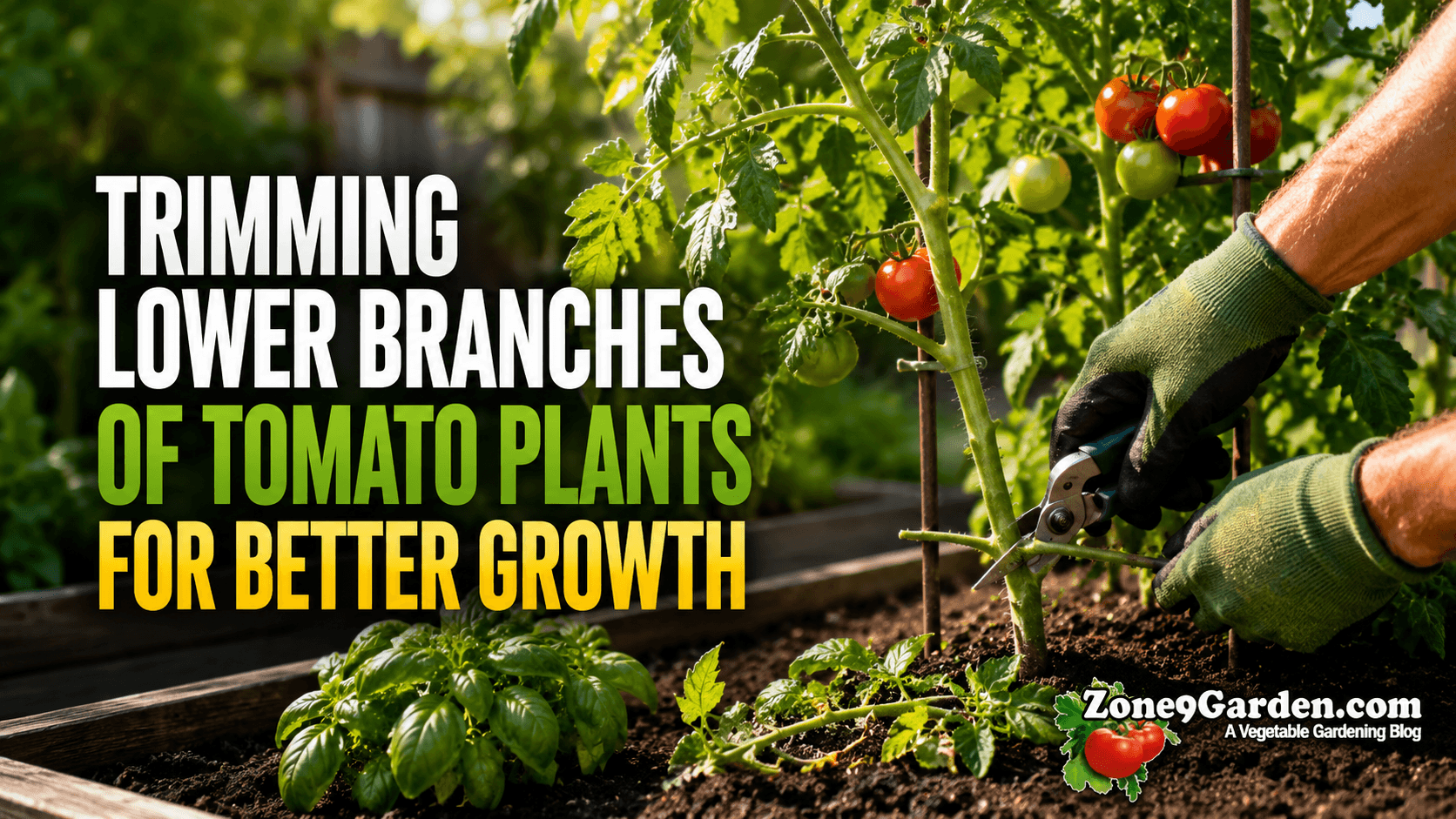
Removing the lower 6 to 12 inches of foliage creates a buffer zone between the soil and the plant canopy. This simple practice dramatically reduces the likelihood of soil-borne diseases reaching healthy foliage.
Improved Air Circulation
Fungal diseases thrive in moist, stagnant environments. Dense foliage near the base of tomato plants can trap humidity and prevent leaves from drying quickly after rain or watering.
Pruning lower branches improves airflow throughout the plant. Better air circulation allows moisture to evaporate faster, creating conditions that are less favorable for fungal growth.
In humid climates, including many Zone 9 growing regions, improving airflow can be one of the most effective methods of reducing disease pressure without relying heavily on fungicides.
Easier Monitoring for Problems
When the lower portion of the plant is less crowded, gardeners can more easily inspect stems, fruit, and leaves for signs of disease.
Early detection is critical when dealing with tomato diseases. Identifying symptoms quickly allows you to remove affected leaves before problems spread throughout the plant.
Reducing Pest Problems
Another benefit of removing lower tomato leaves is improved pest management.
Many common tomato pests begin their attacks near the base of the plant. Dense lower foliage provides shelter, protection, and easy access for insects and other garden pests.
Common tomato pests include:
- Aphids
- Cutworms
- Hornworms
- Whiteflies
- Spider mites
- Flea beetles
- Stink bugs
- Slugs and snails
While pruning alone will not eliminate pest problems, it can make your garden less attractive to many insects.
Removing Pest Hiding Places
Thick foliage near the soil line creates shaded, protected environments where insects can hide during the day.
By opening up the lower portion of the plant, you reduce the number of protected areas available for pests to establish themselves. This makes the environment less hospitable and allows beneficial insects easier access to potential prey.
Improving Visibility
One often-overlooked advantage of pruning is that it makes pest inspections much easier.
It’s far simpler to spot caterpillars, eggs, aphid colonies, or signs of chewing damage when the lower plant canopy is open and accessible.
Regular inspections allow gardeners to intervene before infestations become severe.
Limiting Pest Pathways
Many crawling insects and pests move from the soil onto plants. Removing leaves that touch or nearly touch the ground reduces easy access routes for these pests.
Combined with mulch and proper garden sanitation, lower-leaf pruning can become an important part of an integrated pest management strategy.
Directing Energy Toward Fruit Production
Tomato plants require energy to maintain every leaf, stem, flower, and fruit they produce.
As plants grow larger, the oldest leaves near the base often receive less sunlight due to shading from upper foliage. These leaves gradually become less productive and contribute less to photosynthesis.
Despite their reduced productivity, the plant still expends energy maintaining them.
Older Leaves Become Less Efficient
The lower leaves on mature tomato plants are typically the oldest leaves on the plant. Over time they may:
- Turn yellow
- Develop spots
- Become damaged by insects
- Experience nutrient deficiencies
- Receive insufficient sunlight
These aging leaves contribute less to overall plant growth while still requiring resources.
Removing them allows the plant to focus more energy on healthy foliage, flower production, and fruit development.
Encouraging Larger and Better Fruit
When resources are directed toward actively growing portions of the plant, gardeners often notice improvements in:
- Fruit size
- Fruit quality
- Ripening speed
- Overall plant vigor
Although pruning alone won’t double your harvest, it can help the plant allocate resources more efficiently throughout the growing season.
Improving Watering Efficiency
Proper watering is essential for successful tomato production.
When dense foliage covers the soil surface around the base of the plant, it can be difficult to water accurately. Gardeners may accidentally wet the leaves instead of delivering moisture directly to the root zone.
Pruning lower foliage provides easier access for watering and encourages gardeners to apply water where it is most beneficial.
Keeping Foliage Dry
Many tomato diseases spread more rapidly when leaves remain wet for extended periods.
By removing lower leaves and watering directly at the base of the plant, you can significantly reduce the amount of moisture that remains on foliage.
Drip irrigation systems and soaker hoses become even more effective when lower foliage is pruned away.
Supporting Better Garden Hygiene
Good sanitation is one of the most effective disease prevention strategies in any vegetable garden.
Removing lower leaves contributes to overall garden cleanliness by eliminating foliage that is most likely to become damaged, diseased, or infected.
Preventing Ground Contact
Leaves that touch the soil are particularly vulnerable to:
- Disease transmission
- Rot
- Insect damage
- Physical injury
Pruning helps keep foliage elevated above the soil surface where it can remain healthier.
Easier Mulching
Maintaining a layer of mulch around tomato plants is highly beneficial. Mulch helps:
- Retain soil moisture
- Suppress weeds
- Reduce soil splash
- Moderate soil temperatures
Lower-leaf pruning makes it easier to apply and maintain mulch around the base of plants without trapping moisture against foliage.
When Should You Remove Lower Tomato Leaves?
Timing is important when pruning tomato plants.
Avoid removing leaves immediately after transplanting. Young plants need as much foliage as possible to establish themselves and build energy reserves.
Instead, wait until the plant is actively growing and well established.
A good rule of thumb is to begin removing lower leaves once the plant reaches approximately 18 to 24 inches tall.
At this stage, removing the lowest leaves generally has little impact on plant growth while providing substantial disease-prevention benefits.
How Much Should You Prune?
Moderation is key.
For most tomato varieties, removing the lower 6 to 12 inches of foliage is sufficient.
As the plant grows taller, you can continue removing leaves that:
- Touch the soil
- Show signs of disease
- Turn yellow
- Become heavily shaded
- Restrict airflow
Avoid removing too much foliage at once. Excessive pruning can stress the plant and reduce its ability to produce energy through photosynthesis.
A gradual approach throughout the season is typically best.
Determinate vs. Indeterminate Tomatoes
Different tomato varieties may require slightly different pruning approaches.
Determinate Tomatoes
Determinate tomatoes grow to a fixed size and produce most of their fruit over a relatively short period.
Because these plants have a more compact growth habit, pruning should be conservative. Focus primarily on removing lower leaves for disease prevention rather than extensive shaping.
Indeterminate Tomatoes
Indeterminate tomatoes continue growing and producing fruit throughout the season.
These varieties generally benefit more from regular pruning. Removing lower leaves, managing suckers, and improving airflow can help maintain plant health over a long growing season.
Common Mistakes to Avoid
When pruning tomato plants, avoid these common errors:
Removing Too Many Leaves
Excessive pruning reduces the plant’s ability to photosynthesize and can slow growth.
Pruning Wet Plants
Always prune when foliage is dry. Working on wet plants can spread diseases from one part of the plant to another.
Using Dirty Tools
Clean pruning shears between plants to prevent disease transmission.
Ignoring Diseased Leaves
Remove infected leaves promptly and dispose of them away from the garden. Do not add diseased foliage to compost piles unless your compost reaches temperatures high enough to destroy pathogens.
The Bottom Line
Tomato plants can certainly grow, thrive, and produce fruit without any pruning at all. However, removing the lower leaves is one of the simplest and most effective maintenance practices a gardener can perform.
Lower-leaf pruning helps reduce fungal diseases, improve airflow, discourage pests, simplify watering, and direct the plant’s energy toward healthy growth and fruit production. The practice is especially valuable in warm, humid climates where disease pressure can be high.
By taking a few minutes throughout the growing season to remove aging foliage near the base of your plants, you can create healthier growing conditions and increase your chances of harvesting a larger, more productive tomato crop.
Whether you’re growing a few tomato plants in raised beds or managing a large backyard garden, this simple technique can make a noticeable difference in plant health and harvest quality.
Related Gardening Guides