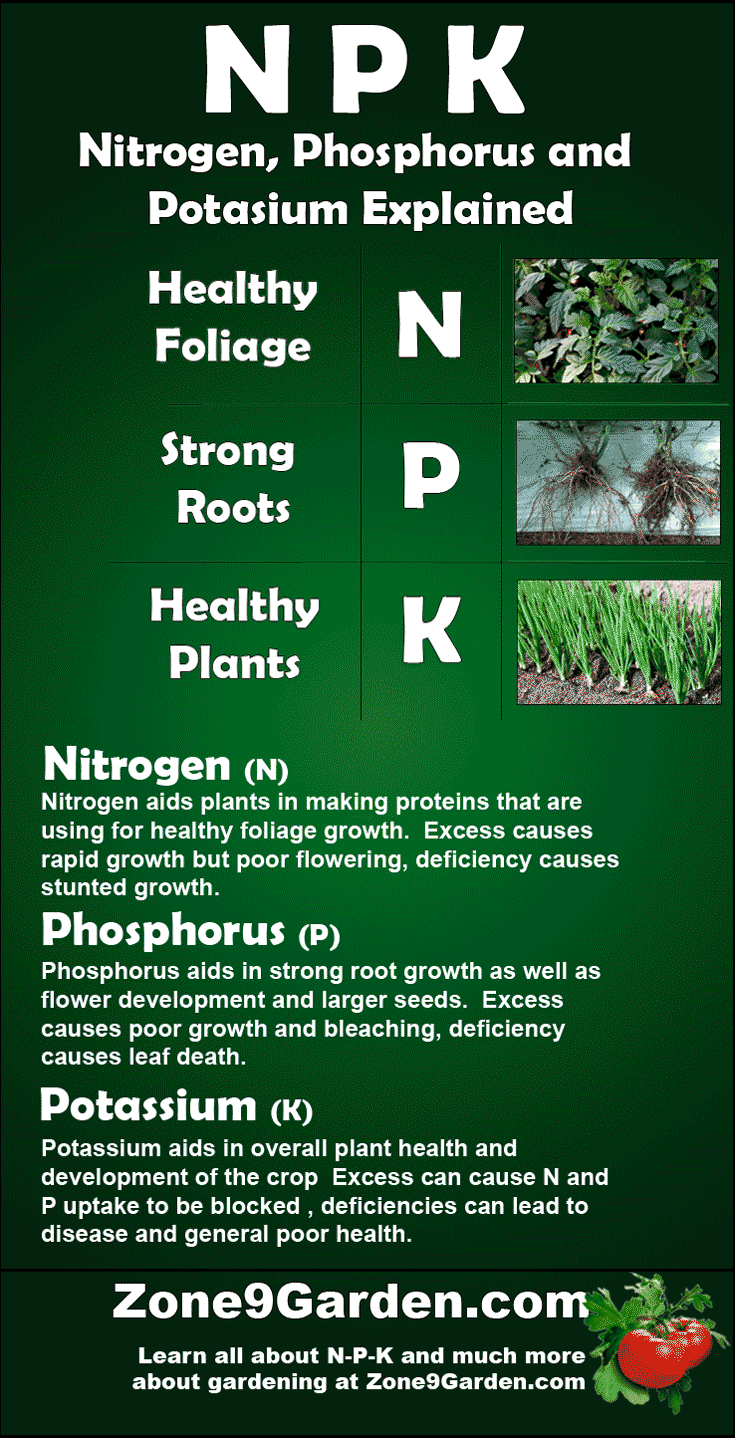

Whether you're using organic fertilizers or synthetic products, nearly every fertilizer is labeled with an NPK rating. NPK stands for Nitrogen (N), Phosphorus (P), and Potassium (K)—the three primary macronutrients that plants require for healthy growth, flowering, and fruit production.
Understanding how these nutrients function can help gardeners choose the right fertilizer, avoid common nutrient problems, and maximize plant health and yields. In this guide, we'll explain the role of each nutrient, the symptoms of deficiencies and excesses, and how to interpret fertilizer ratios.
Nitrogen (N)
Nitrogen is primarily responsible for leafy growth and stem development. Plants use nitrogen to produce proteins, enzymes, and chlorophyll, making it one of the most important nutrients for overall plant growth.
In nature, nitrogen is often in short supply because it moves readily through the soil and can be lost through leaching, runoff, and other natural processes. Because of this, plants frequently benefit from supplemental nitrogen during active growth periods.
Excess Nitrogen
While nitrogen promotes rapid growth, too much can create problems.
Plants receiving excessive nitrogen often develop lush, dark-green foliage but produce fewer flowers and fruits. In severe cases, excess nitrogen can actually stunt growth by causing the plant to absorb disproportionate amounts of nitrogen while neglecting other essential nutrients.
Young seedlings are especially vulnerable and may be damaged or killed by heavy nitrogen applications.
Common symptoms of excess nitrogen include:
- Excessive leafy growth
- Delayed flowering
- Reduced fruit production
- Weak, overly soft stems
- Increased susceptibility to some pests
Nitrogen Deficiency
Because nitrogen is mobile within the plant, deficiency symptoms appear first on older leaves. The plant will move available nitrogen from older growth to support new growth.
Symptoms of nitrogen deficiency include:
- Stunted plants
- Small leaves
- Pale green or yellow leaves
- Slow growth
- Reduced vigor
Phosphorus (P)
Phosphorus plays a critical role in root development, flower formation, seed production, and energy transfer throughout the plant. It helps move energy where it is needed most and contributes to overall plant vigor.
Unlike nitrogen, phosphorus does not move freely through the soil. Instead, it tends to bind tightly to soil particles, making it less prone to leaching but more susceptible to buildup from repeated fertilizer applications.
Excess Phosphorus
Because phosphorus accumulates in soil, overapplication is relatively common.
Excessive phosphorus can interfere with the plant's ability to absorb micronutrients such as iron and zinc. It can also negatively impact beneficial soil fungi and bacteria that help roots absorb water and nutrients.
Symptoms associated with excessive phosphorus include:
- Stunted growth
- Iron and zinc deficiencies
- Pale or bleached leaves with green veins
- Increased weed growth in some situations
Phosphorus Deficiency
Mild phosphorus deficiencies can be difficult to identify because symptoms develop slowly. Plants may simply appear smaller or less vigorous than expected.
As deficiencies become more severe, symptoms become easier to recognize.
Common symptoms include:
- Dark green leaves with a bluish tint
- Older leaves turning red, purple, or bronze
- Premature leaf drop
- Reduced flowering and fruiting
- Poor root development
Because phosphorus is mobile within the plant, symptoms usually appear on older growth first.
Potassium (K)
Potassium is often referred to as the "quality nutrient" because it contributes to overall plant health and resilience. It helps regulate water movement, supports protein production, strengthens cell walls, and improves resistance to insects, diseases, drought, and environmental stress.
Adequate potassium levels often result in stronger, healthier plants with improved yields and better-quality fruit.
Excess Potassium
Unlike nitrogen and phosphorus, excess potassium rarely causes direct toxicity. However, too much potassium can interfere with the uptake of other important nutrients, particularly nitrogen and phosphorus.
This imbalance can create secondary deficiencies even when those nutrients are present in the soil.
Potassium Deficiency
Potassium deficiencies often result in weakened plants that are more vulnerable to pests, diseases, and environmental stress.
Common symptoms include:
- Brown, scorched leaf margins
- Curling leaf tips
- Yellowing between leaf veins
- Purple spotting on leaf undersides
- Slow or stunted growth
- Reduced drought tolerance
Potassium is highly mobile within plants, so deficiency symptoms usually appear first on older, lower leaves as the nutrient is moved to support newer growth.
Understanding NPK Ratios
Every fertilizer package displays three numbers that represent the percentage of Nitrogen, Phosphorus, and Potassium it contains.
For example:
10-10-10
This fertilizer contains:
- 10% Nitrogen
- 10% Phosphorus
- 10% Potassium
The remaining 70% consists of micronutrients, carrier materials, and fillers that help distribute nutrients safely and evenly.
Choosing the Right Ratio
Many plants perform well with a balanced fertilizer, but different crops have different nutrient requirements.
For example:
- Beans and peas naturally fix nitrogen from the atmosphere and often benefit from lower-nitrogen fertilizers.
- Leafy vegetables such as lettuce, spinach, and kale generally require higher nitrogen levels to support vigorous leaf production.
- Root crops often benefit from adequate phosphorus for root development.
- Fruiting plants typically need different nutrient ratios as they mature.
Fertilizing Tomatoes: A Common Example
Tomatoes demonstrate how nutrient needs change throughout a plant's life cycle.
During early growth, a balanced fertilizer helps establish healthy roots, stems, and foliage. Once flowering and fruit production begin, reducing nitrogen while increasing phosphorus can encourage the plant to direct more energy toward producing flowers and fruit rather than excessive leaf growth.
This principle applies to many fruiting crops, including peppers, eggplants, cucumbers, and squash.
Soil Testing: The Key to Proper Fertilization
While general fertilizer recommendations can be helpful, the most effective fertilization program begins with a soil test.
A soil test measures existing nutrient levels and helps determine:
- Which nutrients are deficient
- Which nutrients are already abundant
- How much fertilizer should be applied
- The ideal NPK ratio for your crop
Because every plant species has unique nutritional requirements and every garden soil is different, soil testing remains the most accurate way to create an efficient fertilization plan.
Conclusion
Nitrogen, phosphorus, and potassium are the foundation of plant nutrition. Understanding how each nutrient functions—and recognizing the signs of deficiencies and excesses—can help gardeners make better fertilization decisions and grow healthier, more productive plants.
By selecting the appropriate NPK ratio and combining it with regular soil testing, you can provide your plants with exactly what they need for strong growth, abundant harvests, and long-term garden success.