
Last Updated on November 10, 2026
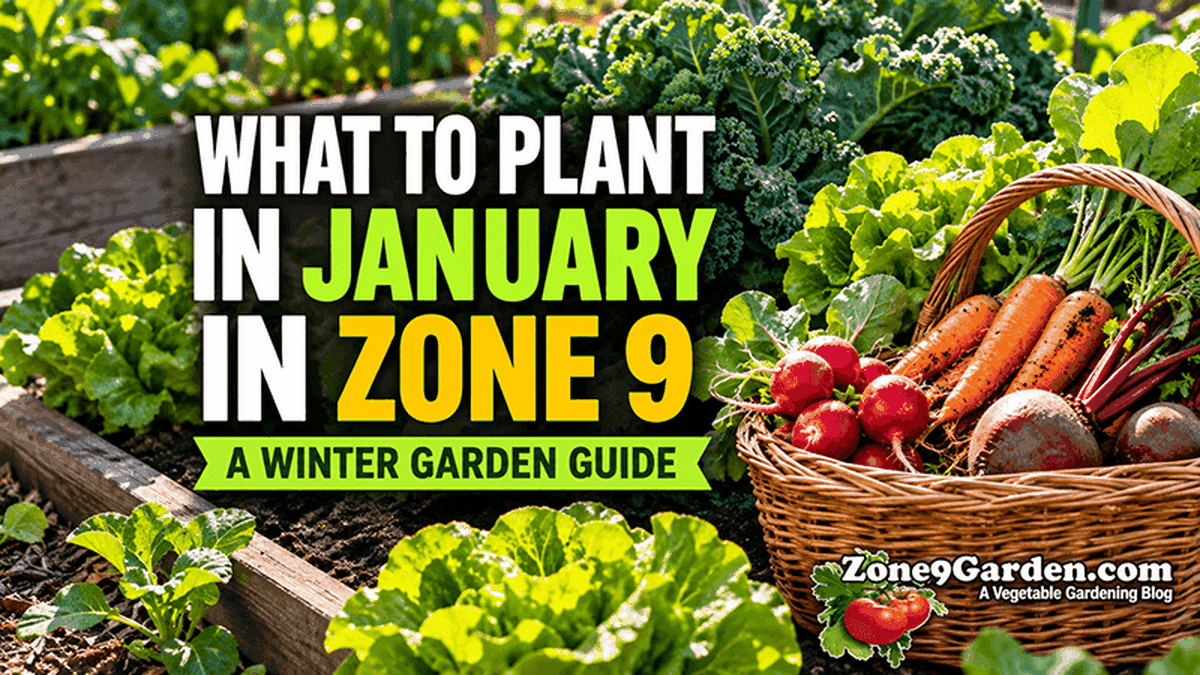
Your January garden can offer much more than a place to wait for spring. Picture fresh lettuce beside a row of carrots, kale ready for another picking, and broccoli heads developing in the cool air. Across suitable parts of Zone 9, winter is an opportunity to grow vegetables that struggle when summer heat arrives.

The secret is separating what you can plant now from what you should maintain, harvest, or protect. Short days slow growth, freezes can interrupt mild weather, and planting windows vary across Florida, Texas, Arizona, California, and other Zone 9 regions. This guide brings January together with planting tables, crop explanations, garden-care tips, regional adjustments, and a checklist to help you keep winter productive while preparing for spring.
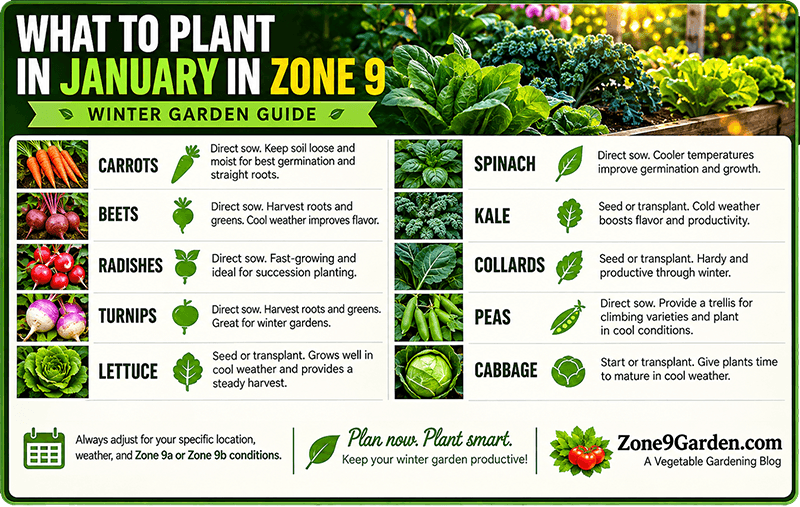
January Planting Guide at a Glance
Prefer a text-based overview? Use this table to organize January into new planting, ongoing harvests, and preparation.
Why Garden in January?
January provides growing conditions that many cool-season vegetables welcome. Lettuce, spinach, peas, roots, and cabbage-family crops can thrive during suitable winter weather while struggling through Zone 9 summer heat.
Established fall crops may already be ready to harvest. New plantings can extend the season, especially when you sow manageable batches rather than filling every available space at once.
Expect a slower pace during cold or cloudy periods. Seed-packet maturity estimates are useful planning tools, but actual growth depends on temperature, daylight, variety, and plant health. Inspect the crop itself before deciding it is ready.
What to Plant in January in Zone 9
Begin with crops suited to your current conditions. Roots and leafy vegetables offer useful options, while long-season brassicas need closer attention to planting date and the remaining cool-weather window.
Jump to January gardening tips ↓
Choosing Crops for Your January Garden
Lettuce and Leafy Greens
Lettuce, spinach, kale, and collards deserve a prominent place in a suitable January garden. Leaf lettuce provides flexibility because you can harvest usable leaves while the plant continues growing. Head lettuce needs more time and space to reach its final harvest.
Established kale and collards can provide repeated pickings. Remove larger outer leaves while leaving the central growing point intact. Spinach also welcomes cool conditions, although newly sown seed still needs careful moisture management.
For detailed care, use our lettuce guide, kale guide, and collard greens guide.
Carrots and Beets
Direct sow carrots into a prepared bed rather than moving them from a seed tray. Remove rocks, hard clumps, and other obstructions before planting. Their shallow seedbed should remain evenly moist through germination.
Beets offer edible roots and greens. Direct sowing is convenient, although young beets can also be transplanted carefully. Thin seedlings before crowding limits root development. See our carrot growing guide and beet growing guide.
Radishes and Turnips
Radishes are useful for short rows and small succession plantings. Turnips can supply roots, greens, or both, depending on the variety and how you harvest them. Sow directly, thin crowded seedlings, and check roots regularly as they approach usable size.
Cold weather can extend the time to harvest, so avoid promising a fixed number of days. Learn more in How to Grow Radishes and How to Grow Turnips in Zone 9.
Broccoli, Cabbage, and Cauliflower
January can be a harvest month for fall-planted brassicas. Pick broccoli while the head remains tight and before its flower buds open. Some varieties continue producing smaller side shoots after the main head is removed. Check cabbage for firm heads and cauliflower for the variety’s appropriate harvest stage.
New January plantings are possible in some regions, but there is no single answer for all of Zone 9. Consider both near-term freeze risk and whether enough suitable weather remains before spring heat. Healthy transplants can be more practical than beginning a long-season crop from seed late in its window.
English, Snow, and Snap Peas
Cool-season peas are different from heat-loving southern peas. Choose the type you enjoy eating and sow within your local window. Provide a trellis for climbing varieties before the vines become difficult to manage.
Avoid waterlogged soil and unnecessary heavy nitrogen applications. Peas can form a nitrogen-fixing relationship with appropriate root bacteria, but they still need suitable soil conditions and adequate overall fertility. Our Zone 9 pea growing guide explains their care.
Onions, Garlic, and Potato Planning
Plant Appropriate Onions
January is an onion-transplanting period in some southern growing regions. Starting bulbing onions from seed and planting established transplants are different activities, so check the recommended method as well as the month.
Choose a day-length category suited to your latitude and local growing system. Short-day onions are common in southern regions, while some other Zone 9 locations use intermediate-day varieties. Use our How to Grow Onions in Zone 9 guide to compare varieties, methods, and regional timing.
Maintain Fall-Planted Garlic
For many Zone 9 gardeners, January garlic work involves caring for cloves planted in fall. Keep weeds from competing with the plants, check moisture beneath the mulch, and avoid soil that stays saturated.
Do not assume January is an equally good replacement for the preferred fall planting window. Variety, chilling requirements, and local conditions affect late-planting results. See How to Grow Garlic in Zone 9 for the full crop plan.
Check Your Irish Potato Window
Irish potatoes belong on the January planning list, but not every Zone 9 garden should plant them on the same date. For example, LSU AgCenter identifies mid-January through mid-February as a planting period in its Louisiana winter guidance. Other regions use different windows.
Confirm your local planting period, prepare a well-drained growing area, and arrange suitable seed potatoes before that window opens. Irish potatoes and sweet potatoes have different seasonal requirements.
Herbs for the January Garden
Consider cilantro, parsley, and dill where local conditions support establishment. Cilantro is particularly useful during cooler weather, when rapid heat-driven bolting is less of a challenge.
Established chives, rosemary, thyme, and mint may also remain useful, although growth and cold tolerance vary. Check the needs of each species instead of treating the entire herb bed alike.
Basil is cold sensitive and should not be treated as a dependable outdoor January crop throughout Zone 9. Protect vulnerable herbs when needed.
January Gardening Tips
- Harvest established crops before quality declines.
- Plant manageable batches of suitable quick-growing vegetables.
- Keep germinating seedbeds moist without leaving them saturated.
- Thin crowded roots and allow transplants room to mature.
- Inspect leaf undersides and developing heads for pests.
- Prepare frost protection before a cold forecast.
- Review the remaining cool-weather window before each new planting.
- Keep records of sowing dates, harvests, and weather setbacks.
Prepare Your Garden for the Months Ahead
Keep healthy, productive plants while clearing space from exhausted crops. Remove weeds early and assess drainage, soil condition, and irrigation before beginning another planting.
- Prepare seedbeds: Loosen compacted areas and remove obstructions where roots will develop.
- Review amendments: Add finished compost where needed, accounting for previous applications.
- Check irrigation: Repair leaks and clear blocked emitters.
- Inspect supports: Repair trellises before peas or future warm-season vines need them.
- Maintain mulch: Keep it useful around established plants without burying small seedlings.
- Reserve space: Leave room for later sowings and spring transplants.
Continue Succession Planting
Small sowings of lettuce, radishes, and other suitable crops can spread out harvests. A one- or two-week interval may be useful for some quick crops, but adjust the interval for your household, growth rate, and remaining planting window.
Do not keep sowing automatically as spring approaches. Later plantings still need enough suitable weather to produce before heat becomes limiting.
Plan Indoor Seed Starting
January can be an indoor seed-starting period for tomatoes, peppers, or eggplant in some locations. Work backward from a locally appropriate outdoor planting date and the variety’s seedling-development needs.
Clean containers, check seed inventories, and prepare adequate light and growing space. Starting too early can leave you managing oversized plants while waiting for suitable outdoor conditions.
Watering Your January Garden
Cooler temperatures and shorter days often reduce irrigation needs compared with summer. Newly sown seeds and young transplants still require attention, especially while roots are becoming established.
Keep shallow seedbeds appropriately moist through germination. As plants develop, check moisture in their root zone and water according to soil and crop needs.
Rainfall, wind, soil texture, mulch, and container size all affect drying. Reassess irrigation after rain or a change in weather instead of leaving the summer schedule running unchanged.
Check below the surface. A dry-looking top layer can hide moist soil, while a small container may dry faster than a nearby garden bed.
Fertilizing in January
Winter crops still need adequate nutrition, but January does not call for an automatic fertilizer application to every bed. Use soil-test recommendations, crop requirements, previous inputs, and current growth to guide feeding.
Avoid trying to force weather-limited growth with extra fertilizer. Check soil moisture, drainage, and root health when plants struggle. Measure applications and follow product directions.
Our NPK fertilizer guide explains label numbers and how to connect them to crop needs.
Protect Your Garden From January Freezes
Mild afternoons can be followed by freezing nights. Cold tolerance varies by crop, variety, plant age, and the severity and duration of the cold, so do not assume every winter vegetable needs identical protection.
- Keep suitable frost cloth available before cold weather arrives.
- Cover vulnerable plants before temperatures fall.
- Secure the edges and use supports where needed to protect delicate foliage.
- Ventilate or remove covers when conditions warm, following the material’s instructions.
- Move manageable, cold-sensitive containers to shelter when practical.
- Give young seedlings and tender herbs particular attention.
A regional average frost date is a planning reference, not a guarantee. Use current forecasts and your garden’s exposure to make protection decisions.
Common January Garden Pests
Pests can remain active during mild winter weather. Check leaf undersides, new growth, and developing heads, and identify the cause of damage before choosing treatment.
Disease can also develop during wet weather. Maintain suitable spacing, avoid unnecessary leaf wetness, and remove severely diseased material where appropriate. Ask your Extension office for help if symptoms remain unclear.
Zone 9a and Zone 9b in January
Hardiness zones describe average annual extreme minimum winter temperatures. They do not describe every January night, the amount of winter rain, or one universal planting schedule.
Regional Differences Across Zone 9
Florida and the Southeast
Use guidance for your part of the state. UF/IFAS January resources cover a broad selection of greens, root crops, peas, and brassicas, but recommendations differ between North, Central, and South Florida. Winter dryness, rain, and cold fronts can change irrigation and protection needs.
Texas and the Gulf Coast
Consult a county or regional calendar. Texas A&M AgriLife provides winter and spring planting guidance, including January onion transplanting in appropriate areas. Strong cold fronts can interrupt mild weather. Louisiana gardeners can also consult LSU AgCenter’s winter planting recommendations.
Arizona and the Desert Southwest
The University of Arizona’s Maricopa County calendar identifies winter opportunities for roots, greens, peas, and selected brassicas. Use it for low-desert context rather than extending it to every elevation. Check nighttime temperatures, soil moisture, and the time remaining before heat.
California
Coastal, valley, and desert gardens have different winter conditions. UC Master Gardener guidance for Butte County includes January direct sowing and brassica transplanting opportunities, illustrating why county-level recommendations are useful. Check your own local program before copying another region’s schedule.
Frequently Asked Questions
What vegetables can I plant in January in Zone 9?
Consider carrots, beets, radishes, turnips, lettuce, spinach, peas, and locally suitable greens. Brassica and onion transplants may also fit your regional window. Confirm the method and timing with local guidance.
Is January too cold to plant?
Not necessarily. Many cool-season vegetables can establish during suitable winter weather. Repeated freezes, saturated soil, or prolonged cold may make protecting established plants the better immediate priority.
Can I grow tomatoes outdoors in January?
Outdoor opportunities are highly location dependent because tomatoes are frost sensitive. In many Zone 9 gardens, January is better used for planning or protected seed starting. Follow a local planting calendar and current weather.
What grows fastest in January?
Radishes, baby lettuce, and some leafy greens are useful relatively quick crops. Growth still depends on temperature, daylight, variety, and conditions; winter harvests may take longer than expected.
Can I plant carrots in January?
Yes, where the local window is suitable. Direct sow into prepared soil, keep the seedbed moist during germination, and thin seedlings to allow root development.
Should I fertilize during January?
Feed according to the crop, soil recommendations, and previous applications. Avoid using extra fertilizer to compensate for growth slowed by weather or unhealthy roots.
What does “harvest” mean in the planting table?
It refers to earlier crops that have reached usable maturity. It does not mean a new January planting will necessarily produce during the same month.
What should I do before a freeze?
Identify vulnerable plants, prepare suitable covers, secure them before temperatures fall, and shelter manageable containers where appropriate. Check covers again as conditions warm.
Final Thoughts
A productive January garden combines a few well-timed plantings with steady care for the crops already growing. Harvest usable vegetables, protect vulnerable plants, keep seedbeds moist, and let your local conditions guide the next sowing.
Choose crops your household enjoys and keep the plan manageable. With attention to timing and weather, January can provide fresh harvests while setting up a smoother transition into spring.
Research Behind This January Guide
The resources below address January planting across multiple crop groups and regions. Use the calendar closest to your location rather than treating one county’s recommendations as a schedule for all of Zone 9.