
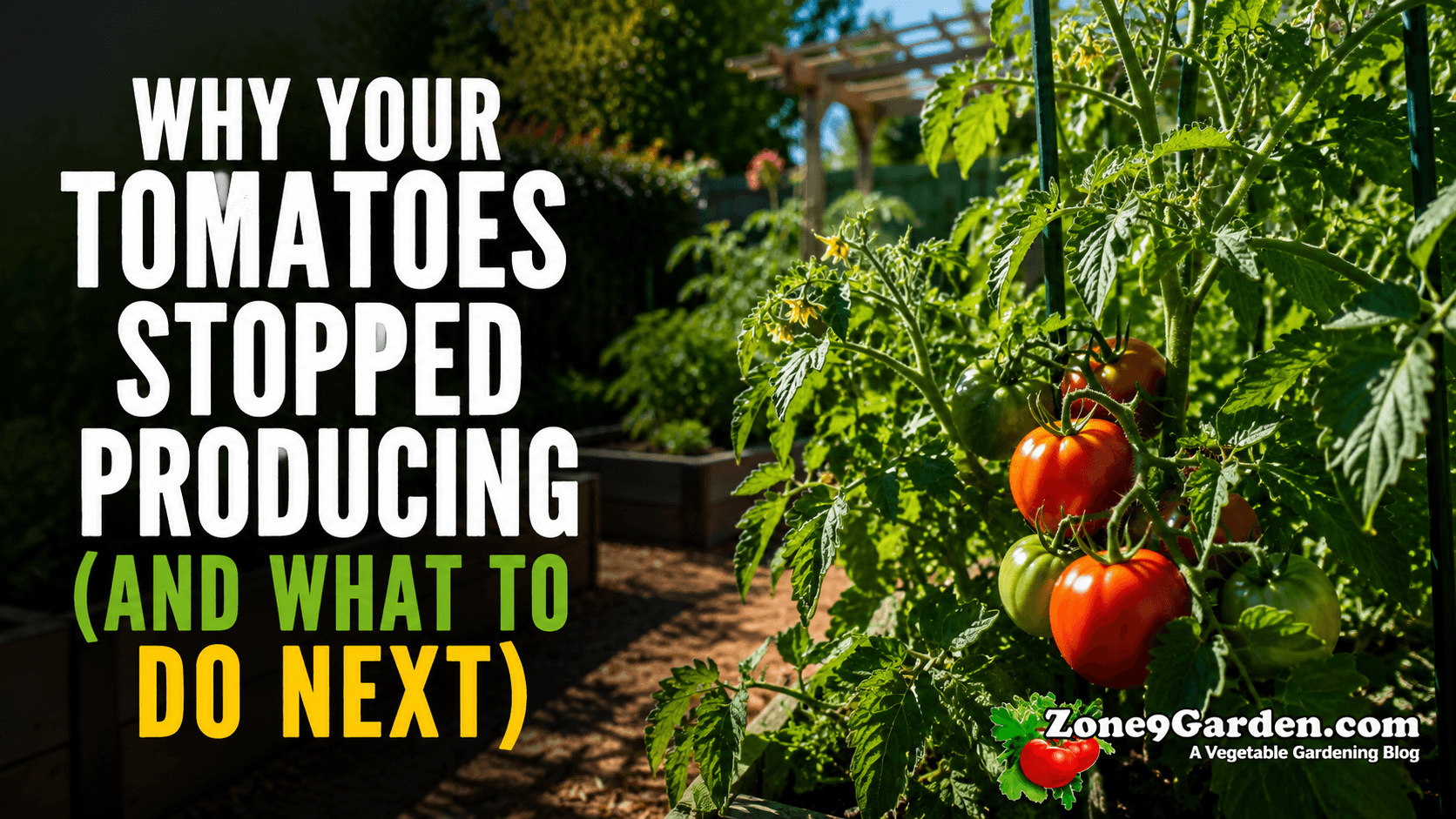
You planted your tomatoes in spring, watched them explode with growth, harvested a few beautiful fruits—and then suddenly everything stopped.
The plants still look healthy. The leaves are green. The vines keep growing.
But no new tomatoes.
If you’re gardening in Zone 9, this is one of the most common frustrations of June and July. The good news is that your plants may not be dying, diseased, or failing at all. They’re often reacting exactly the way tomatoes do when summer heat arrives.
Here’s what’s really happening—and what you should do next.
The Hidden Culprit: High Nighttime Temperatures
Most gardeners focus on daytime heat, but tomatoes are often more affected by warm nights.
Tomato plants need a certain temperature range to successfully produce pollen and set fruit. When nighttime temperatures stay above about 70–75°F for extended periods, pollen can become sterile. Flowers may still appear, but they won’t develop into tomatoes.
In much of Zone 9, nighttime temperatures remain well above that threshold throughout summer.
This creates a confusing situation:
- Plants continue growing
- Flowers continue forming
- Leaves remain healthy
- Few or no new tomatoes develop
Many gardeners assume they’re doing something wrong when the real issue is simply the weather.
Heat Stress vs. Disease: How to Tell the Difference
When tomatoes stop producing, it’s important to determine whether heat stress or disease is responsible.
Signs of Heat Stress
- Lots of blossoms but few fruits
- Flowers dropping off the plant
- Healthy green foliage
- Continued vine growth
- No major leaf spotting or yellowing
Signs of Disease
- Yellowing leaves spreading upward
- Dark spots on foliage
- Wilting that doesn’t improve after watering
- Stem discoloration
- Fruit rot or lesions
If your plants still look vigorous and green but aren’t producing tomatoes, heat stress is far more likely than disease.
Before reaching for fungicides or ripping out plants, take a close look at the overall health of the foliage.
Understanding Blossom Drop
Blossom drop is exactly what it sounds like.
A tomato flower forms, opens, and then falls off without producing fruit.
This happens because pollination and fertilization fail during periods of excessive heat.
Many gardeners mistake blossom drop for nutrient deficiencies, watering issues, or pest damage. While those problems can contribute, prolonged heat is usually the primary cause during summer in Zone 9.
A few dropped flowers are normal.
When nearly every flower falls off without producing fruit, high temperatures are almost always involved.
Can Shade Cloth Help?
Yes—sometimes.
Shade cloth won’t completely solve extreme summer temperatures, but it can reduce stress enough to improve plant performance.
Best Practices for Tomato Shade Cloth
- Use 30% to 40% shade cloth
- Install it above plants, not directly on foliage
- Allow good airflow around the plants
- Focus on protecting plants during the hottest afternoon hours
Many Zone 9 gardeners see healthier foliage and reduced blossom drop after adding shade cloth.
However, it’s important to keep expectations realistic.
Even under shade cloth, tomatoes may still struggle to set fruit when nighttime temperatures remain excessively warm.
Watering During Summer Heat
Tomatoes need consistent moisture during hot weather, but overwatering won’t fix heat-related fruit set problems.
Aim for:
- Deep watering
- Mulched soil
- Even moisture levels
- Avoiding repeated wet-dry cycles
Adding 2–4 inches of mulch around plants can dramatically reduce root-zone temperatures and conserve moisture.
Good watering practices help plants survive summer. They don’t necessarily restore fruit production when temperatures are the limiting factor.
Should You Keep Your Tomatoes Alive?
This is the question every Zone 9 gardener eventually asks.
The answer depends on the condition of the plants.
Keep Them If:
- Foliage remains healthy
- Disease pressure is low
- Plants are still growing vigorously
- Fall temperatures will arrive within a few months
Many indeterminate varieties begin producing again when temperatures moderate in late summer and early fall.
Remove Them If:
- Disease has become severe
- Plants are declining rapidly
- Pest pressure is overwhelming
- You need the space for fall planting
Sometimes starting fresh is the better option.
When to Stop Fighting Summer and Start Planning Fall Tomatoes
One of the biggest mindset shifts for Zone 9 gardeners is realizing that tomatoes often have two seasons.
The spring crop is usually the most productive.
Then comes the summer slowdown.
Finally, many gardeners enjoy a second harvest in fall once temperatures become more favorable.
Instead of pouring energy into forcing production during the hottest weeks of the year, consider shifting your focus toward your fall garden.
In many Zone 9 areas, gardeners begin:
- Starting tomato seeds indoors in midsummer
- Purchasing transplants for late-summer planting
- Preparing beds for fall crops
- Improving irrigation systems before autumn arrives
A healthy fall tomato crop often outperforms a struggling midsummer one.
The Bottom Line
If your tomatoes suddenly stopped producing in June or July, don’t panic.
Healthy plants with plenty of flowers but few fruits are usually responding to heat—not failing.
High nighttime temperatures can prevent pollination, leading to blossom drop and reduced fruit set even when plants look perfectly healthy.
Use shade cloth, mulch well, and maintain consistent watering to help plants weather the heat. But remember that sometimes the best strategy isn’t fighting summer—it’s preparing for the productive fall season ahead.
In Zone 9 gardening, understanding the rhythm of tomato production is often the difference between frustration and success.