
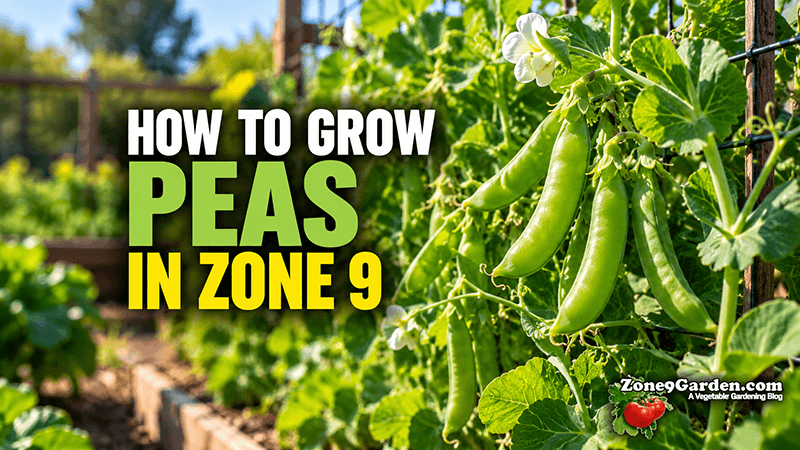
Peas are one of the most rewarding cool-season vegetables to grow in Zone 9. They are relatively easy to establish from seed, produce delicious fresh harvests, and can be grown in traditional garden beds, raised beds, and containers.
However, growing peas successfully in Zone 9 requires understanding one important factor: peas prefer cool weather and generally struggle when temperatures become too warm.
While gardeners in colder regions often plant peas in early spring, Zone 9 gardeners can take advantage of fall and winter growing conditions. In many locations, the cooler months provide an excellent opportunity to grow English shelling peas, sugar snap peas, and snow peas.
For most Zone 9 gardeners, the best time to plant peas is from September through December for fall and winter production, with another planting opportunity during January and February where cool weather lasts long enough.
The exact timing depends on your location. Gardeners in Florida, Texas, Arizona, and California may experience very different winter conditions despite sharing the same USDA hardiness zone.

The key to successful pea production is choosing the right varieties, planting directly into well-drained soil, providing support when needed, maintaining consistent moisture, and harvesting before sustained spring heat arrives.
With proper planning, peas can become one of the most productive vegetables in your Zone 9 winter garden.
Can You Grow Peas in Zone 9?
Yes. Peas grow very well in Zone 9 when planted during the cooler portions of the year.
Garden peas (Pisum sativum) belong to the Fabaceae family, commonly called the legume or pea family.
There are three main types grown in home vegetable gardens:
- English peas: Also called garden or shelling peas, these produce edible seeds inside pods that are normally removed before eating.
- Sugar snap peas: These produce thick, crisp, edible pods that are harvested while the peas inside are still tender.
- Snow peas: These produce flat, edible pods that are harvested before the seeds become large.
All three types can perform well during the Zone 9 cool season.
It is important to distinguish these garden peas from Southern peas, black-eyed peas, and cowpeas.
Southern peas (Vigna unguiculata) are warm-season crops that thrive in conditions that are often too hot for English, snap, and snow peas.
This guide focuses specifically on cool-season garden peas.
Peas generally perform best when daytime temperatures remain around 55–70°F.
They can tolerate light frost once established, but severe freezing weather may damage flowers and developing pods.
Temperatures above approximately 80°F can interfere with flowering, reduce pod production, and shorten the harvest season.
That makes planting dates particularly important in Zone 9.
When Should You Plant Peas in Zone 9?
Timing is one of the most important factors in growing peas successfully.
Peas need enough cool weather to establish healthy vines, produce flowers, and develop pods before temperatures become excessively warm.
In much of Zone 9, fall and winter provide the most favorable growing conditions.
Zone 9 Pea Planting Calendar
| Planting Activity | Fall / Winter | Spring |
|---|---|---|
| Start Seeds Indoors | Not recommended | Not recommended |
| Direct Sow Outdoors | September 15 – December 31 | January 1 – February 28 |
| Transplant | Not recommended | Not recommended |
| General Harvest Window | November 15 – April 30 | March 1 – May 15 |
| Succession Planting | Every 2–3 weeks while conditions remain favorable | Every 2–3 weeks while enough cool weather remains |
These dates are broad regional planning windows, not guaranteed planting dates for every Zone 9 location.
In warmer areas, October through December may provide better planting conditions than September.
In cooler Zone 9 locations, January and February sowings may produce good spring harvests.
For additional seasonal guidance, see our Zone 9 Fall Planting Guide and Zone 9 Winter Planting Guide.
Can You Plant Peas in December in Zone 9?
Yes. December is an excellent month to plant peas in many Zone 9 gardens.
By December, daytime temperatures have usually cooled enough to provide favorable growing conditions.
However, planting success depends on regional temperatures.
In warmer Zone 9b locations, December can provide ideal conditions for direct sowing.
In colder Zone 9a gardens, seeds may germinate more slowly, and plant growth may slow during periods of short daylight and cold weather.
December planting can be particularly useful for gardeners who want to harvest peas during late winter or early spring.
Choose early-maturing varieties when possible, especially where spring heat arrives quickly.
Sugar Ann, Oregon Sugar Pod II, Little Marvel, and Wando are useful varieties to consider.
Wando is particularly interesting because it has greater heat tolerance than many traditional English peas.
However, even heat-tolerant pea varieties perform best when most of their growth occurs during cool weather.
Can Peas Be Planted Too Early?
Yes.
Planting peas while late-summer temperatures remain high can create several problems.
Although pea seeds can germinate in relatively cool soil, hot growing conditions are not ideal for healthy plant development.
Potential problems include:
- Poor establishment during hot weather
- Rapid drying of the seedbed
- Reduced flowering
- Flower drop
- Poor pod development
- Increased moisture stress
- Shortened harvest periods
In hotter portions of Zone 9, particularly desert locations, waiting until October or November may produce better results than planting in September.
Can Peas Be Planted Too Late?
Yes.
Peas need enough time to grow, flower, and develop pods before sustained heat arrives.
Late winter plantings may establish successfully but encounter warm spring weather before reaching peak production.
When temperatures rise above approximately 80°F, flowering and pod development may decline.
For this reason, early-maturing varieties are particularly useful for late-season planting.
Gardeners should also remember that peas grow more slowly during cold winter conditions.
A variety advertised as maturing in 60 days may take considerably longer during periods of short daylight and low temperatures.
Choosing the Best Pea Varieties for Zone 9
Not all pea varieties grow the same way.
Some produce compact plants that require little support, while others develop tall vines that need a trellis.
Different varieties also produce different types of edible pods or seeds.
Choosing a variety suited to your garden space and expected growing temperatures can make a significant difference.
Sugar Ann
Sugar Ann is an early-maturing sugar snap pea.
It produces sweet, crisp edible pods on relatively compact plants.
Because it matures earlier than many larger climbing varieties, Sugar Ann is particularly useful where the cool growing season is limited.
Its compact growth habit also makes it an excellent choice for raised beds and containers.
For gardeners planting peas in December, Sugar Ann is one of the strongest varieties to consider.
Oregon Sugar Pod II
Oregon Sugar Pod II is a popular snow pea variety.
It produces broad, flat pods that are harvested while tender.
The entire pod is edible, making it useful for stir-fries, steaming, and fresh eating.
This variety has resistance to certain pea diseases, although resistance does not eliminate every disease risk.
Oregon Sugar Pod II is a good option for gardeners who want productive snow peas during the cool season.
Little Marvel
Little Marvel is a compact English shelling pea.
It produces traditional green peas that are removed from their pods before eating.
Its relatively small plant size makes it useful for gardeners with limited space.
Little Marvel is a good choice for anyone who prefers sweet shelling peas rather than edible-pod varieties.
Green Arrow
Green Arrow is an English shelling pea known for producing long pods containing multiple peas.
It is a useful variety for gardeners who want a traditional shelling pea harvest.
Because the pods are generally not eaten, Green Arrow is grown primarily for the tender green peas inside.
Wando
Wando is an English shelling pea known for better heat tolerance than many traditional varieties.
This makes it especially interesting for Zone 9 gardeners who experience warming temperatures during late winter and spring.
However, Wando is not a true hot-weather crop.
It still performs best when planted early enough for flowering and pod development to occur during relatively cool weather.
Sugar Snap
Sugar Snap is a classic climbing snap pea.
It produces thick, sweet edible pods on vigorous vines.
Because plants can become tall, a sturdy trellis is recommended.
Sugar Snap is a good choice for gardeners who have vertical growing space and want a productive edible-pod variety.
Super Sugar Snap
Super Sugar Snap is another vigorous climbing snap pea.
It produces crisp, sweet pods and benefits from sturdy support.
Disease-resistance characteristics may vary depending on the specific seed strain or supplier, so review the seed packet before purchasing.
Mammoth Melting Sugar
Mammoth Melting Sugar is a tall snow pea variety.
It produces large, flat edible pods and vigorous vines.
This variety is best suited to gardens with a sturdy trellis and adequate vertical growing space.
It is a good option for gardeners who want substantial snow pea production.
Which Pea Variety Should You Choose?
For beginners, Sugar Ann, Oregon Sugar Pod II, and Little Marvel are excellent starting points.
For traditional shelling peas, consider Little Marvel, Green Arrow, or Wando.
For edible pods, Sugar Ann, Sugar Snap, and Oregon Sugar Pod II are dependable choices.
For larger trellises, consider Sugar Snap, Super Sugar Snap, or Mammoth Melting Sugar.
Growing two or three varieties can help determine which performs best in your particular Zone 9 garden.
Choosing the Best Location for Peas
Peas grow best in full sun.
Choose a location that receives at least six hours of direct sunlight daily when possible.
UC Agriculture and Natural Resources recommends at least four to six hours of sunlight for pea production.
Adequate sunlight supports healthy vines, flowering, and pod development.
Peas can tolerate some light shade, but excessive shade may reduce flowering and yields.
Good drainage is equally important.
Peas do not perform well in soil that remains waterlogged.
Poor drainage can interfere with root development, reduce nitrogen fixation, and increase the risk of root rot.
Raised beds are particularly useful where native soil is heavy or poorly drained.
Climbing varieties should be planted where a trellis can be installed without shading nearby vegetables.
Preparing the Soil for Peas
Proper soil preparation helps peas establish healthy roots and produce vigorous vines.
Peas prefer fertile, well-drained soil with adequate organic matter.
A loose loam or improved sandy soil is ideal.
Avoid locations with compacted soil, poor drainage, or standing water.
Before planting:
- Remove weeds and old plant debris.
- Loosen compacted soil.
- Incorporate finished compost where needed.
- Check drainage.
- Correct nutrient deficiencies based on a soil test.
- Install a trellis if growing climbing varieties.
- Moisten dry soil before sowing.
Peas generally grow best in slightly acidic soil.
What Soil pH Do Peas Prefer?
A soil pH of approximately 6.0–6.5 is a useful target.
Peas can tolerate a somewhat broader near-neutral range, but excessively acidic or alkaline conditions may interfere with nutrient availability and healthy growth.
A soil test is the best way to determine whether lime or other amendments are needed.
Avoid adding fertilizer or lime automatically without knowing your soil conditions.
How to Plant Peas in Zone 9
Peas should generally be planted directly into the garden.
Starting peas indoors and transplanting them is usually unnecessary for Zone 9 cool-season production.
Direct sowing allows the roots to establish naturally without transplant disturbance.
Step 1: Prepare the Planting Area
Begin with loose, well-drained soil.
Remove weeds, large clumps, and debris.
The soil should be moist but not saturated.
If you are growing climbing peas, install the trellis before planting.
Installing supports early reduces the risk of damaging roots later.
Step 2: Plant at the Correct Depth
Sow pea seeds approximately 1–2 inches deep.
Texas A&M AgriLife Extension recommends approximately 1 inch for English peas.
In heavier soil, planting around 1 inch deep is a useful starting point.
In lighter soil, seeds may be planted somewhat deeper, up to approximately 2 inches.
Cover the seeds with soil and gently firm the planting surface.
Step 3: Space the Seeds
Plant pea seeds approximately 2–3 inches apart.
For traditional single rows, allow approximately 18–36 inches between rows, depending on the variety and support system.
Peas can also be grown in closely spaced double rows.
UC ANR describes double rows approximately 3–6 inches apart, with about 24 inches between sets.
This arrangement works particularly well when a trellis is placed between the two rows.
Step 4: Water After Planting
Water gently after sowing.
The soil should remain evenly moist during germination.
Avoid excessive irrigation that leaves the soil saturated.
Waterlogged conditions can cause seeds to rot before emerging.
Step 5: Provide Support
Compact bush varieties may require little support, although short stakes or netting can help keep plants upright.
Climbing varieties need a trellis.
Install support early so young tendrils can attach naturally as the plants grow.
Step 6: Monitor Seedling Establishment
Pea seedlings generally emerge within approximately 7–14 days under favorable conditions.
Cold or saturated soil may delay emergence.
Once seedlings appear, monitor soil moisture, weed competition, and insect damage.
Avoid disturbing young roots unnecessarily.
How Long Do Pea Seeds Take to Germinate?
Pea seeds generally germinate in approximately 7–14 days under favorable cool-season conditions.
Germination can take longer when soil temperatures are very low or the soil remains excessively wet.
Unlike warm-season vegetables, peas do not require hot soil to germinate.
They can begin germinating at soil temperatures around 45°F.
However, emergence is generally faster under moderately cool conditions.
Pea Germination Temperature Guide
| Soil Temperature | Expected Conditions |
|---|---|
| Around 45°F | Germination possible but often slow |
| 45–55°F | Cool conditions; emergence may be delayed |
| 55–70°F | Favorable practical range for establishment |
| Above 70°F | Germination may occur, but monitor moisture and rising air temperatures |
| Hot soil | Greater risk of establishment problems and heat stress |
The 55–70°F range is a practical cool-season establishment target, not a universal scientifically established optimum.
Soil moisture is just as important as temperature.
Seeds planted into saturated soil may rot before germinating.
In sandy soils, the opposite problem can occur when the seedbed dries too quickly.
Maintain even moisture without waterlogging.
Watering Peas in Zone 9
Peas need consistent moisture for healthy growth and pod production.
Although they are relatively shallow-rooted plants, they do not tolerate prolonged waterlogging.
The goal is to keep the root zone evenly moist without keeping the soil constantly saturated.
Moisture is particularly important during flowering and pod development.
Water stress during these stages can reduce pod production and affect quality.
How Often Should You Water Peas?
Watering frequency depends on:
- Rainfall
- Soil texture
- Temperature
- Wind
- Plant size
- Mulch
- Raised beds versus in-ground planting
- Growth stage
Sandy soils may need more frequent irrigation than heavier soils.
During cool winter weather, the soil may remain moist for several days after rainfall.
Rather than following a rigid daily schedule, check soil moisture before watering.
Water at the soil level when possible.
Avoid unnecessary overhead watering that keeps foliage wet for extended periods, particularly in humid climates.
Should You Mulch Peas?
Yes.
A light layer of organic mulch can help conserve moisture, moderate soil temperatures, and reduce weed competition.
Suitable materials include clean straw and shredded leaves.
Apply mulch after seedlings become established.
Avoid burying young plants or piling mulch directly against stems.
Fertilizing Peas in Zone 9
Peas have different fertilizer requirements than many other vegetables.
As legumes, peas can form a beneficial relationship with soil bacteria called rhizobia.
These bacteria live in nodules on pea roots and can convert atmospheric nitrogen into forms the plant can use.
However, nitrogen fixation depends on the presence of compatible bacteria and suitable soil conditions.
Peas do not automatically produce all the nitrogen they need in every garden.
Excessive nitrogen fertilizer can encourage vigorous leafy growth without improving pod production.
The best approach is to test the soil and apply nutrients only when needed.
Pea Fertilizer Schedule
| Growth Stage | Timing | Recommended Action |
|---|---|---|
| Pre-Plant | 1–3 weeks before sowing | Test soil, incorporate finished compost if needed, and correct documented nutrient deficiencies |
| Seed Preparation | At sowing | Consider an appropriate pea-group rhizobial inoculant where nodulation is uncertain |
| Planting | Day 0 | Direct sow into prepared soil; avoid concentrated fertilizer against seeds |
| Early Growth | 2–4 weeks after emergence | Monitor plant vigor and investigate poor growth |
| Flowering | During bloom | Maintain consistent moisture and avoid excessive nitrogen |
| Pod Development | During harvest | Continue watering appropriately and correct demonstrated deficiencies only |
Should You Use a Pea Inoculant?
A pea inoculant contains compatible rhizobia that can help establish nitrogen-fixing root nodules.
It may be useful in beds where peas have not previously been grown or where suitable rhizobia are uncertain.
Choose an inoculant specifically labeled for peas or the appropriate pea/vetch group.
Follow the product directions.
Inoculation is not always necessary in garden soil where compatible bacteria are already present.
Do Peas Need Nitrogen Fertilizer?
Sometimes.
Healthy peas with effective root nodulation may need little supplemental nitrogen.
However, poor soil fertility, inadequate nodulation, or nutrient deficiencies can limit growth.
UC ANR guidance allows supplemental nitrogen where appropriate, so a strict rule against all nitrogen fertilizer would be misleading.
Avoid excessive applications and use soil testing or local Extension guidance to determine what is needed.
For more information about plant nutrients, see our NPK: Nitrogen, Phosphorus, and Potassium Explained guide.
Growing Peas on a Trellis
Many pea varieties benefit from vertical support.
Climbing peas produce tendrils that attach to nearby structures as the vines grow.
A trellis helps keep vines upright and can make harvesting easier.
Benefits include improved access to pods, less contact with wet soil, and better organization of garden space.
Suitable supports include:
- Garden netting
- Wire mesh
- Wooden trellises
- Bamboo supports
- String trellises
- Fencing
Choose a support appropriate for the variety’s mature height.
Compact varieties such as Sugar Ann may need little support, while vigorous climbing varieties such as Sugar Snap and Mammoth Melting Sugar benefit from taller, sturdier structures.
Install supports before or shortly after planting.
Avoid disturbing established roots when adding a trellis later.
Growing Peas in Raised Beds
Raised beds are excellent for growing peas in Zone 9.
They offer improved drainage and make it easier to prepare soil and install supports.
A raised bed can be especially useful in locations with compacted or poorly drained native soil.
Peas can be planted in single rows or closely spaced double rows.
For climbing varieties, position the trellis so it does not unnecessarily shade neighboring vegetables.
Raised beds may dry faster than in-ground gardens, particularly during windy or warm weather.
Check soil moisture regularly during germination and flowering.
Growing Peas in Containers
Peas can also be grown successfully in containers.
Compact varieties are particularly suitable for patios, balconies, and small gardens.
Sugar Ann and Little Marvel are useful options.
Choose a container with sufficient root space and drainage.
A container approximately 12 inches deep or deeper is a practical starting point for compact peas, although larger containers provide more consistent moisture and additional growing space.
Use a quality potting mix rather than dense garden soil.
Place the container where plants receive adequate sunlight.
Provide support if the variety requires it.
Container-grown peas may need more frequent watering because the growing medium dries more quickly than garden soil.
Managing Weeds Around Peas
Weed control is especially important while pea seedlings are establishing.
Young peas compete with weeds for sunlight, moisture, and nutrients.
Remove weeds before they become large.
Hand pulling or shallow cultivation is usually preferable near established pea roots.
Avoid deep digging around the plants because root damage can interfere with growth and nitrogen fixation.
Once peas develop a healthy canopy, weed competition often becomes easier to manage.
Mulch can also help suppress weeds.
Common Pea Pests in Zone 9
Several insect pests can affect peas during fall, winter, and spring.
Pest pressure varies by region and weather conditions.
Regular inspection is the best way to identify problems before they become severe.
Pea Aphids
Pea aphids are small, soft-bodied insects that feed on plant sap.
They often gather on growing tips, tender stems, and developing foliage.
Symptoms include curled or yellowed leaves, sticky honeydew, and reduced plant vigor.
Heavy infestations may interfere with flowering and pod production.
Some aphids can also transmit plant viruses.
Inspect new growth regularly and encourage beneficial insects such as lady beetles and lacewings.
Vegetable Weevils
Vegetable weevils can damage young pea plants during cool-season growth.
Adults chew notches and irregular holes in foliage.
Heavy feeding may weaken seedlings and reduce early plant vigor.
Monitor young plants closely, particularly where vegetable weevils have caused problems previously.
Vegetable Leafminers
Leafminers are small insects whose larvae feed inside leaves.
Their feeding creates pale, winding tunnels or blotchy areas.
Severe infestations can reduce the amount of healthy leaf tissue available for photosynthesis.
Remove heavily damaged leaves when practical and monitor new growth.
Thrips
Thrips are tiny insects that feed on plant tissues.
They may become troublesome during mild, dry weather, particularly around flowering.
Symptoms include silvery scarring, flecked leaves, distorted growth, and damage to flowers or pods.
Good plant monitoring is important because thrips are difficult to see without close inspection.
Spider Mites
Spider mites are more likely to become troublesome during warm, dry conditions.
They feed on leaves and cause fine pale stippling.
Heavy infestations may produce webbing, bronzed foliage, and premature leaf drop.
Spider mites can become a particular concern as temperatures rise toward the end of the pea-growing season.
For any pest problem, identify the organism before selecting a treatment. If a pesticide is necessary, use a product specifically labeled for edible peas and the target pest, and follow the label instructions.
Common Pea Diseases in Zone 9
Peas can be affected by several diseases, especially when growing conditions are unfavorable.
Cool, wet weather may encourage some fungal and fungal-like diseases, while warmer conditions can increase others.
Good drainage, appropriate spacing, crop rotation, and careful watering help reduce disease pressure.
Powdery Mildew
Powdery mildew produces white, powdery growth on pea foliage and stems.
It often becomes more noticeable later in the growing season when temperatures become milder or warmer.
Affected leaves may yellow and decline prematurely.
Severe infections can weaken plants and shorten the harvest period.
Choose resistant varieties when available and maintain appropriate spacing.
Downy Mildew
Downy mildew is favored by cool, humid, or wet conditions.
Symptoms may include pale or yellow angular patches on leaves and grayish-purple growth on leaf undersides.
Severe infections can cause leaf blight and reduced plant vigor.
Improve airflow and avoid prolonged leaf wetness when possible.
Fusarium Wilt
Fusarium wilt is a soilborne disease that affects the plant’s water-conducting tissues.
Symptoms can include yellowing, wilting, vascular discoloration, and eventual plant collapse.
Affected plants may decline even when soil moisture appears adequate.
Crop rotation and resistant varieties can help reduce problems where this disease is established.
Root Rot and Damping-Off
Root rot and damping-off are especially troublesome in poorly drained or saturated soil.
Seeds may decay before emerging.
Young seedlings may collapse near the soil surface.
Established plants can develop brown roots, stunted growth, and yellowing foliage.
Avoid planting into waterlogged soil and improve drainage before sowing.
Ascochyta Blight
Ascochyta blight can affect pea leaves, stems, and pods.
Symptoms may include tan or brown lesions, dark specks, pod spotting, and dieback.
Cool, wet conditions can favor disease development.
Use clean seed, avoid unnecessary overhead irrigation, and remove heavily diseased plant debris.
Common Pea Growing Problems
Not every pea-growing problem is caused by insects or disease.
Temperature, moisture, fertility, and planting practices can all affect production.
Why Are My Peas Growing but Not Flowering?
Peas may produce healthy vines without flowering when conditions are unfavorable.
Possible causes include:
- Excessive nitrogen fertilizer
- Insufficient sunlight
- Immature plants
- Temperature stress
- Poor overall growing conditions
If plants are growing vigorously but producing few flowers, review fertilizer applications and sunlight exposure.
Why Are My Pea Flowers Falling Off?
Flower drop is often associated with heat or other environmental stress.
Temperatures above approximately 80°F can interfere with flowering and pod development.
Water stress may make the problem worse.
Planting earlier in the cool season is usually more effective than trying to maintain production through prolonged hot weather.
Why Are My Pea Pods Small?
Small or poorly filled pods can result from heat stress, inconsistent watering, nutrient deficiencies, or harvesting before pods reach the desired stage.
The correct harvest size also depends on the type of pea.
Snow peas are intentionally harvested while flat.
Snap peas are harvested when pods become rounded and crisp.
English peas should be allowed to fill with tender seeds.
Why Are My Pea Leaves Turning Yellow?
Yellowing leaves can result from several problems, including:
- Excessively wet soil
- Root rot
- Nutrient deficiencies
- Fusarium wilt
- Insect damage
- Natural aging
Check soil moisture and inspect the roots and foliage before assuming fertilizer is needed.
Why Are My Pea Seeds Not Germinating?
Poor germination may result from:
- Waterlogged soil
- Soil temperatures that are too cold
- Dry seedbeds
- Seed decay
- Old or poorly stored seeds
- Poor drainage
Peas generally germinate within 7–14 days under favorable conditions, but cold weather can delay emergence.
Avoid repeatedly watering already saturated soil.
Succession Planting Peas in Zone 9
Succession planting is an effective way to extend the pea harvest.
Instead of sowing every seed at once, plant smaller amounts every two or three weeks while weather conditions remain favorable.
For example, a gardener might sow one row in October, another in late October, and a third in November.
This spreads harvest dates across a longer period.
However, peas require enough cool weather to reach maturity.
Late sowings may encounter spring heat before producing a substantial harvest.
In warmer Zone 9 locations, succession planting may need to stop earlier than in cooler regions.
For additional planning information, read our Succession Planting in Zone 9 guide.
Companion Planting and Crop Rotation
Peas can be grown alongside a variety of cool-season vegetables and flowering plants.
Some gardeners include flowering plants near pea beds to encourage beneficial insects.
Potential choices include:
- Sweet alyssum
- Cilantro allowed to flower
- Dill allowed to flower
- Calendula
- Other low-growing flowering plants that do not crowd the peas
These plants may provide nectar or habitat for beneficial insects.
However, companion planting does not guarantee improved pea yields or pest control.
Proper spacing, sunlight, watering, and pest management remain more important.
Crop Rotation for Peas
Peas belong to the Fabaceae family.
Other legumes include beans, lentils, and fava beans.
Avoid repeatedly planting peas or closely related legumes in the same bed where root rot or other soilborne diseases have occurred.
Crop rotation can help reduce the buildup of certain disease organisms.
This does not mean peas and other legumes cannot grow beside one another.
The primary concern is repeated cultivation of susceptible crops in the same soil.
When Are Peas Ready to Harvest in Zone 9?
Pea harvest timing depends on the variety, planting date, and weather.
Texas A&M AgriLife Extension lists approximately 55–90 days to maturity for English peas under favorable conditions.
Snow and snap pea varieties vary by cultivar.
During cold winter weather, maturity may take considerably longer.
The University of Arizona’s Maricopa County planting calendar illustrates this difference, with fall-sown peas sometimes taking 60–120 days and November-sown peas potentially taking 120–150 days under slower winter growing conditions.
These ranges demonstrate why seed packet maturity estimates are not guaranteed harvest dates.
When to Harvest Snow Peas
Snow peas should be harvested when the pods are broad, flat, and tender.
The seeds inside should still be relatively small.
If allowed to become overmature, pods may lose tenderness.
When to Harvest Sugar Snap Peas
Sugar snap peas should be harvested when the pods are rounded, crisp, and well developed.
The pods should feel firm but still tender.
Both the pod and the peas inside are edible.
When to Harvest English Peas
English peas are harvested when the pods are filled with tender green peas.
The seeds should be well developed but not hard or starchy.
Overmature peas may become less sweet and develop a tougher texture.
How to Harvest Peas
Peas should be harvested carefully to avoid damaging the vines.
- Inspect the plants for mature pods.
- Hold the vine with one hand.
- Gently remove the pod with the other hand.
- Avoid pulling or tearing the plant.
- Harvest regularly while plants remain productive.
- Cool harvested peas promptly.
During peak production, check plants every two or three days.
Frequent harvesting helps prevent pods from becoming overmature.
English shelling peas lose sweetness relatively quickly after harvest, so refrigerate or prepare them promptly.
Storing Homegrown Peas
Fresh peas are highly perishable.
For the best flavor and texture, harvest them shortly before eating whenever possible.
Refrigerate harvested pods promptly.
Keep them cool and avoid allowing them to dry out.
Snow peas and snap peas are generally stored with their edible pods intact.
English peas may be stored briefly in their pods and shelled shortly before cooking.
For longer storage, peas can be blanched and frozen using appropriate food-preservation instructions.
Zone 9a vs. Zone 9b: Does It Matter for Peas?
Yes.
Although both subzones can support cool-season pea production, winter conditions may differ.
USDA hardiness zones are based on average annual extreme minimum temperatures.
- Zone 9a: 20–25°F
- Zone 9b: 25–30°F
These values describe winter cold extremes rather than average growing-season conditions.
Growing Peas in Zone 9a
Zone 9a gardeners may experience colder winter temperatures and more frequent freezes.
Established peas can tolerate light frost, but severe freezes may damage flowers and developing pods.
Growth can slow during short, cold winter days.
Fall planting may help plants establish before the coldest weather arrives.
Frost protection may be useful during unusually severe cold.
Growing Peas in Zone 9b
Zone 9b generally experiences milder winter extremes.
In many locations, peas can be planted during fall and winter.
However, warmer spring temperatures may arrive relatively early.
This can shorten the harvest season.
Choose planting dates and varieties that allow flowering and pod development before sustained heat.
Regional Differences Across Zone 9
Zone 9 includes several distinct growing climates.
The best planting schedule for one region may not work well in another.
Florida and the Southeast
Mild winters provide excellent opportunities for growing peas.
However, humidity, heavy rainfall, and occasional cold fronts can affect production.
Good drainage and disease management are particularly important.
In warm Florida locations, fall and winter planting is generally more dependable than late spring planting.
Texas and the Gulf Coast
Peas can perform well during cool weather, but temperature changes can be rapid.
Gardeners may experience warm periods followed by freezing conditions.
Plan around local forecasts and provide frost protection when necessary.
Arizona
Sunny winter days and cool nights can create favorable conditions for pea production.
However, dry air and rapid soil moisture loss may require careful irrigation.
Planting too early during desert heat can reduce establishment.
California
Coastal California gardens may have extended periods of mild growing weather.
Inland valleys may experience colder nights, fog, and wet winter conditions.
Good drainage and appropriate disease management are important during prolonged cool, damp weather.
The best planting dates should be based on local Extension recommendations rather than the USDA hardiness zone alone.
Common Mistakes When Growing Peas in Zone 9
Many pea-growing problems can be prevented with good planning.
Common mistakes include:
- Planting during excessively hot weather
- Waiting too long before spring heat arrives
- Growing tall varieties without a trellis
- Using poorly drained soil
- Overwatering during cool weather
- Allowing plants to dry during flowering
- Applying excessive nitrogen fertilizer
- Ignoring aphids and other pests
- Planting peas repeatedly in disease-affected soil
- Harvesting snow peas too late
- Allowing snap peas to become tough
- Leaving mature pods on vines too long
The most important factors are planting at the right time, choosing suitable varieties, maintaining consistent moisture, and harvesting regularly.
Frequently Asked Questions About Growing Peas in Zone 9
What is the best month to plant peas in Zone 9?
October, November, and December are excellent planting months in many Zone 9 locations.
January and February can also work where cool weather continues long enough for plants to mature.
Can I plant peas in December in Zone 9?
Yes.
December is a good planting month in many Zone 9 gardens.
Sugar Ann, Oregon Sugar Pod II, Little Marvel, and Wando are useful varieties to consider.
What are the best peas to grow in Zone 9?
Sugar Ann, Oregon Sugar Pod II, Little Marvel, Green Arrow, Wando, Sugar Snap, Super Sugar Snap, and Mammoth Melting Sugar are all suitable varieties to consider.
The best choice depends on whether you prefer shelling peas, snap peas, or snow peas.
Can peas grow all winter in Zone 9?
Yes, in many locations.
Established peas can continue growing during winter, although cold temperatures and short days may slow development.
Should I start pea seeds indoors?
Direct sowing is generally recommended.
Peas establish readily from seed under favorable conditions and usually do not need indoor starting.
How deep should I plant pea seeds?
Plant pea seeds approximately 1–2 inches deep.
About 1 inch is a good starting point in heavier soil.
How far apart should peas be planted?
Space seeds approximately 2–3 inches apart.
Traditional rows can be spaced about 18–36 inches apart, depending on the variety and support system.
How long do peas take to germinate?
Peas generally germinate in approximately 7–14 days under favorable conditions.
Very cold or saturated soil may delay emergence.
Do peas need a trellis?
Climbing varieties generally need a trellis.
Compact bush varieties may require little support, although short stakes or netting can help keep plants upright.
Do peas need full sun?
Peas perform best in full sun.
At least six hours of direct sunlight is a useful goal, although some Extension guidance allows four to six hours.
Can peas grow in containers?
Yes.
Compact varieties such as Sugar Ann and Little Marvel are particularly suitable for containers.
Provide drainage, adequate root space, and support when needed.
Can peas tolerate frost?
Established peas can tolerate light frost.
However, severe freezes may damage flowers, pods, and tender growth.
Why are my peas flowering but not producing pods?
Heat stress, moisture stress, and other unfavorable conditions can interfere with pod development.
Temperatures above approximately 80°F can reduce pod set.
Are Southern peas the same as English peas?
No.
English peas, snap peas, and snow peas belong to Pisum sativum and are cool-season crops.
Southern peas and cowpeas belong to Vigna unguiculata and are warm-season crops.
How often should I harvest peas?
During peak production, inspect plants every two or three days.
Frequent harvesting helps maintain quality and prevents pods from becoming overmature.
Final Thoughts
Peas are one of the most enjoyable vegetables to grow during the Zone 9 cool season.
They produce sweet, tender harvests, require relatively little space, and offer several choices for home gardeners.
English peas provide traditional shelling peas, sugar snap peas produce crisp edible pods, and snow peas offer tender flat pods.
The biggest challenge in Zone 9 is timing.
Plant too early, and excessive heat may interfere with establishment.
Plant too late, and rising spring temperatures may reduce flowering and pod production.
For most gardeners, fall and winter provide the most dependable growing conditions.
Choose a suitable variety, direct sow into well-drained soil, provide support where needed, and maintain consistent moisture during flowering and pod development.
With proper planning and regular harvesting, peas can become a productive part of your Zone 9 vegetable garden.
Related Zone 9 Gardening Guides
- Zone 9 Winter Planting Guide — Discover what to plant during December, January, and February.
- Zone 9 Fall Planting Guide — Plan your cool-season vegetable garden before winter arrives.
- How to Grow Beets in Zone 9 — Learn how to grow another dependable cool-season vegetable.
- Zone 9 Crop Profiles — Explore growing information for individual Zone 9 crops.
- Succession Planting in Zone 9 — Learn how to extend your harvest with staggered planting dates.