
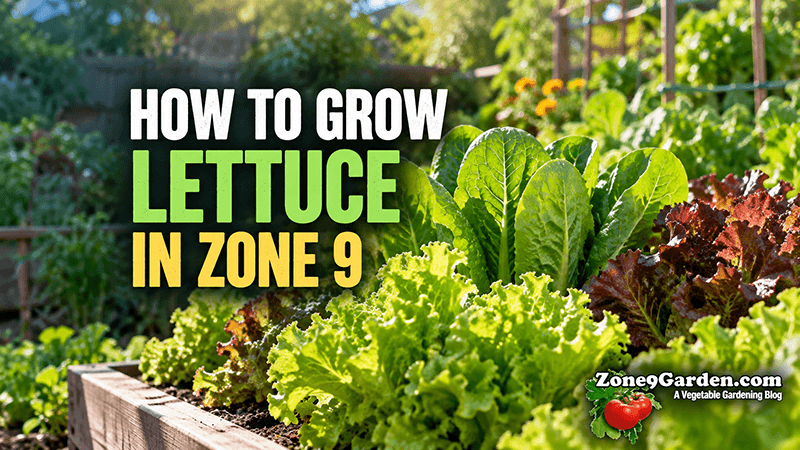
Growing lettuce in Zone 9 is less about protecting plants from cold and more about getting the timing right before warm weather arrives. Lettuce thrives during the cooler months, making fall, winter, and early spring the prime growing seasons for Zone 9 gardeners.
The challenge is that lettuce responds quickly to rising temperatures and longer days. Once conditions become too warm, plants begin to bolt, leaves become increasingly bitter, and head-forming varieties may never develop properly. For that reason, successful Zone 9 lettuce growing depends on choosing the right varieties, planting during the right windows, maintaining consistent moisture, and harvesting before the heat takes over.
This guide focuses on how to grow lettuce successfully in Zone 9 from planting through harvest. For detailed reference information on varieties, pests, diseases, spacing, and other crop specifications, see the Zone 9 Vegetable Profile: Lettuce.
When to Plant Lettuce in Zone 9
Timing is the single most important part of growing lettuce in Zone 9.
Lettuce prefers cool weather. Daytime temperatures around 60–70°F and nighttime temperatures around 40–60°F provide excellent growing conditions. Once temperatures regularly climb above about 75–80°F, the likelihood of bolting and bitter leaves increases substantially.
That gives Zone 9 gardeners two primary planting periods.
See our Zone 9 Planting Calendar for more.
Fall Lettuce
Fall is generally the beginning of the main lettuce season.
A useful Zone 9 schedule is:
| Task | Fall Timing |
|---|---|
| Start seeds indoors | July 15 – August 31 |
| Direct sow outdoors | August 15 – November 1 |
| Transplant outdoors | September 1 – November 15 |
| Main harvest | October 1 – February 28 |
The exact starting date depends heavily on your local temperatures.
August may technically fall within the planting window, but much of Zone 9 can still be extremely hot. Seeds and young seedlings may perform better when started in a protected location until outdoor temperatures begin moderating.
Spring Lettuce
Zone 9 also has a productive spring lettuce season, but the window is shorter because plants are growing toward warmer weather.
| Task | Spring Timing |
|---|---|
| Start seeds indoors | December 15 – January 31 |
| Direct sow outdoors | January 1 – March 1 |
| Transplant outdoors | January 15 – March 15 |
| Main harvest | February 15 – May 1 |
Spring planting should generally be treated as a race against the heat.
Earlier plantings have more time to mature under favorable conditions. Lettuce planted toward the end of the spring window has a greater chance of encountering temperatures that trigger bolting before the crop reaches its full potential.
Choose Lettuce Varieties for Your Season
Not every lettuce performs equally well under Zone 9 conditions.
Lettuce generally falls into four major types: looseleaf, butterhead or Bibb, romaine or cos, and crisphead or iceberg. Looseleaf lettuce is particularly useful for home gardeners because it develops quickly and can be harvested repeatedly rather than waiting for a complete head to form.
During the coolest part of winter, you have considerably more flexibility.
Varieties such as Buttercrunch, Salad Bowl, Red Sails, Oakleaf, Little Gem, Parris Island, Rouge d’Hiver, and Breen are options for the cool-season garden.
As temperatures begin pushing upward, heat tolerance becomes more important.
Nevada, New Red Fire, Tropicana, and Coastal Star are useful choices for the warmer edges of the Zone 9 lettuce season because of their better heat tolerance and slower bolting characteristics.
That doesn’t make them summer lettuce. It simply gives you a little more room at the beginning and end of the cool season.
Pick the Right Location
Choose a garden location that receives full sun to partial shade, ideally around 4–6 or more hours of sunlight per day.
During winter, a sunny location is usually ideal.
During warmer fall and spring weather, some afternoon shade can become an advantage. Reducing exposure to the hottest part of the afternoon can help keep plants and soil cooler and may slightly extend your productive season.
Lettuce also has a relatively shallow root system, so choose a location where you can irrigate easily.
Prepare the Soil Before Planting
Lettuce grows quickly and performs best when its roots can move easily through fertile, moisture-retentive soil.
A loose, well-drained loam rich in organic matter is ideal. A soil pH around 6.0–6.5 provides a good target.
Before planting, work finished compost or other organic matter into the bed.
This serves several purposes in a Zone 9 lettuce garden. Organic matter improves moisture retention in sandy soils, improves drainage and structure in heavier soils, and helps create the loose seedbed needed for tiny lettuce seeds.
Avoid planting lettuce in beds that remain saturated after irrigation or rain. Lettuce needs regular moisture, but consistently waterlogged soil encourages root and crown problems.
How to Plant Lettuce Seeds
Lettuce seeds are small and should be planted shallowly.
Plant seeds approximately ¼ to ½ inch deep. Keep the upper layer of soil consistently moist while the seeds germinate.
Under favorable conditions, germination commonly occurs in approximately 6–8 days.
Lettuce seed can germinate at surprisingly low temperatures, but germination is much more practical as the soil warms. Around 60–75°F provides excellent germination conditions, with roughly 60–65°F particularly favorable for planting and establishment.
Heat creates the opposite problem.
Once soil temperatures become very warm, lettuce germination can become unreliable. This is one reason getting a fall lettuce crop started can sometimes be harder in Zone 9 than growing the crop once cooler weather arrives.
During a hot early-fall planting, keeping the seedbed moist and avoiding the hottest afternoon exposure can help.
Thin Seedlings Instead of Letting Them Compete
It is easy to sow lettuce too densely.
Those tiny seeds quickly turn into a crowded mass of seedlings competing for light, water, nutrients, and airflow.
Thin plants to approximately 6–10 inches apart, depending on the type of lettuce and whether you’re growing for individual leaves or larger plants and heads. Rows can generally be spaced about 18–24 inches apart.
Don’t think of thinning as wasting plants.
Young lettuce seedlings can often be harvested as baby greens while creating room for the remaining plants to mature.
Direct Sow or Transplant?
Both approaches work in Zone 9.
Direct sowing is simple and particularly useful once outdoor temperatures have entered the lettuce-friendly range.
Transplants are valuable when you’re trying to get ahead of the season.
For example, you can start fall lettuce before outdoor conditions are ideal and move established seedlings into the garden once temperatures moderate. The same technique works for getting an early start on spring lettuce.
When transplanting, avoid burying the growing point in the center of the plant. Set seedlings at approximately the same depth at which they were growing in their containers and water them immediately after planting.
Keep Lettuce Consistently Watered
Consistent moisture is one of the keys to producing tender lettuce.
The goal isn’t constantly wet soil. It’s evenly moist soil.
Allowing the root zone to repeatedly swing between very dry and very wet conditions can stress the plants and reduce leaf quality. Hot, dry conditions are particularly troublesome because they contribute to wilting, bitterness, bolting, and tipburn.
Check lettuce frequently because its relatively shallow roots can dry out faster than deeper-rooted vegetables.
Water deeply enough to moisten the active root zone, but don’t leave the bed saturated.
Morning irrigation is generally preferable when possible because foliage has time to dry during the day. Prolonged cool, wet conditions increase the likelihood of diseases such as downy mildew, Botrytis, damping-off, and lettuce drop.
Fertilizing Lettuce
Lettuce is grown primarily for leaves, so nitrogen plays an important role in healthy leafy growth.
That doesn’t mean more fertilizer is always better.
Start by incorporating compost or organic matter and applying fertilizer according to a soil test approximately one to two weeks before planting.
If fertility is low, a modest amount of balanced fertilizer can be applied at planting.
Once plants develop several sets of true leaves, apply a light nitrogen side-dressing. Another light feeding approximately three to four weeks later can be useful if growth becomes pale or slow, particularly in sandy soils where nutrients can leach quickly.
For cut-and-come-again lettuce, light supplemental feeding every three to four weeks can support continued regrowth when the plants actually need it.
The important word is light.
Your goal is steady, healthy growth—not forcing plants with excessive fertilizer.
Use Succession Planting for a Longer Harvest
One of the easiest ways to improve a Zone 9 lettuce garden is to stop thinking of lettuce as a crop you plant once.
Plant smaller amounts repeatedly.
Instead of sowing an entire bed on the same weekend, sow part of it and then make another planting a couple of weeks later.
This creates plants at several stages of development.
While one group is ready for harvest, another is approaching maturity and a third is still developing.
Succession planting is particularly effective with looseleaf varieties because you can combine staggered plantings with repeated leaf harvesting.
As spring progresses, stop making new sowings when you no longer have enough cool weather remaining for the plants to produce a worthwhile crop.
Mulch Can Help Manage Zone 9 Conditions
A thin layer of clean organic mulch can be useful once seedlings become established.
Mulch helps conserve soil moisture and moderate fluctuations in soil temperature. Both are valuable in Zone 9, particularly during the warmer edges of lettuce season.
Keep mulch from piling directly against the plant crowns.
During prolonged wet periods, also watch moisture levels carefully. The same mulch that helps conserve water during dry weather can keep an already-wet bed from drying.
Growing Lettuce in Containers
Lettuce is an excellent container vegetable.
Its relatively compact root system means you don’t need an enormous pot, particularly for looseleaf varieties.
Containers also provide a significant Zone 9 advantage: mobility.
During cool weather, containers can remain in full sun. When spring temperatures rise, they can be moved somewhere that receives morning sun and afternoon shade.
Use a high-quality, well-draining potting mix rather than garden soil and make sure the container has adequate drainage holes.
Container-grown lettuce may need more frequent watering than lettuce planted in the ground because pots dry out quickly.
Protect Lettuce During Freezes
Lettuce handles cold weather much better than most warm-season vegetables.
Temperatures near 32°F are usually less concerning than they would be for tomatoes, peppers, or cucumbers. However, significant freeze damage can occur once temperatures fall into approximately the 25–28°F range, particularly on young or tender growth.
If a hard freeze is forecast, protect plants with frost cloth or another suitable garden covering.
This is especially worthwhile in Zone 9 because a relatively brief cold event may be followed by weeks of excellent lettuce-growing weather.
Watch for Aphids
Aphids are one of the more troublesome lettuce pests because they can hide inside folds and developing heads.
Look for colonies of small insects along leaves and growing points. Infested leaves may curl or become distorted, and sticky honeydew may appear.
Aphids can also transmit plant viruses.
Inspect plants regularly rather than waiting until harvest. Aphids are much easier to deal with before they become established deep inside a mature plant.
Check Leaves for Leafminers
Vegetable leafminers create distinctive winding white or translucent trails inside lettuce leaves.
The larvae feed between the upper and lower surfaces of the leaf, so the damage looks very different from ordinary chewing.
A few affected leaves can simply be removed. Heavy infestations reduce usable leaf area and can make an otherwise healthy crop unattractive or unusable.
Caterpillars, Slugs, and Snails
Irregular holes in lettuce don’t always come from the same pest.
Loopers and armyworms chew foliage and can leave frass inside developing plants. Cutworms are particularly damaging to young seedlings because they may sever the stem close to the soil surface.
Slugs and snails become especially troublesome during cool, damp weather. Their irregular feeding holes are often accompanied by shiny slime trails.
Checking the garden in the evening or early morning can make these pests easier to find.
Prevent Lettuce Diseases
Many common lettuce diseases become more problematic when foliage remains wet for long periods.
Downy mildew favors cool, damp conditions and produces light-green to yellow angular spots on the upper leaf surface, often accompanied by white growth underneath.
Botrytis rot, or gray mold, produces soft brown lesions followed by fuzzy gray fungal growth.
Damping-off attacks seeds and young seedlings, especially in cool, saturated soil.
Lettuce drop causes lower leaves to wilt and collapse, followed by soft decay around the crown. White cottony fungal growth may develop near the base.
Virus diseases can cause mottling, distortion, stunting, and poor head formation. Aphids can contribute to their spread.
Good spacing, drainage, airflow, sanitation, and irrigation practices are therefore just as important as responding to a disease after symptoms appear.
How to Harvest Leaf Lettuce
One of the biggest advantages of growing leaf lettuce is that you don’t have to harvest the entire plant.
Once leaves reach a usable size, begin harvesting from the outside.
Remove a few mature outer leaves while leaving the center growing point intact. The plant continues producing new leaves from the middle.
A good rule is to take about two to three leaves per plant at a time when using this approach.
This method can provide multiple harvests from the same planting.
You can also cut an entire leaf-lettuce plant near its base. Leaving approximately an inch of stem may allow additional growth under favorable conditions.
How to Harvest Head Lettuce
Butterhead, romaine, and crisphead lettuce require a slightly different approach.
Allow the plant to reach an appropriate size and develop its characteristic head.
Harvest while the leaves are still tender and before the center begins elongating.
That elongation is an early sign of bolting.
Once lettuce begins sending up a flower stalk, leaf quality declines rapidly and bitterness increases.
Don’t hold mature lettuce in the garden waiting for it to become bigger if hot weather is approaching. In Zone 9, harvesting a little early is often better than waiting a week too long.
The Zone 9 Lettuce Strategy
The key to growing lettuce in Zone 9 is to work with the cool season instead of against the summer heat.
Start your fall crop as temperatures begin declining. Grow aggressively through fall and winter. Make additional plantings so the entire crop doesn’t mature at once. Then plant early enough in spring to harvest before sustained heat triggers bolting.
Looseleaf varieties are particularly useful because they mature quickly and allow repeated harvesting. Head varieties can also perform very well, but they need a sufficiently long stretch of cool weather to finish properly.
Combine good timing with fertile soil, consistent moisture, sensible nitrogen feeding, adequate spacing, and regular harvesting, and lettuce can become one of the most productive vegetables in the Zone 9 cool-season garden.
For specific cultivar information, planting specifications, pest and disease references, and crop relationships, visit the Zone 9 Vegetable Profile: Lettuce.